
The story of Takako Konishi is heartbreaking. An office worker from Tokyo who reportedly struggled with mental health challenges, she traveled to Minnesota, stopping by Fargo, North Dakota, before she was later discovered dead in Detroit Lakes. Her death was ruled a suicide, but due to language barriers and media sensationalism, the case sparked an urban legend that she was searching for the buried money from the Coen Brothers film “Fargo.” This theory would be the basis for David Zellner’s “Kumiko, the Treasure Hunter.”
Buy This Title
by clicking on the image below
A lonely woman named Kumiko lives in Tokyo, where she works in an office under a strict boss, is socially isolated, and endures constant pressure from her overbearing mother to get married. The few sources of happiness are her pet rabbit Bunzo and treasure hunting, which lead her to a worn VHS copy of “Fargo,” which she mistakes for a documentary. Convinced the suitcase of cash buried in the snow in the film is real, she travels to Minnesota in search of the money.
The film unfolds like a surreal fairy tale, blending drama with touches of dry comedy. Kumiko stubbornly treats her copy of “Fargo” as a sacred map to treasure, insisting to herself and others that the buried money is real. Watching her quietly rebel against her rigid boss at work in different ways brings welcome cathartic laughs. Even the cultural clashing when our lead gets to Minnesota is infused with humor. Her encounters with well-meaning locals, including an older woman who offers her hospitality and a sheriff determined to keep her safe, are amusing while reinforcing the heartbreaking reality of her situation.
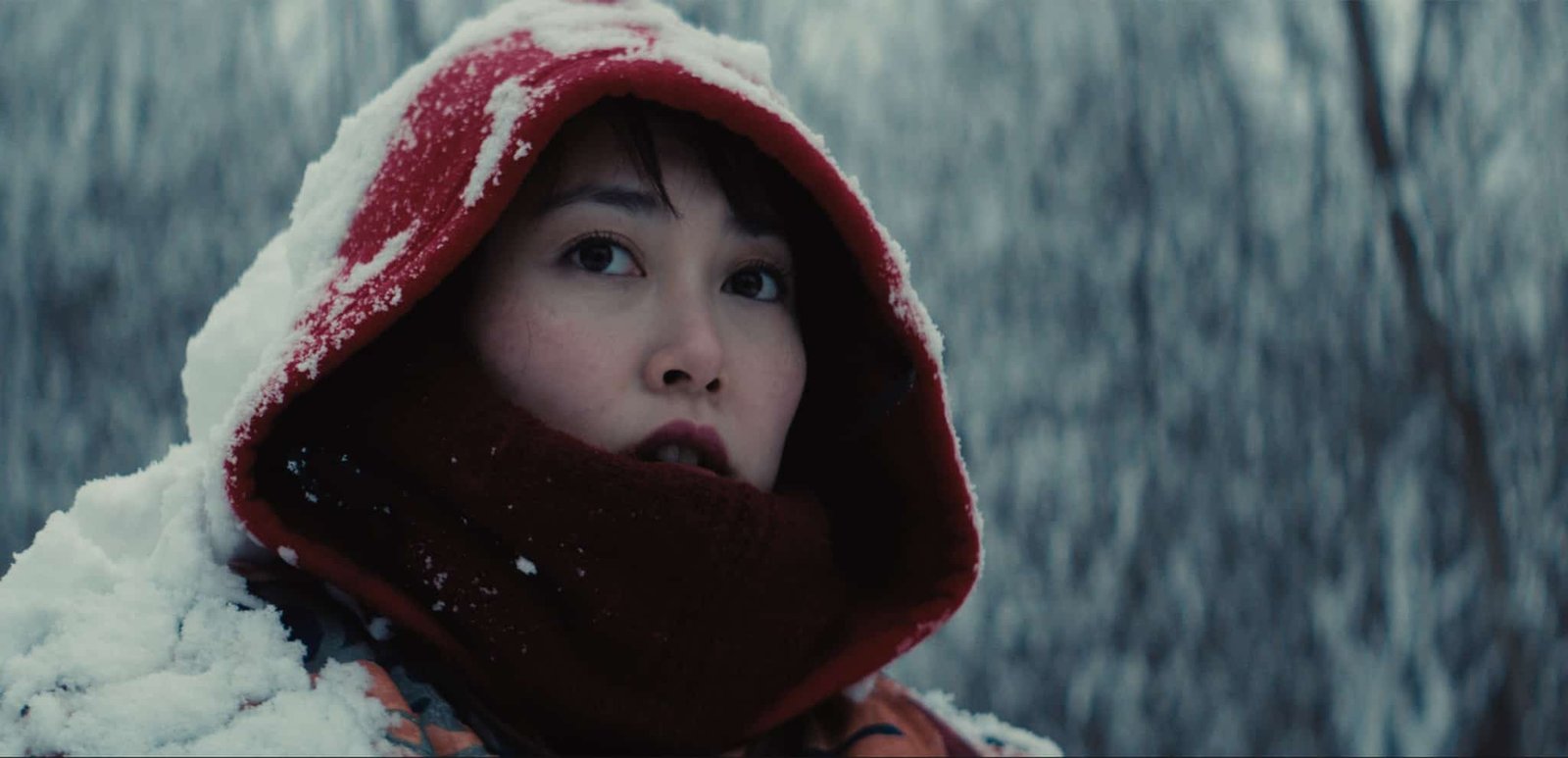
“Kumiko, the Treasure Hunter” remains a sad film as David and Nathan Zellner handle their main character, whose deteriorating mental state and intense isolation shape her perception of the world, with compassion and empathy. We want to see Kumiko find happiness and receive the help she needs. However, she has been so consumed by her loneliness that her obsession with treasure hunting and retreat into fantasy have become her only escapes from her miserable reality. It only becomes more painful to watch when she is alone in the freezing snow with nothing more than a bright red hoodie, a hotel quilt, and garbage-bag boots.
Kumiko is a tragic protagonist to follow, and Rinko Kikuchi delivers an outstanding performance that showcases her range. Rather than her portrayal feeling like a caricature of someone living with a mental illness, she approaches the role with dignity, nuance, and respect. Moreover, Kikuchi is elevated by the strength of the direction and writing, giving the character the depth she deserves.
In keeping with the film’s dreamlike atmosphere, Sean Porter’s beautiful cinematography captures the scale of Kumiko’s journey while emphasizing her fragile mental state as she becomes increasingly detached from the rest of the world. The ambient music score by the Octopus Project also reinforces the mood whenever it is utilized. Even the inclusion of the Yamasuki’s playful song “Yamasuki” is used to great effect in conjunction with the escapism through treasure hunting and the underlying sense of tragedy.
“Kumiko, the Treasure Hunter” transforms a bizarre urban legend into a powerful meditation on the collision between delusion and reality, while remaining a compassionate portrait of a lonely individual navigating society. Anchoring the film’s emotional journey is Rinko Kikuchi’s unforgettable performance.



