
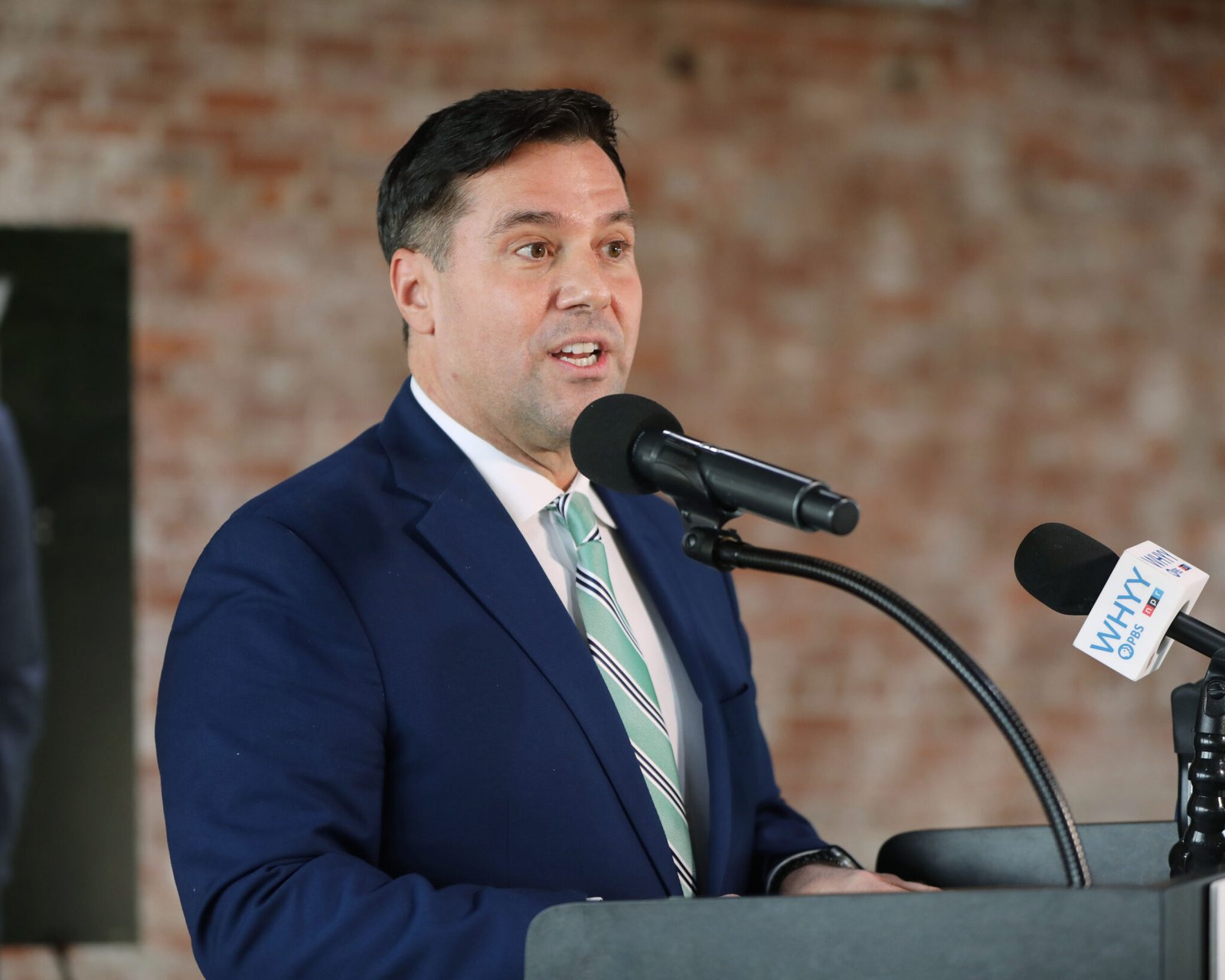
Legislators applauded new state funding intended to speed up New Jersey’s poky pace in approving environmental permits but fretted over flatlined or slashed funding on other environmental initiatives during a budget hearing Tuesday at the Statehouse in Trenton.
Ed Potosnak, acting commissioner of the state Department of Environmental Protection, said it takes officials 18 months, on average, to approve just the first step in the permitting process for anyone who wants to develop around wetlands. Years of flatlined funding have kept the department from upgrading technology and hiring the staff it needs to process such permits faster, he said.
“That’s a year and a half of taxes you would pay just to find out where you can build on a property,” Potosnak said. “So many projects depend on that, and the 18-month average means that many are taking longer than that.”
Under the $60.7 billion budget plan Gov. Mikie Sherrill proposed for the next fiscal year, the department would get $4.3 million to modernize and expedite its permitting processes and expand permitting staff. Sherrill had vowed, in an executive order issued her first day in office in January, to make the state’s regulatory processes faster and more transparent.
Sen. Douglas Steinhardt (R-Warren), a committee member, told Potosnak the streamlining effort would be “a welcome change.”
“One of the things that I think New Jersey does well is red tape and bureaucracy,” Steinhardt said. “For some years, there have been issues at the DEP with permit backlogs, which hamper economic development.”
The issue came up at the department’s first hearing on its proposed $1.3 billion budget before the Senate’s budget and appropriations committee. Lawmakers have until June 30 to approve a budget for the fiscal year that begins July 1.
Members of the panel lamented other proposed cuts in Sherrill’s budget plan, urging Potosnak to figure out how to get those funded.
Sherrill included no funding in her budget plan for the New Jersey School of Conservation, a state-owned site in Sussex County that offers year-round environmental education and professional development especially for students and teachers from marginalized districts. The school received $2.8 million in state funding in the current budget, even though former Gov. Phil Murphy tried to cut its allocation to $800,000 two years ago and $500,000 last year (legislators erased Murphy’s proposed funding cuts in later budget addendums both years).
“It’s a really amazing place,” Steinhardt told Potosnak.
But Potosnak said he couldn’t comment because he was recused from matters on the school. Potosnak supported efforts to preserve the school when he headed the New Jersey League of Conservation Voters before joining Sherrill’s administration.
Sen. Linda Greenstein (D-Middlesex) also worried about a $2 million cut in Sherrill’s budget from the state’s oversight of the troubled Trenton Water Works.
The city-owned utility, which serves the state capitol and four surrounding suburbs, has been beset for decades by complaints of mismanagement and contamination, prompting the state to declare partial oversight in 2022 and the suburbs to sue last fall. It also faces replacing more than 20,000 known lead pipes in its 683-mile water distribution system.
Potosnak told Greenstein that the state solicited bids last year to bring in specialized staff to better manage the utility, which serves about 250,000 people and dates back to the 1800s. But the state received no bids.
“It’s ultimately Trenton Water Works’ responsibility, a clean, reliable drinking water supply,” Potosnak said. “We’re still moving forward on that to make sure that the operations is being supported while we look at long term solutions for Trenton Water Works.”

Sen. Teresa Ruiz (D-Essex) exhorted Potosnak to figure out how the state will fund the Essex-Hudson Greenway, a proposed 9-mile linear park that would replace the trash-strewn, weed-choked old train tracks that snake through eight cities and towns in North Jersey. State money ensured the greenway’s first mile, where construction is now underway, will open within the next year, but funding for — and so the fate of — the greenway’s final eight miles remains uncertain, Ruiz said.
The greenway is an overdue improvement for communities disproportionately impacted by pollution, Ruiz said. When it’s done, it will safely connect communities in a congested area of the state and rival the popular High Line in New York City, she predicted.
Potosnak said the department remains committed to the greenway’s completion but acknowledged the funding challenges, saying he would work with legislators to come up with money to finish it. The first phase cost about $69 million, while the entire project is expected to top $200 million.
“Momentum is a hard thing to get back,” Potosnak said. “We are pleased with the progress, but also mindful of the next steps.”
Sherrill’s budget plan would cut $150 million from the department’s state appropriation, a 22% drop from the current year’s $662 million adjusted state appropriation.
That gap should shrink later in the fiscal year once officials add in supplemental support from the corporate business tax, Potosnak said. Six percent of that tax gets set aside to fund public transit; open space, farmland, and historic preservation; water programs; contamination remediation; and underground storage tank removals.
The department gets about half its budget from federal funding, and that has fallen by 11% in large part to federal cuts to programs that support water and land conservation and forestry, budget documents show.
GET THE MORNING HEADLINES.



