
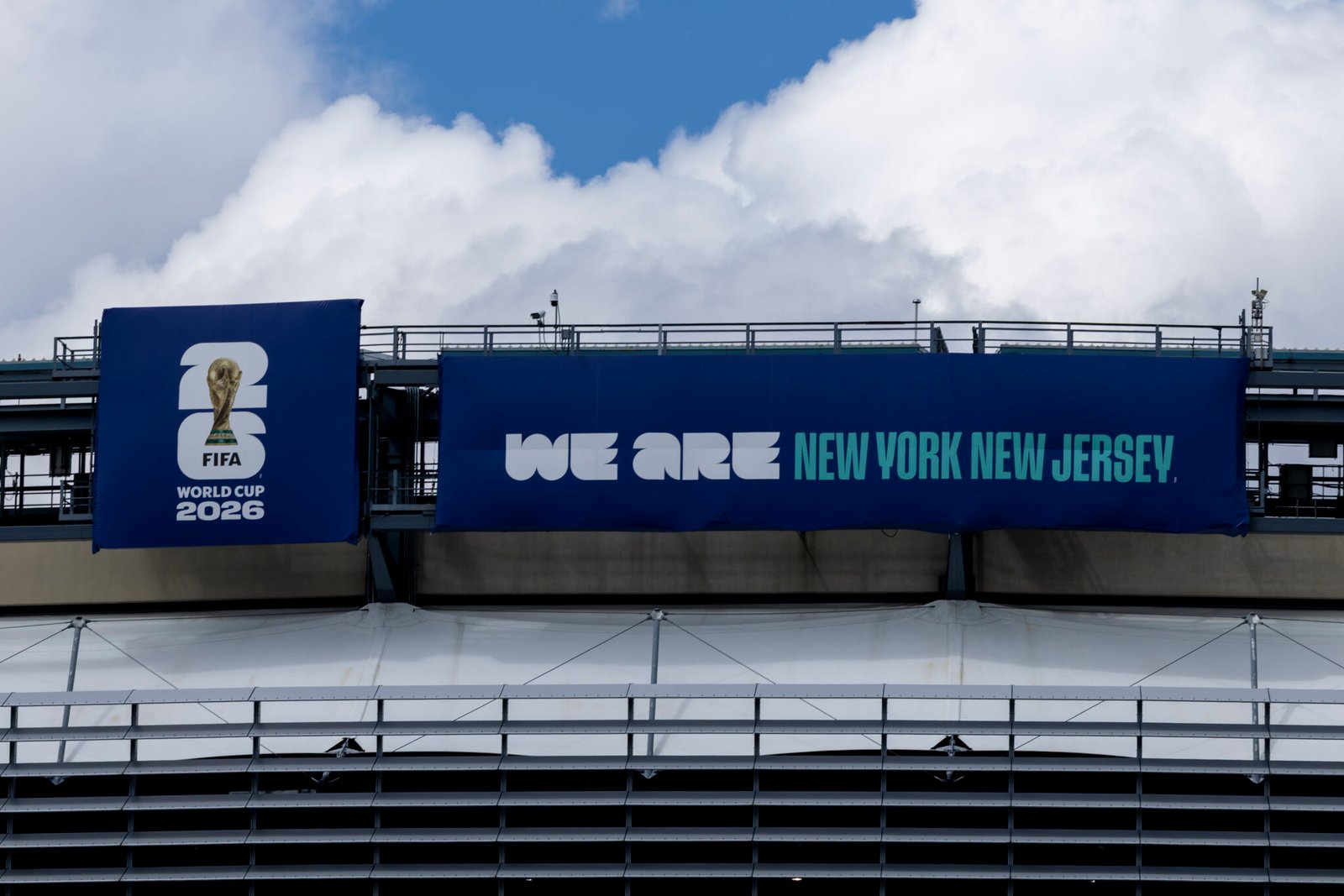
The coming World Cup is expected to generate billions in economic impact in New Jersey, but human traffickers will be among those scrambling to cash in, law enforcement officials warn.
The monthlong men’s soccer tournament, which will kick off June 13 at the MetLife Stadium, will bring more than a million visitors to the region, offering sinister opportunities for traffickers who rely on crowds and chaos to hide their activity, experts say.
“With the events of this magnitude come increased risks,” said Montville Police Chief Andrew Caggiano, who’s president of the New Jersey State Association of Chiefs of Police. “When we think of large-scale events, we often focus on visible threats — terrorism, crowd safety, theft, fraud — and all those are very real concerns. But there’s another crime that thrives in these environments … human trafficking.”
Daniela Peterka-Benton, director of the Global Center on Human Trafficking at Montclair State University, said human trafficking typically spikes during large sporting events, and the World Cup’s massive scale heightens the cause for concern.
The increase is largely driven by a demand for sex workers, but labor trafficking also is likely, Peterka-Benton said. The New Jersey Coalition Against Human Trafficking warned that people who build event infrastructure and work in hospitality and transportation may be at risk, pointing to labor trafficking and exploitation reported during the 2022 World Cup in Qatar.
Undocumented immigrants historically have been vulnerable to trafficking, with traffickers threatening to have them deported or otherwise exploiting their lack of legal status — and the Trump administration’s ongoing mass deportation effort makes victimization a larger likelihood, Peterka-Benton said.
“They see what’s happening with ICE. They will not seek out help. So it’s perfect for traffickers,” she said. “Law enforcement will have to work on this for a very long time after this era is over to regain that trust.”
Human trafficking doesn’t seem like a common crime in New Jersey, judging just by arrests.
While assault, burglary, theft, and other offenses land thousands of people in New Jersey courts every year, law enforcement officers charged just 21 people with human trafficking-related offenses last year, 14 in 2024, and eight in 2023, said Dan Prochilo, a spokesman for the New Jersey Attorney General’s Office.
But human trafficking is a crime that’s vastly underreported, whether that’s because victims are too scared to seek help or law enforcement fails to recognize the crime, Peterka-Benton said.
“When the police see them, they first and foremost see an undocumented migrant, so they become the criminals and are not really seen as a victim,” she said. “Official statistics usually only provide a very small snapshot of what’s happening.”
New Jersey State Police officials have been preparing for the World Cup for three years, Major Mike Flory said. He joined a small crowd of public officials, law enforcement officers, and social service providers who help trafficking victims in Hamilton Wednesday for a summit focused on human trafficking at the World Cup.
“We see this, unfortunately, all too often in New Jersey, of course, because of its proximity between New York and Philadelphia, with international airports, with seaports, with an I-95 corridor, with the tourism economy like the city of Atlantic City,” said Sen. Vincent Polistina (R-Atlantic). “This is something we are, unfortunately, always going to deal with.”
Part of the state police strategy to thwart traffickers — and ensure safety more broadly — at the World Cup will be to flood the event with troopers. The agency will deploy 1,200 troopers at various official and unofficial World Cup events, with 600 alone at MetLife Stadium for every match, Flory said. Games also will be held in Philadelphia and New York, and one of the teams scheduled to play in Philly will stay in Atlantic City, with state police tasked with ensuring their safety too, he added.
Detective Liam O’Hara of the New York Police Department said officers there will use surveillance and plainclothes and undercover officers, targeting known or suspected victims and traffickers at hotels.
In New Jersey, investigators scour escort ads to aid trafficking probes and work with drug treatment providers, given that some trafficking victims struggle with addiction, said state police Detective Sergeant Richard Hershey.
The state has stepped up awareness campaigns, training officers and civilians alike how to spot the warning signs of human trafficking and posting signs in public restrooms and elsewhere with numbers people can call to get help or report suspected trafficking, Prochilo said. (The national human trafficking hotline is 888-373-7888.)
The state also has worked to better screen youths for human trafficking indicators and connect them with recovery services, train truck drivers and other transportation workers to recognize trafficking, and teach jail staff across the state to understand trafficking and link victims with services, Prochilo said.
Part of any awareness campaign is teaching people that trafficking is a crime of coercion and might not look like what they think it does, said Dr. Nicole Harris-Hollingsworth, senior vice president of social impact and population health at Hackensack Meridian Health.
“When people think about human trafficking, what do they think of? They think, like, Liam Neeson in ‘Taken,’ and someone being on the phone, like, ‘a very special set of skills,’” Harris-Hollingsworth said. “If that is what you think trafficking is, then you’re going to miss it, and you’re not going to have the opportunity to help someone.”
GET THE MORNING HEADLINES.



