
Getting faster doesn’t have to put you into debt. Find out how the little things can make a big difference.
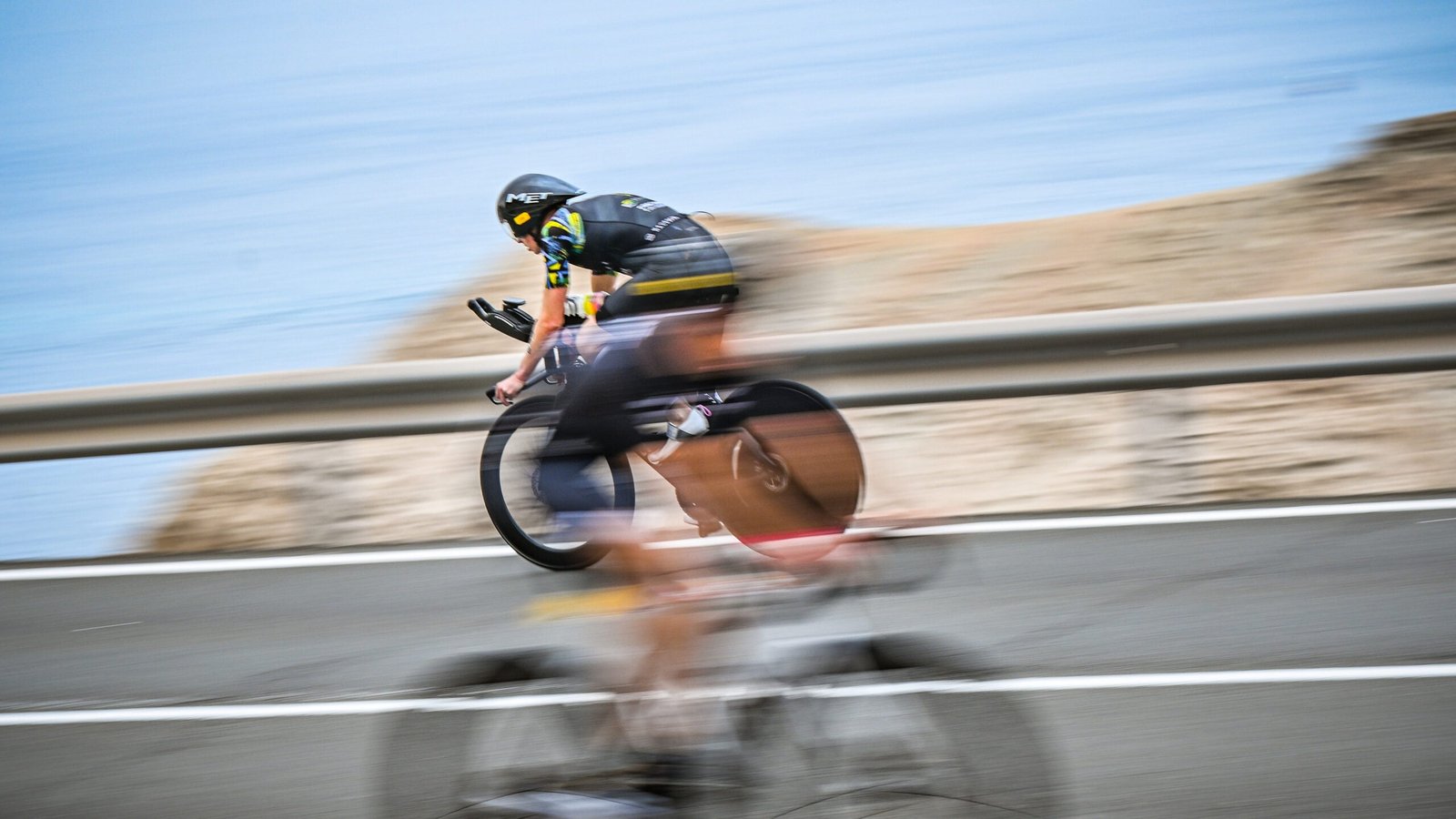
You can gain impressive speed just by completing a few simple gear upgrade, some of which are free. (Photo: Challenge Family)
Published April 23, 2026 06:00AM
There’s no denying triathlon is a gear-heavy, expensive sport where it’s possible to spend infinite amounts to get faster, lighter, and stronger. While having plenty of dough is one way to make race day faster, there are myriad ways to save time – and effort – that are low or zero cost. From shaving your legs to having a clutter-free transition, we explore upgrades that help you get from the swim start to the finish chute faster.
Shave your legs
It might feel more like a grooming choice than a performance decision, but the data says otherwise. Wind tunnel testing has shown that shaved legs can save about 70 seconds over an Olympic-distance bike course, which is one of the greatest time-saving moves you can make.
And the science makes sense: When you’re riding, your legs are the largest moving surface area and the hair creates what aerodynamicists call “trip points,” disrupting smooth airflow over the leg and increasing drag. Shaving your legs is low-cost, takes minutes, and delivers measurable, proven speed gains.
Aero socks
Not all socks are created equal, and in the wind tunnel, the difference is stark. Aero socks, which feature textured or dimpled surfaces, work on the same principle as a golf ball: the surface disruptions reduce aerodynamic drag by manipulating the boundary layer of air around your leg.
Wind tunnel data from aero sock brand Velotoze shows a 4.45-watt saving at 40 kilometers per hour, which converts to approximately 30–40 seconds saved over an Olympic-distance bike leg. Socks are typically $40-50 a pair, making them one of the highest return-on-investment purchases in triathlon. Many are cut tall enough to cover the ankle and lower calf, which is arguably the trickiest area for airflow around a moving leg.
Correct goggles for the conditions

Trying to swim in low-light or foggy conditions with mirrored goggles – or conversely, swimming in sunny conditions in clear goggles – is like trying to find your way out of a maze blindfolded. It’s not fun, and it’s not fast. Plus, poor sighting can lead to you swimming much farther than intended and can add several minutes to your swim split, which is the opposite of what you’ve been training for.
Ahead of race day, be sure to find one model goggle you like that’s available in both clear and mirrored versions (we can help with our favorites for 2026). Swim in both pairs often, and be sure to pack both options for race day. Keep them in your transition bag, and if foggy conditions roll in on race morning, you’ll be one of the few people who can swim – and sight – your way around the course.
Clutter-free, easily identifiable transition
You didn’t realize that Marie Kondo-ing your transition zone could make you faster, but have you ever seen a race-winning pro triathlete with a kitchen-sink T1 or T2? No, us neither. While it can be extremely tempting to have everything you might need laid out in transition, minimalism pays off here.
Keep it to the bare essentials: helmet, glasses, and nutrition in T1; shoes, socks, and nutrition in T2. It can also be helpful to have a brightly colored towel or mat laid out in your transition zone so you can easily find your spot amid the high heart-rate hurry and adrenaline rush of T1 and T2.
And perhaps this is too obvious, but actually practicing your transitions (not just leaving it until race day) will yield huge (free) time savings and much less panic.
Cut the ankles from your wetsuit
Although some premium wetsuits now feature quick-release material in the lower legs and ankles, the majority don’t. Trimming a few inches from the lower legs of your wetsuit makes it much easier and quicker to flick over your feet to remove the suit when you’re in T1.
Done right, this can save you 30-60 seconds, enabling you to move through T1 with minimal hassle and maximum speed. However, be careful not to cut so much material from the bottom that you open a thread or seam, and cut it at an angle (higher in the back toward the calf) to create a larger opening.
Running the correct tire pressure for race-day conditions
It might sound obvious, but be sure to run the recommended tire pressure for your wheelset and tires (most manufacturers publish these on their websites), and then make sure you adapt for race-day weather and road conditions. If you’ll be racing on smooth, dry roads, then you’ll typically want higher pressure. If road conditions are rougher and/or you’ll be racing in wet and/or corner-heavy courses, then running slightly lower pressure will be favorable. Running 2-3 PSI lower in the front tire compared to the back can also help with handling.
And to make sure your pressure is what you think it is, pack your own reliable bike pump – don’t rely on the kindness of strangers, or the busy mechanic tent on race day.
Ensuring you’re running the right PSI for you and your conditions is a simple two-minute move that can save you far more time on race day.
Drill your aero position
Many top bike coaches will give their athletes aero drills to do while riding to help them hone their position, even encouraging them to do this in front of a mirror when training inside. This can help you gain awareness of how much you move out of aero while riding and encourage you to hold your position for progressively longer periods.
The goal is to make your race-day position feel effortless and familiar, and with your body position accounting for the majority of your aerodynamic drag, it can be well worth it.



