
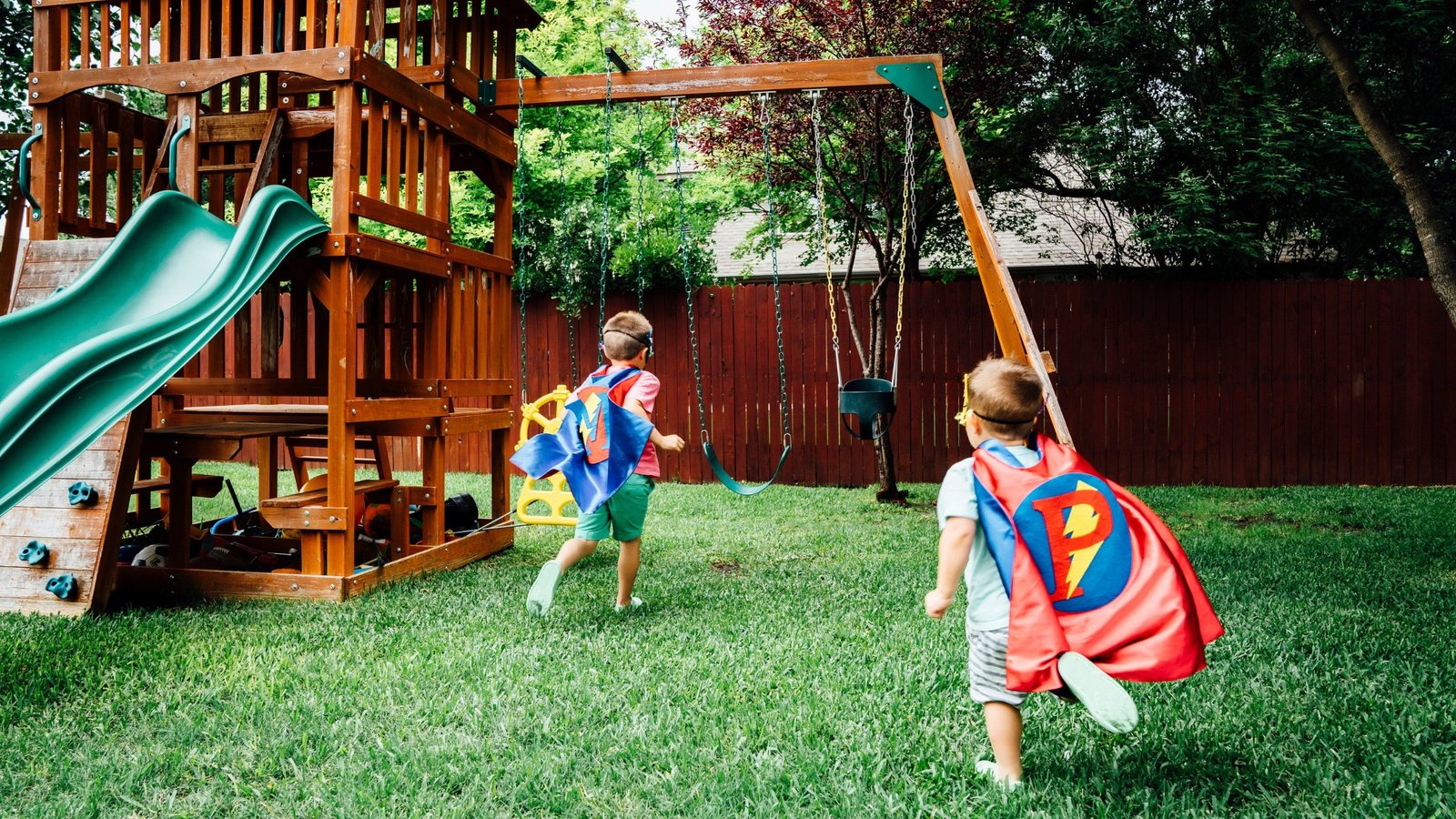
A backyard playground promises active kids, less screen time, and a yard that actually gets used. But before you start browsing for swing sets, it’s worth asking whether the investment pays off, in daily life—and when it’s time to sell.
The honest answer, according to experts, is that it depends on what you buy, how you maintain it, and how well it fits the space around it. Here, we break down the FAQs on backyard playgrounds.
Meet the experts
We asked three real estate pros and two outdoor experts to weigh in:
What is a backyard playground?
We’re not talking about a big elaborate setup. Basically what we mean by background playground is a structure that encompasses two or three swings, a slide, a canopy cover and possibly some other feature such as a rock climbing wall.
How much does a home playground cost?
The sticker price on a swing set is just the beginning. Getting a playground installed and ready for kids to use safely involves a few layers of decisions and associated costs.
Starting with the structure itself, a standard play set commonly runs $500 to $1,000, according to Paul. That’s your baseline.
Next comes the ground beneath it. Paul recommends clearing the area and laying a black weed mat down first, which prevents unwanted plant growth from creeping up around the structure over time.
From there, you’ll choose your surface material. Mulch is the budget-friendly option and holds up well across most weather conditions. Foam pads cost more but offer a softer landing surface and a cleaner, more finished look. Either way, the ground prep is a step worth doing right.
What you likely don’t need is concrete. It’s a common assumption that a play structure needs to be anchored into a poured base, but Paul skips it on most jobs.
“The weight of a playground set typically keeps it secure without the need for anchoring it into concrete,” he says. The practical upside: When the kids outgrow the set—or if you move—removal is far simpler and less expensive than jackhammering out an anchored installation.
Add surfacing, site prep, and professional installation, and a complete setup realistically lands between $850 and $2,000. DIY assembly can bring that number down, though complex sets with multiple components can test patience quickly.
A breakdown of the basic costs of building a home playground
Play structure (2 swings + slide): $500–$1,000
Weed mat and site prep: $50–$150
Safety surfacing (mulch or foam pads): $100–$400
Professional installation: $200–$500+
Estimated total: $850–$2,050+
Should I choose wood, metal, or composite—and do I need a tarp?
Wood looks natural but needs the most upkeep (sealing, sanding, and monitoring for rot). Metal is durable but can rust in humid climates. Composite resists weathering best and requires the least maintenance, but it comes at a higher upfront cost.
Regardless of material, Paul’s advice is to cover it. “The best thing a person can do to extend the life of a play structure is to get a giant tarp and place it over the structure whenever it’s not in use,” he says. Hosing it down during pollen season helps prevent staining. Budget $50 to $150 annually for upkeep, and a quality set can last a decade or more.
What should I know about permits, HOA, and safety standards?
Most backyard play structures don’t require permits. “Because it’s not a two-story structure, zoning isn’t usually an issue,” Paul notes. That said, HOA rules vary, so be sure to check your CC&Rs for restrictions on size, placement, or materials before purchasing.
In terms of safety, look for structures that meet ASTM F1148 standards and align with U.S. Consumer Product Safety Commission guidelines. Reputable manufacturers list compliance clearly.
What else should I consider when thinking about a backyard playground?
Placement and presentation matter more than most homeowners expect. Taylor says a playground, when properly integrated with your landscape, can feel like a seamless part of the yard.
“When a playground is camouflaged with plants, mulch, and a natural color palette, it will be more harmonious and appear to be a part of the yard and surrounding environment,” he says.
The opposite is equally true. A structure that looks oversized or out of place, especially in an upscale yard, can undermine the entire outdoor space. Keep the footprint proportional, choose colors that complement the home’s exterior, and treat the surrounding area as part of the design.
Does a backyard playground add or detract from resale value?
This is where condition and context become everything. A well-maintained playground in a family neighborhood can nudge value up 1% to 2%, says Dallaire.
“For families, it can be the detail that pushes them to make an offer,” he explains, although he notes that he has also watched a rusty set cost a seller $15,000 when nervous buyers discounted their offer over safety concerns.
For the luxury market, design coherence is nonnegotiable. Olenbush has seen buyers treat an out-of-place structure as extra cost rather than added value, leading to lower offers.
“Clean lines, neutral tones, and high-quality materials make a big difference,” she says.
In neighborhoods with fewer families or more empty nesters, the math shifts further. Szostak applies a straightforward rule: “If you are not sure if it adds up, take it out.”
Dallaire agrees, noting that he typically advises sellers to remove play structures before listing. “Most buyers don’t want to inherit a structure like this; it’s just another maintenance item to deal with.”
So, what should I buy (and avoid)?
Paul recommends a structure with at least two swings and a slide, with a covered, clubhouse-style area built in. Modular systems that allow add-ons over time offer more flexibility as kids grow. Skip heavily customized designs that are hard to repurpose, and avoid budget sets that won’t survive more than a few seasons.
Keep the size proportional to the yard, as a structure that dominates the space creates problems both visually and at resale.
The bottom line
A backyard playground is worth it if you have young kids, plan to stay put for several years, and have the yard space to integrate a structure thoughtfully. In a family-oriented neighborhood, a well-maintained set can make your home more appealing and, for the right buyer, seal the deal.
If you’re in a luxury market, approaching a sale, or unsure whether your neighborhood skews family-friendly, think carefully before installing—and consider removing it before listing if there’s any doubt. The structure itself isn’t the investment. How you choose it, maintain it, and fit it into your yard is what determines whether it pays off.



