
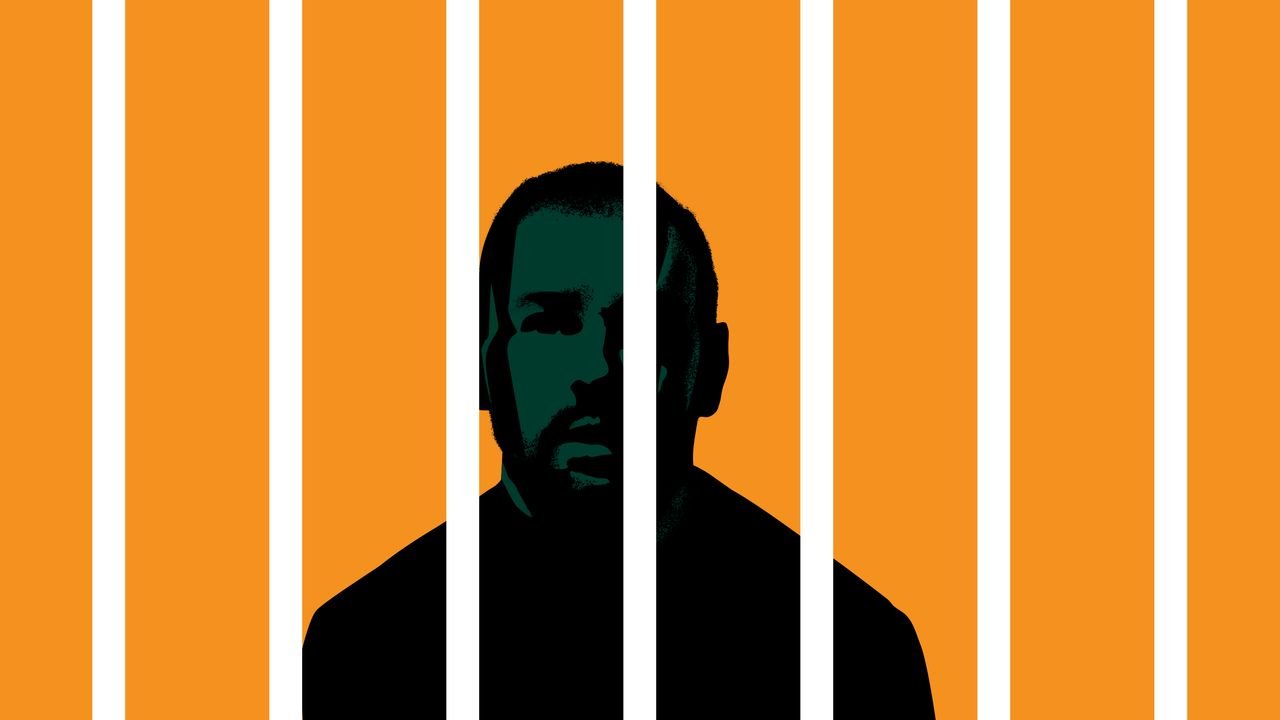
When Kinahan married Caoimhe Robinson at the Burj Al Arab, a luxury hotel on Dubai’s waterfront, in 2017, the wedding was attended by almost every member of a group that has become known as the Super Cartel—a collection of drug importers who, at one point, controlled around a third of Europe’s twenty-billion-dollar-a-year cocaine industry. (The wedding was also attended by Tyson Fury, the former heavyweight champion of the world, and by at least one guest who was passing information to the Drug Enforcement Agency.)
Major crooks found that as long as they behaved like regular businessmen in Dubai, they were unlikely to be harassed by law enforcement. Last year, Karen Greenaway, a former F.B.I. agent who has studied the city’s role in facilitating corruption and crime, told me that “Dubai has never cared too much about people’s reputation, as long as you’re not committing crimes in their country.”
According to the testimony of Raffaele Imperiale, an Italian cocaine trafficker and fellow Super Cartel member, Kinahan understood the unspoken rules of the city. When Ricardo (El Rico) Riquelme Vega, a Chilean Dutch cocaine importer also in the Super Cartel, wanted to murder a rival in Dubai by sending a team of Colombian assassins to the Emirates, Kinahan voiced his disapproval. As Imperiale recalled, “The Irish said, ‘You shouldn’t commit murders in Dubai. We live here, our children are here. This is a neutral country.’ ” He added that “Daniel didn’t want it, and he has an important voice.”
As I reported last October in my investigation of the Kinahan cartel’s sprawling cocaine operation, there have also been suggestions that the Emirati government’s relationship with Kinahan was about more than just apathy. While living in Dubai, Kinahan presented himself as a legitimate boxing promoter. His Dubai-based boxing stable, M.T.K. Global, employed a “brand ambassador” named Khalid al Jassmi, who had worked for the Emirati government for more than two decades, and who was—in the words of one former Kinahan employee—“integral to all the business licensing for Kinahan in Dubai . . . and all the political engagement.”
Whatever arrangements Kinahan had made, they have not proved watertight. Even before his arrest, there were signs that the Emirates was becoming less tolerant toward major criminals. Over the past few years, several members of the Super Cartel that were living in Dubai, including Imperiale, have been deported or extradited to their home countries. Then, in 2024, Sean McGovern, Kinahan’s most trusted lieutenant, was arrested in Dubai. In May, 2025, he was extradited from the U.A.E. to Ireland under the terms of a new bilateral agreement between the countries. When the Emirati police transported McGovern from prison to a private airport where he boarded a military plane, he was blindfolded.
What changed? In general, it seems that Dubai had grown concerned about its reputation. In 2022, the U.A.E. was placed on the Financial Action Task Force’s global “grey list,” a group of countries that it has deemed deficient in anti-money-laundering and counter-terrorism procedures. By 2024, the U.A.E. had done enough to be removed from the register, but the F.A.T.F. is currently in the process of assessing countries for its next “grey list,” and one investigator who has worked in Dubai suggested that scrutiny may have motivated the country to work more closely with international police forces. Other reports propose that the current conflict in the region has sharpened the U.A.E.’s desire to impede Iran and its proxies; in recent years, the Kinahans have co-financed cocaine and shipping deals with Hezbollah.



