
Published May 6, 2026 11:20AM
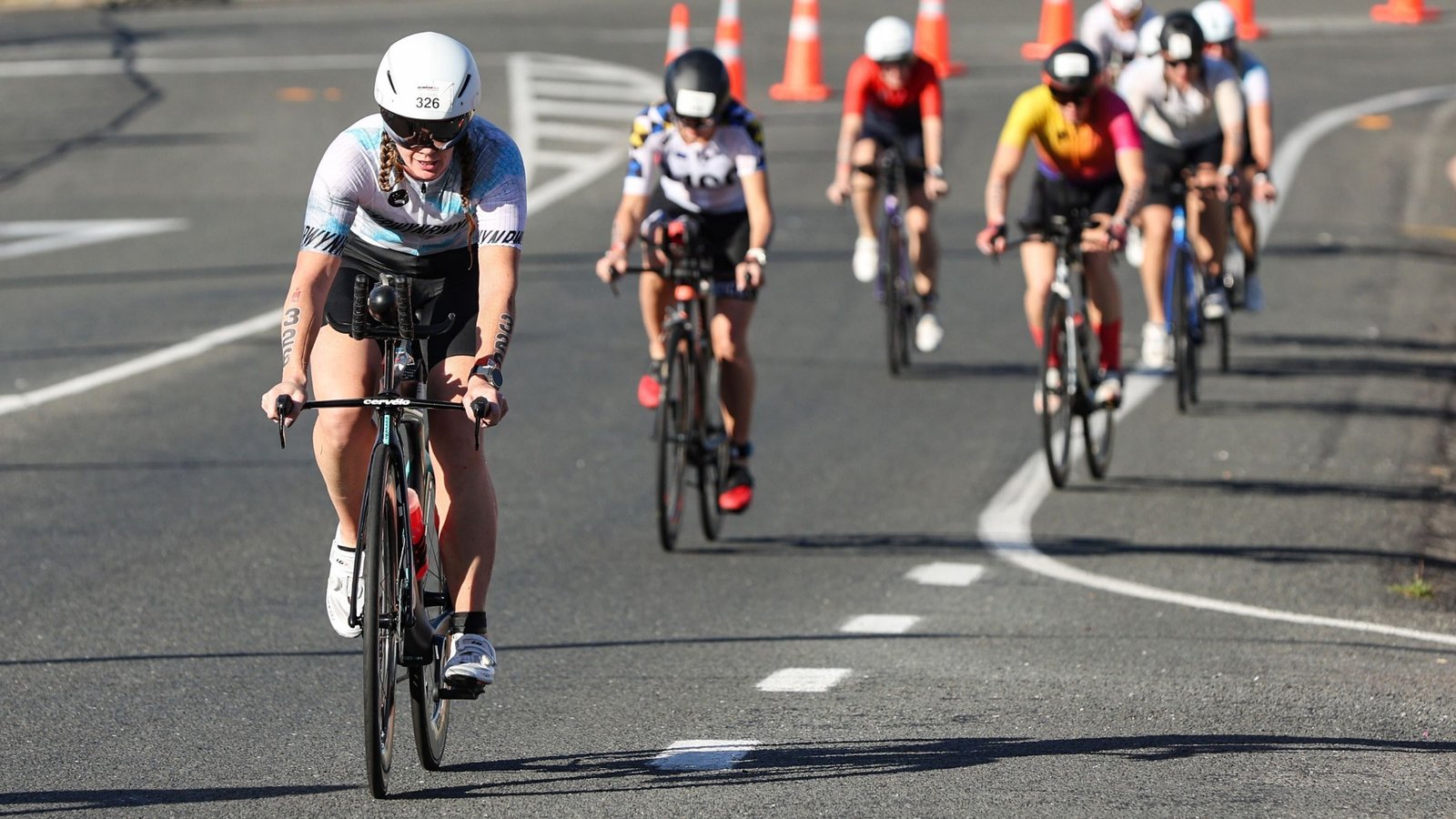
Drafters, beware: RaceRanger, the anti-drafting technology previously limited to professional triathletes, is set for its first whole-field age-group rollout at Tauranga Half and Challenge Wanaka in 2027. This marks RaceRanger’s first step out of pro-only racing, equipping every age-group triathlete’s bike with the draft-detection system for the January and February 2027 races.
The system has already been used in over 100 professional events since 2023, including the Ironman Pro Series and the T100 World Tour, and was tested in 2025 with a select sample of age-groupers at Challenge Wanaka.
Though its initial use was for enforcing draft zones, more features have been added over the years; now, RaceRanger is equipped with technology for supporters to track their athlete’s real-time location on the bike course. It has also proven to be a critical safety dimension for race organizers, allowing them to locate athletes in need during medical emergencies.
But its primary focus remains ensuring fair racing, and of course, there are people looking to cheat the system. The expansion of RaceRanger to the age-group ranks has ignited a “rumor mill” among athletes across the internet seeking ways to evade the detection system. Speculation centers on high-tech methods like “stealth paint” and strategic bike positioning to stay just outside the measured draft zone.
However, James Elvery, CEO and co-founder of RaceRanger, is clear, telling Triathlete this week that “There is no escape from the technology’s watchful eyes, and any attempt to manipulate the system will result in disqualification and severe non-sportsmanlike conduct bans.”
Why “radar-avoiding paint” is useless on RaceRanger
Radar-Absorbent Material (RAM) coatings, commonly referred to as radar-avoiding paint, are substances engineered to reduce an object’s radar signature – typically in weapons defense. By utilizing magnetic oxides or iron-based particles in paints or adhesive coverings, these specialized treatments absorb radar waves and dissipate the energy as heat.
In military applications, this allows boats and aircraft to operate in stealth mode. In civilian life, these substances are used by some as aftermarket treatments on vehicles to escape police radar guns for speed limit enforcement, despite legality issues and no evidence of effectiveness (just ask the Mythbusters).
Could the same principle apply to triathlon bikes? Nope, says RaceRanger. For one simple reason: Rumors of using “stealth paint” or special carbon finishes to avoid detection are unfounded, as RaceRanger is not a radar system that detects objects using radar.
“What your bike is made of doesn’t make a difference,” Elvery says. Instead, the rear devices on one athlete’s bike are designed to listen specifically for messages coming from the front devices of the athlete(s) behind. Because the system relies on device-to-device communication rather than reflective materials, painting your bike will not grant you invisibility – but it’ll certainly increase weight and expense.
Why strategic positioning fails against RaceRanger
Another popular theory involves riding in what some triathletes are describing as a “buffer zone” to gain an aerodynamic advantage without triggering a penalty. The suggestion that riding laterally, just out of range of the RaceRanger device in front of them, will evade the system while still staying in the front rider’s draft zone.
Elvery explains that the system is designed to defeat this by measuring backwards from the rear device in an arc. While he concedes that, in theory, two athletes could sit side-by-side 20 meters apart on an extremely wide road and not be classed as drafting, they would also not be gaining any draft benefit at that distance. In practice, the system’s detection arc reaches the sides of the road long before an athlete could sit out of range and still gain an advantage.
The message is definitive: There is no escape from the system. (Sorry, drafters.)
How will RaceRanger roll out age-group draft detection?
Continuing the protocol established for professional events in early 2025, athletes will be responsible for installing their own RaceRanger devices on their bikes, much like they install their own race numbers. Each athlete will receive a padded envelope in their registration race pack containing a pair of devices, along with a QR code to access written and video guides for proper installation. RaceRanger personnel will also be on hand in the race village in the days leading up to the event to assist athletes.
As athletes rack their bikes for the race, a final technical inspection will take place to ensure every device is properly fitted and operational. After the cycling portion of the race concludes, staff will retrieve the units from the bikes while the athletes are out on the run leg.
Elvery says the rollout of RaceRanger may mean future age-group fields will be organized into categories: a competitive group, utilizing two devices for active policing and live remote monitoring by race officials, and a participation group, equipped only with a rear unit.
In this tiered system, the rear lights for the participation group would remain inactive unless they are positioned directly in front of a competitive athlete who is following them. Regardless of their category, all participants will benefit from the system’s safety features and live tracking capabilities. For the initial two events, however, the process will remain uniform for all participants to ensure simplicity.
Will RaceRanger anti-drafting devices be used in Ironman?
Challenge has long been the leader in anti-drafting initiatives, as they were the first to roll out a 20-meter draft zone for age-groupers, the first to use RaceRanger in pro racing, and the first to test (and now, implement) the devices in age-group races. Given that Ironman followed suit on 20-meter draft zones and RaceRanger in its pro series, it’s possible we’ll see adoption in the age-group race, though that was not part of today’s announcement.
“There’s strong demand for the drafting detection side of the system, particularly from the competitive end of the field,” Elvery says.
“The live tracking is something that everyone can appreciate, but hasn’t been made widely available in triathlon to date. In everything we’re doing, we’re laser-focused on elevating the athlete race experience and are in conversation with a number of other events and series globally about how to bring whole-field RaceRanger to the sport as soon as possible.”



