
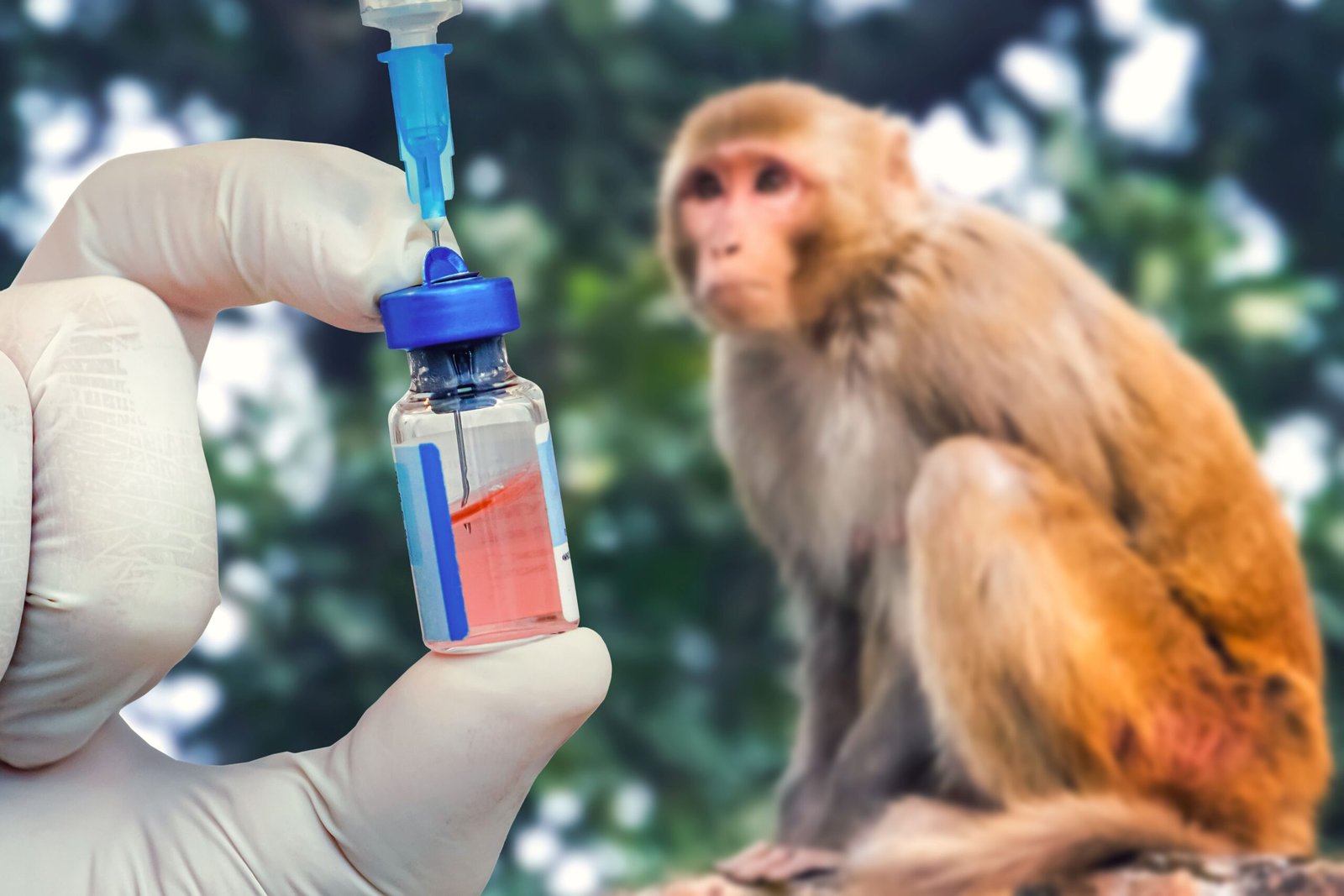
A new bipartisan bill could end the import of primates for U.S. research, targeting the roughly 20,000 monkeys brought into the country each year for laboratories or their suppliers.
Sponsored by U.S. Reps. Greg Steube, R-Fla., and Dina Titus, D-Nev., the Preventing Risky Importation of Monkeys to Avoid Toxic Exposures (PRIMATE) Act (H.R. 8471) aims to reduce the risk of introducing dangerous pathogens and strengthen U.S. biosecurity, according to an April release from Steube’s office.
The bill would ban the import of nonhuman primates except for limited, clearly defined exceptions, including accredited zoological institutions. U.S. Customs and Border Protection would deny entry to prohibited shipments, with violations resulting in $50,000 fines and the forfeiture of illegally imported primates.
“Americans shouldn’t have to worry about dangerous diseases entering our country through imported primates from countries we don’t trust to handle biosecurity risks,” said Rep. Greg Steube in a statement. “This bill is about protecting public health, strengthening accountability, and ending an outdated trade practice that risks safety at the expense of the American taxpayer.”
People for the Ethical Treatment of Animals (PETA) announced its support for what it called “groundbreaking” legislation. The organization said its research found an increase in monkeys imported into the U.S. carrying tuberculosis, shigella, malaria, herpes B, and other dangerous pathogens, and highlighted exposure events at primate facilities in a Michigan laboratory in 2023 and in the federally funded National Primate Research Centers.
“Every year, tens of thousands of monkeys are funneled into the United States through a global supply chain that is inherently unstable, opaque, and a public health risk,” said PETA Chief Science Advisor for Primate Experimentation Lisa Jones-Engel, Ph.D. “PETA applauds Reps. Steube and Titus for recognizing that state-of-the-art research doesn’t need this pipeline, and that it’s time to shut it down.”
The FDA has also been adjusting its guidance to reduce the use of animal testing. In April 2025, the agency announced it was moving away from animal models for investigational new drug (IND) applications for new monoclonal antibodies and some other drug candidates, with the potential to replace such testing with new approach methodologies (NAMs), including computational models, human cell lines, and organoids.
In March, the FDA’s Center for Drug Evaluation and Research (CDER) released new draft guidance that drug approval applicants are welcome to submit data from NAMs, with the National Institutes of Health (NIH) pledging $150 million to animal alternatives. But experts warn there is still a long way to go to eliminate animal testing.
Steven Bulera, Ph.D., chief scientific officer for safety assessment at contract research organization Charles River Laboratories, echoed caution in assessing the FDA’s progress. “The transition to NAMs is evolutionary rather than revolutionary,” he told Fierce Biotech in a statement.



