
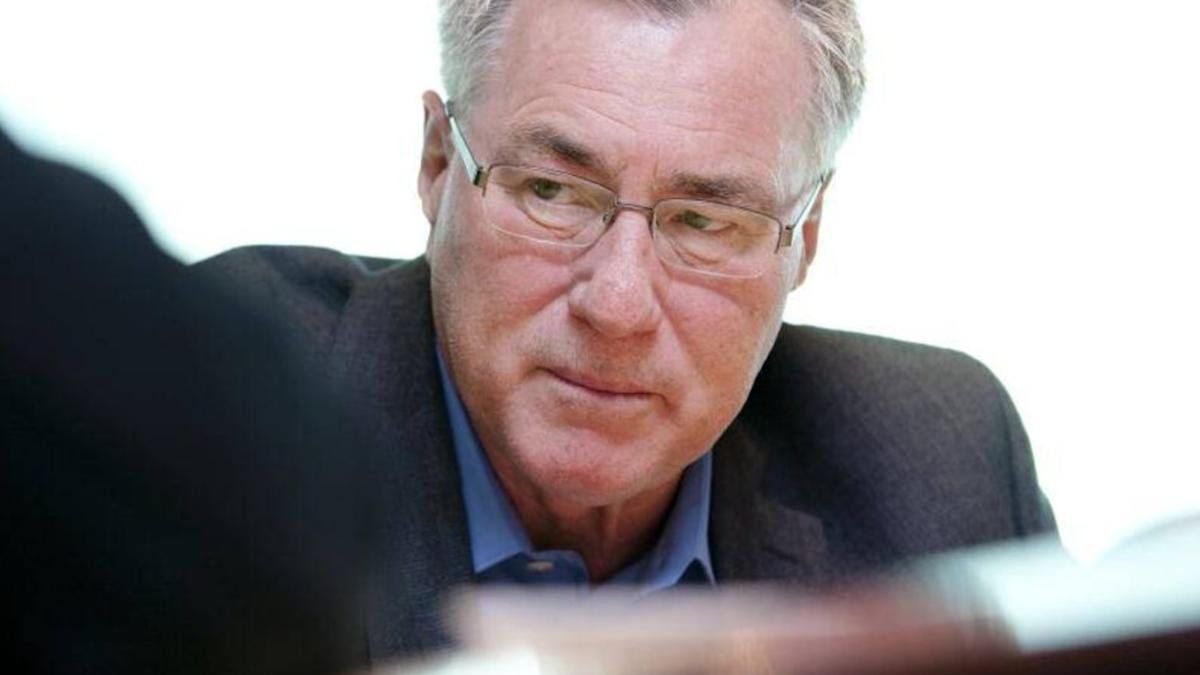
Gold has had one of the greatest two-year runs in its history and the man who saw it coming says it’s just getting started.
Eric Sprott, 81, was at his vacation rental in San Jose, Costa Rica in late January when Forbes checked in with him. This was right around the same time that silver had hit its all-time high of $100 an ounce, and Sprott wasn’t impressed.
Must Read
“I’m not a geologist — I know nothing about rocks, but I know about numbers…if the reward’s a big reward I can afford to lose,” he told Forbes (1). “I think the prices are going much higher, quite frankly. I think silver can easily go to $200, even $300. I think gold could go to $10,000.”
Days later, silver dropped to $76 and gold had pulled back below $5,000, but Sprott was still unfazed.
Such equanimity is easier when you’ve spent four decades being right about precious metals. Eric Sprott doesn’t claim to be a geologist, even after decades of success in the mining sector. When asked how he finds the next billion-dollar play, he keeps it simple: “Numbers took me there, numbers. You don’t have to be a geologist (3).”
Ray Dalio, the founder of Bridgewater Associates and one of the most closely watched macro investors in the world, has been making the same argument for years — that debt-laden governments inevitably devalue their currencies, that bondholders are the last to know and that gold is where you go when you stop trusting the math. He recommends as much as a 15% portfolio allocation (4) in gold.
Sprott began investing in gold and silver in the 1980s and has built a net worth Forbes now estimates at over $3 billion (2) — with 98% of it in gold and silver. His bets in the sector have grown four-fold in just two years.
What Sprott actually thinks is happening, and why
Sprott buys gold because he has a specific view about governments.
“I think all of us know that governments have been quite irresponsible in terms of the financial system and the printing of money and the overspending,” he told Forbes. “Every government, whether it’s Canadian, US, UK, Japan, you name it, they’ve all overspent. They just think that if you can print money, let’s use the printer.”
Source: finance.yahoo.com



