
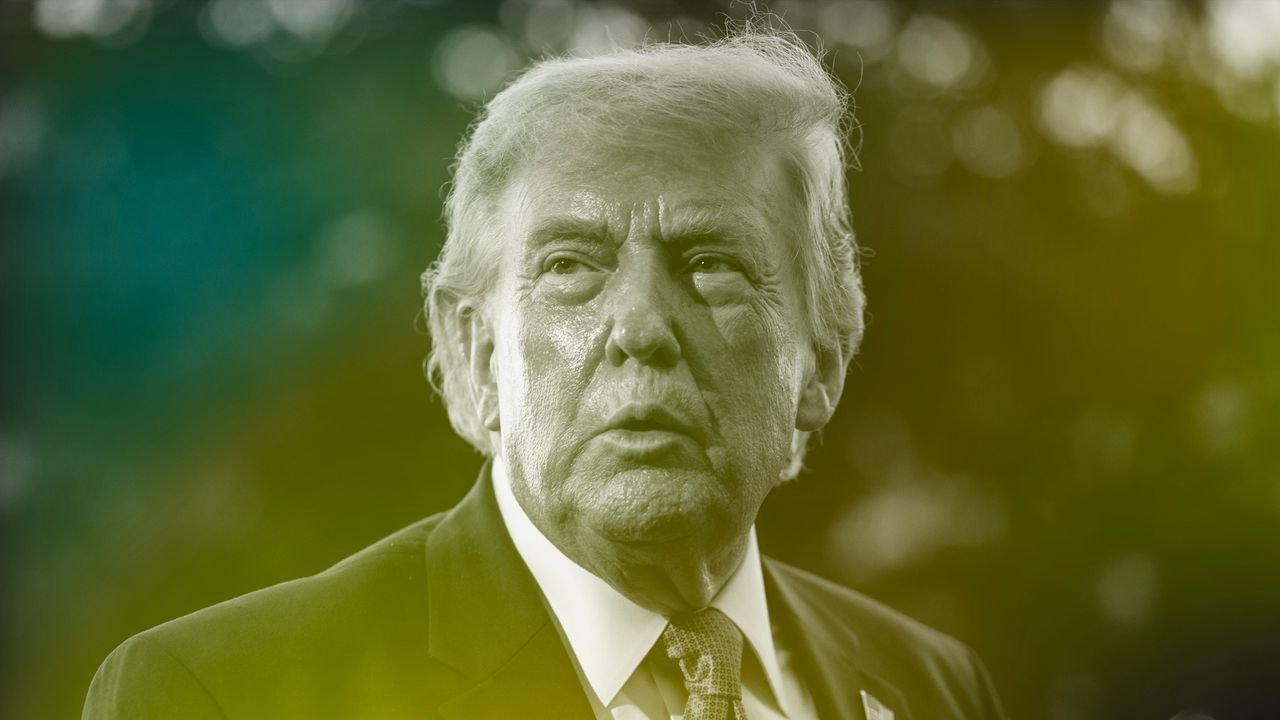
That honor surely goes to the Justice Department’s settlement of a ten-billion-dollar lawsuit that Trump brought against the I.R.S., demanding recompense after his tax returns were leaked by an outside contractor. The most publicized element of the settlement was the establishment of a $1.8-billion “Anti-Weaponization Fund” that appears poised to reward allies of the President who claim to have been victimized by the federal government. Likely of more direct financial consequence to Trump was another part of the agreement, in which the I.R.S., which is part of the Treasury Department, agreed to grant him, his family, and his businesses immunity from any tax claims or charges arising from ongoing tax audits of the family and its business. This grant appears to be sui generis. Danny Werfel, who served as commissioner of the I.R.S. from March, 2023, to January, 2025, said that he was aware of no precedent for the agency agreeing “in advance to permanently forgo examination of previously filed tax returns for a specific person or business.”
I asked Painter if he could think of historical parallels to these latest developments. He couldn’t. “Nixon had his issues, but I don’t think there is anything like this,” he said. “The President is specifically precluded from getting any financial favors from the Treasury while in office.” Painter was referring to the domestic-emoluments clause of the Constitution, which bars the President from receiving any compensation from the government beyond his salary. Critics have focussed on the prospect of Trump, or members of his family, receiving money from the anti-weaponization fund—something that Vice-President J. D. Vance, for his part, has said won’t happen. But the immunity grant from the I.R.S. demands close inspection, too. Notoriously, Trump paid barely any taxes for many years, and he appears to have been under audit for much of that time. If he does owe back taxes, the I.R.S is agreeing to save him a great deal of money—something that, to Painter’s eye, amounts to a blatant contravention of the emoluments clause. “The Founders anticipated this type of challenge,” he told me.
Last week, Trump said he “wasn’t involved” in the legal settlement with the I.R.S., which, in any case, is only the most recent chapter of a long-running story. He is still promoting crypto while a firm he co-founded, World Liberty Financial, does billions of dollars’ worth of business in the industry. He’s preparing to host the annual G-20 summit at his golf resort in Doral, just outside Miami. And his Administration is busy rewarding businesses and individual donors with access and favorable actions. Setting aside the issue of why more Americans aren’t out protesting all this self-dealing, the burning question is what can be done to contain it and make sure that future Presidents can’t repeat it. Ethics experts have a long list of suggestions.
“First and foremost, Congress needs to do its job as the first branch of government and a check on the President,” Donald Sherman, the head of the watchdog group Citizens for Responsibility and Ethics in Washington, told me. “It could say, ‘We are not going to confirm any of your appointees until you end this self-dealing with the government. You are not going to get a dime for your ballroom and your other priorities.’ ”
True and admirable as these sentiments are, they run into the reality that Republicans control Congress. For at least some of them, the thought of January 6th rioters who stormed the Capitol receiving taxpayers money seems to be a grift too far. Senator Bill Cassidy described the $1.8-billion anti-weaponization fund as lacking “legal precedent or accountability.” Senator Mitch McConnell called it “morally wrong.” Senator Thom Tillis called it “stupid on stilts.” But it’s worth noting that none of those three senators will be back next year, and it remains to be seen if Republicans take any definitive action to block the fund.
Even if they did, that wouldn’t resolve the broader issue of restraining Presidential power and preventing corruption. “I think after Trump goes, we need a serious reset,” Painter said. He brought up the post-Watergate era, when, in response to revelations about how Richard Nixon had misused campaign funds and directed the I.R.S. to investigate his enemies, Congress passed the Ethics in Government Act of 1978. Among other things, this bipartisan legislation mandated financial disclosures by government officials, including the President; established the Office of Government Ethics; and created a mechanism for the Attorney General to appoint a special prosecutor to investigate wrongdoing in the executive branch. “There was a real effort to clean things up,” Painter said. “Over the years, it all got steadily eroded. Biden didn’t fix it, and Trump has trampled on it.”



