
The interview is being published in conjunction with the Blu-ray release of ‘New Love in Tokyo’ by Kani Releasing.
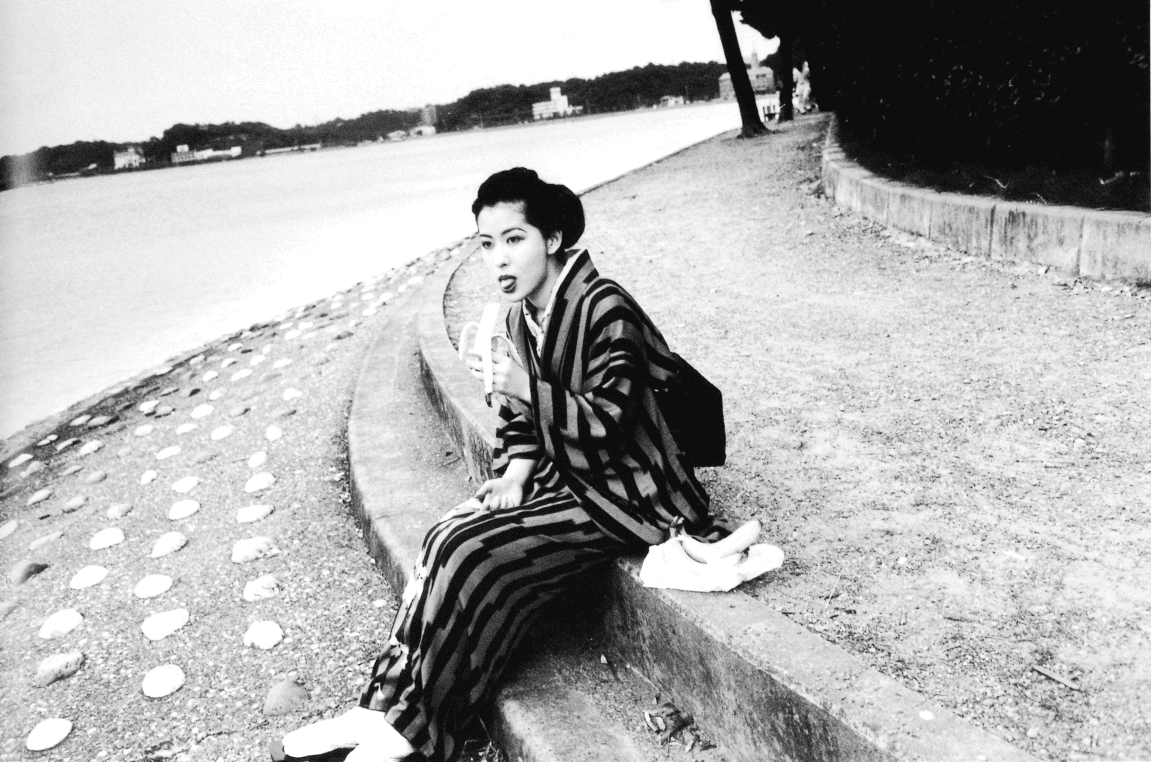
The photographs are published courtesy of the office of Nobuyoshi Araki, with special thanks to Kei Shimamoto for his kind assistance.
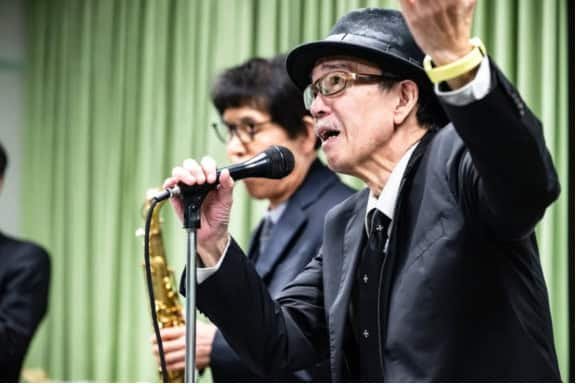
Kei Shimamoto is the founder and core member of Pathos, serving as its vocalist, lyricist, and harmonica player. Born in 1952, he belongs to the so-called shirake generation—a generation marked by disillusionment with the times. It wasn’t until after turning fifty that songs began to flow spontaneously into his mind, prompting him to pursue a career as a singer. He made his CD debut in October 2003. Under the pen name Namedaruma Oyakata, Shimamoto has also established himself as a writer in the adult entertainment industry, earning a dedicated following among enthusiasts. He continues to contribute articles to various newspapers and magazines. His dream is to one day be recognized for his music—to have someone ask for his autograph as a singer—embodying the image of a truly melancholic oyaji (middle-aged man). A longtime collaborator of Araki Nobuyoshi and Suei Akira, both of whom are iconic figures in the erotic culture of Japan’s Showa era
Could you go back in time and tell us about your career?
When I think back to thirty years ago now—I was just overwhelmingly busy. I was writing restlessly, especially for evening newspapers and weekly magazines targeted at adult readers. That was the golden age of sports papers—Nikkan Sports, Tokyo Sports, Sponichi, Nikkan Gendai—I had columns running in all of them. Every day, I’d roam the entertainment districts, often with a young female photographer, conducting interviews with women, sometimes just chatting, sometimes sketching them when no photographs were available. I did everything myself, even the illustrations, like a one-man information shop. I ended up with so much material—so many stories, encounters, and moments—that I wanted to distill the most memorable into a single book. I have been friends with Araki for nearly 50 years, so when I told him I wanted to publish it, he immediately agreed. That’s how the book was born.
Looking back, it really turned out to be something special. A good friend of mine helped with the foreword and the wraparound band for the book. The book design was handled in-house. Once the structure started coming together—bam!—a film proposal came almost immediately. Things progressed so fast it was almost surreal. What’s more, the director was Banmei Takahashi, someone I had admired as a director.
How did your collaboration with Araki start and develop over time?
Akira Suei, who at the time was the editor of the pop comic Kanden King and hosted underground storytelling salons, served as the bridge between me and Araki. At that point, I was working as a freelancer—mostly illustrating books and taking on any job that came my way.
Around that time, Suei started working as an editor at a publishing house, launching new erotic magazines at a relentless pace. He brought in Araki, and I soon found myself working alongside him. Araki was already incredibly busy, with little interest in commercial photography. He intentionally steered clear of advertising work. Having left Dentsu, where he worked as a promotional photographer, in his late twenties, he went freelance, determined to create something different—something more personal and expressive.
Eventually, Suei asked me to start a regular series, encouraging me to seek out unusual places and people, bringing back stories that no one else was telling. It was during the bubble era—an electrifying time when the entire industry was supercharged with energy and ambition.
Avantgarde and underground art of that time is often branded scandalous. Do you have your own definition of a scandal?
There’s something fascinating about how certain Western countries seem drawn to this kind of material. Artists like Nobuyoshi Araki or Shuji Terayama could be branded ‘scandalists’—those who cross lines and push boundaries, creating work that’s not merely provocative but that challenges the very definition of art itself.
Could you tell us about the genesis of the essay book ‘New Love in Tokyo’
Although the book wasn’t a direct commission from Suei, it emerged from the same creative spirit.
Later, an editor suggested that I gather the various essays and articles I had written over the years and turn them into a cohesive book. So, I went through everything, selected the pieces that still resonated, rewrote and reshaped them—and that became the manuscript.
Everything in the book is based on real events—nothing is fictional, except for the fact that the women featured in the photographs aren’t necessarily the same as those mentioned in the essays. The intention wasn’t to mirror the text literally but to have Araki evoke the atmosphere—the emotional world—we were trying to convey. Without that, the publication wouldn’t have been complete. The title ‘Le Nouveau Monde Amoureux’ is actually taken from Fourier’s work.
There are 66 essays in total, each with its own interviews and setup. I’ve always loved the American TV series ‘Route 66’, so the number was a subtle nod to that. Much of the original material had been published before in various outlets, but I reimagined and reworked it specifically for this book—something more complete, more enduring.
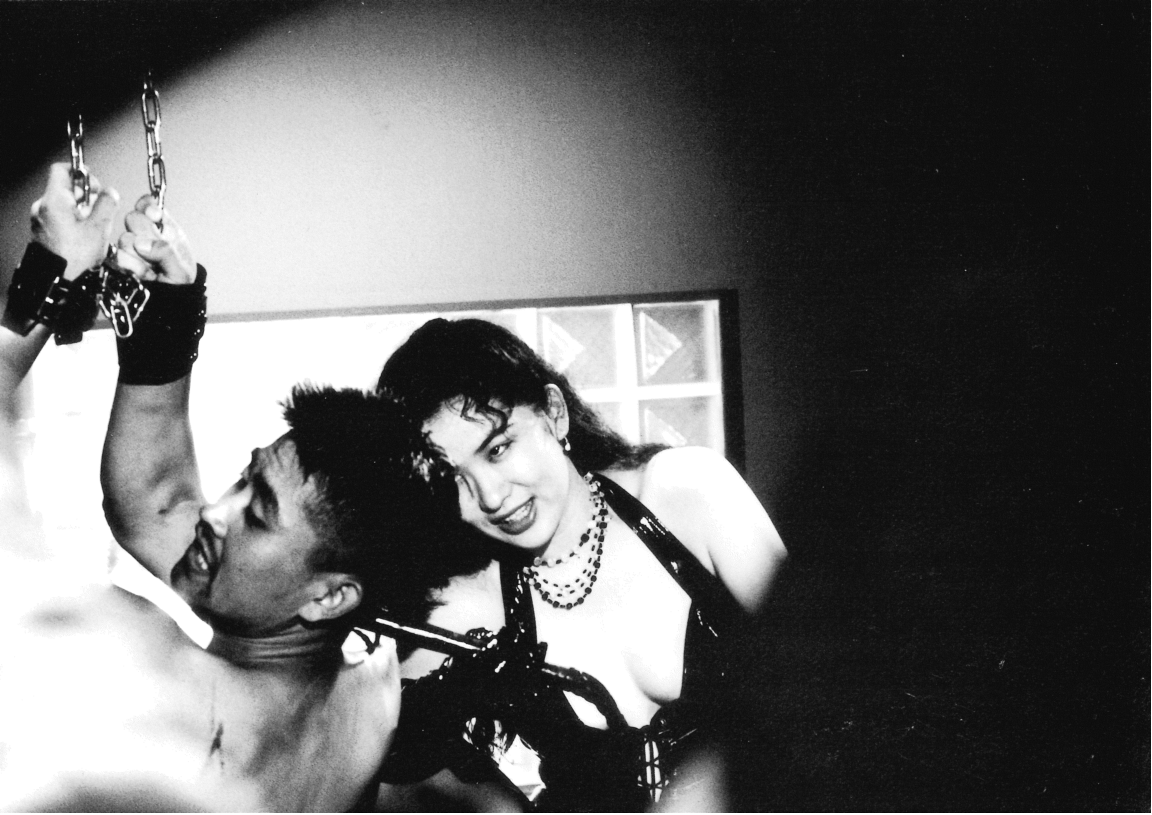
While the film follows a completely different storyline, it still references various pieces from the essays.
Who came up with the structure for the film to take elements from different stories and weave them into a new structure?
I believe this idea came from the producer who was incredibly passionate about it. Some of the lines are used verbatim in the film, but they’re recontextualized helping to create a new narrative.
How would you juxtapose ‘New Love in Tokyo’ to Ryu Murakami’s ‘Tokyo Decadence’?
‘Tokyo Decadence’ feels grim whilst our film is more optimistic, despite dealing with a heavy subject like SM. I think the reason for that is that director Banmei Takahashi didn’t approach it in an overly dramatic or heavy-handed way. All in all, he brought a breath of fresh air to the erotic genre.
What was your first impression of Sawa Suzuki? Her album that came up with the film is visually stunning.
Sawa Suzuki was in her early twenties when she auditioned. There were many attractive girls, but she had that spark in her eye. She wasn’t the most conventionally beautiful, but she had a unique charm. Araki-san and I both saw it—that’s why we chose her.
We were working under very tight conditions. Of course, there are plenty of photos of Sawa Suzuki from that album, especially from the first week. Many of those also appear in the video, but it really feels like that was the limit of what we could accomplish.
How did you manage to outsmart the prevailing Eirin censorship and be able to expose full nudity in the
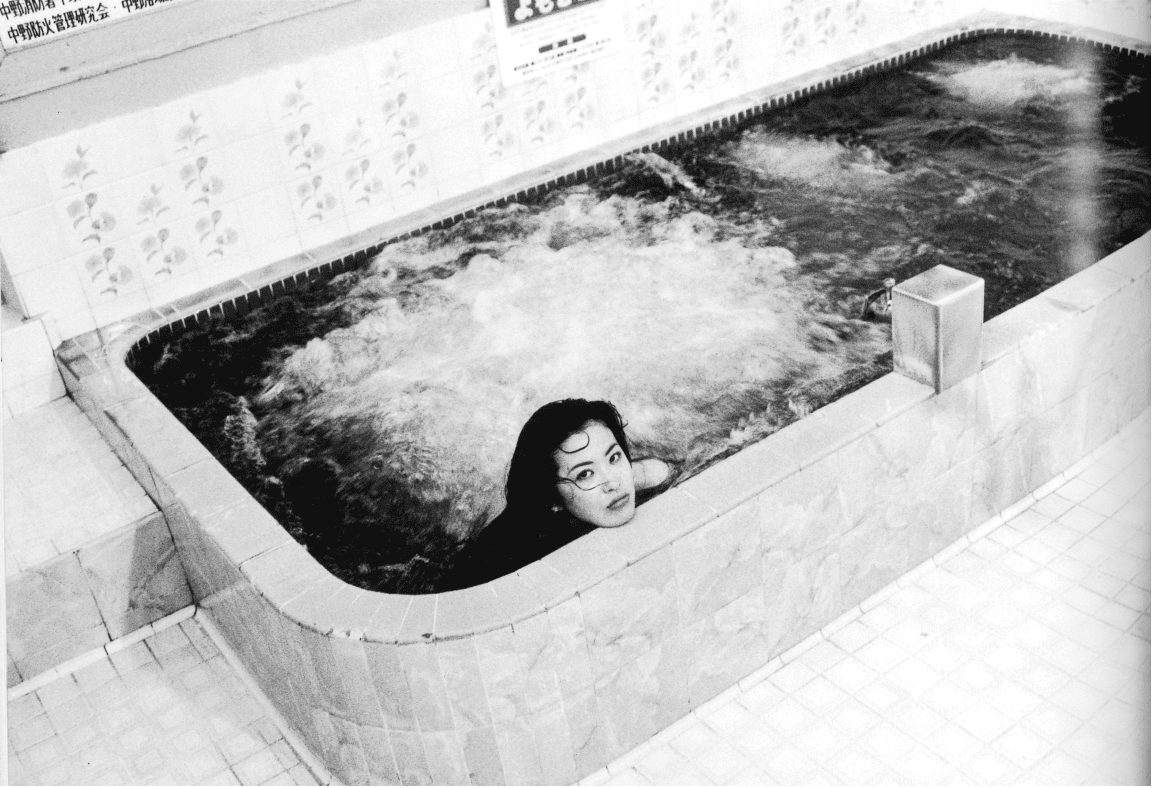
I believe the producers were better informed than I was, as they were responsible for handling all the formalities. That being said, the 1990s in Japan were a time of cultural thaw, particularly regarding what could be shown on screen. In the case of our film, full nudity—still obscured by pubic hair—was accepted because it was treated as an artistic element, closely tied to Araki’s photo album, rather than something pornographic. Around that time, the publication of photographs featuring full nudity in books and magazines had been permitted. Banmei Takahashi was also at the height of his career, recognized as a leading voice in Japan’s erotic cinema. With all these factors combined, New Love in Tokyo became one of the notable examples of how Japanese cinema began to explore the boundaries of nudity and censorship during that period.
Could you tell us more about your collaboration with Araki on the ‘Married Women Erotica’ photobook series?
When the serialization in the weekly magazine first began with Araki-san, it wasn’t something anyone specifically suggested during our planning meetings—it just sort of fell into place naturally.
Araki insisted we wouldn’t shoot unless the participants were real housewives. In other words, he decided to stop using models and pretending they were married women. Instead, he proposed a casting call. In the end we started asking around were there any housewives who might want a little extra spending money?
Of course, some of the women who applied had dabbled in modeling before. But the key criterion was that they were actually married—that was the rule. They were real women living real lives, many with children. We kept arranging shoots with people like that, and soon, the number of participants began to grow. It got to a point where we could continue the series indefinitely.
Ideally, no one would recognize them. But some of the women said that they wouldn’t give a damn. There were lots of different participants of any age. And it wasn’t about conventional beauty either. Each woman had her own unique story to tell.
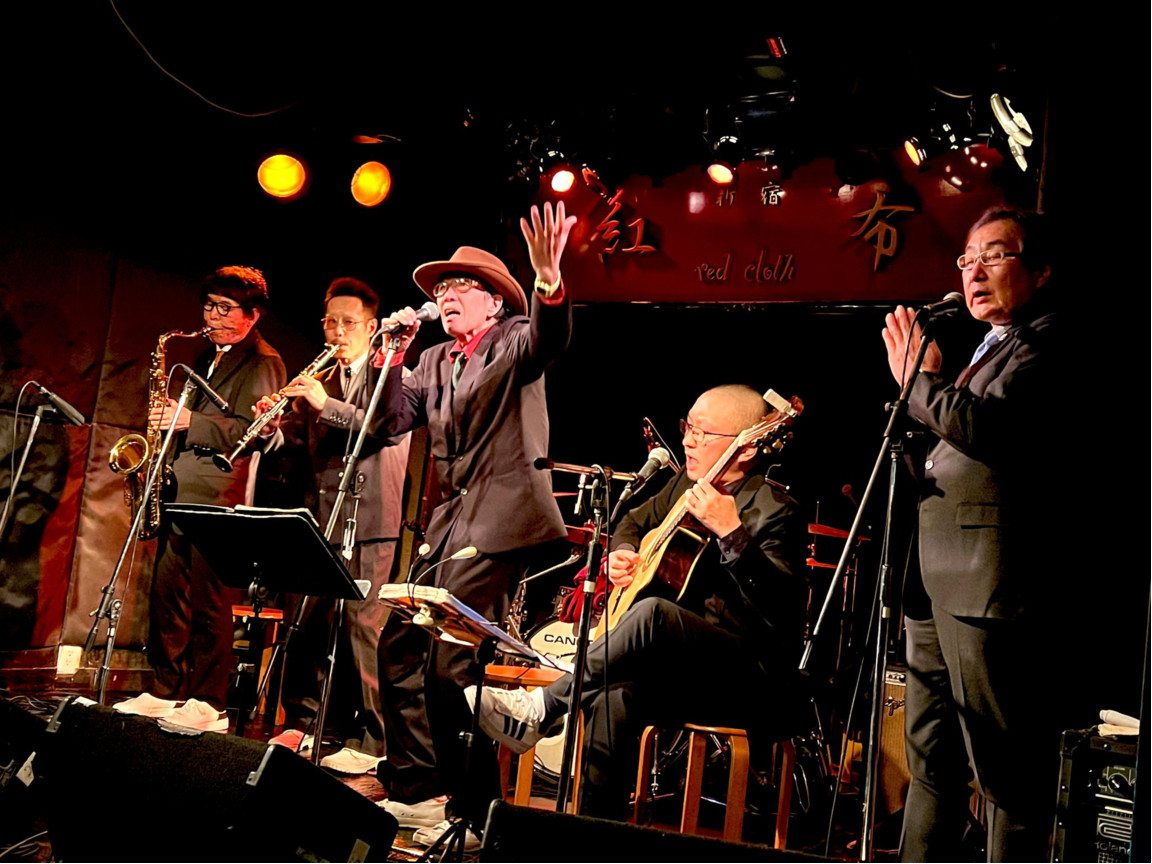
Could you share some insights into your career as a musician with the band Pathos?
Back then, the content we worked on was often laced with sarcasm and irony—sometimes even poking fun at traditional Japanese themes like enka, or delving into darker subjects such as murder cases. It was reminiscent of the short-form TV dramas from the 1960s and ’70s, which aired in 10- to 15-minute segments. These shows often satirized political issues or offered sharp commentary on current events.
The atmosphere of those dramas felt very similar to what we were creating—charged with a sense of urgency and emotional tension. Our aim was to craft something inspired by enka, but with a modern sensibility—a kind of contemporary “banquet” piece. It also served as a reflection of Araki-’s life: a sentimental journey through his personal experiences.
Araki-san also hosted a monthly opening party at his gallery, and each time, he would ask me to perform a new song. This became a tradition—every month, I’d write and perform a new piece. Eventually, I released a CD titled ‘Sentimental Journey’, with all the album photos taken by Araki-san himself.
One particularly memorable moment came when we decided to use the title ‘Sentimental Journey’ for a commercial. I was initially worried it might offend some people, but in the end, it was well received. We used the title without any problems.
What is the current status of erotic magazines in Japan?
Looking back, that Showa-era atmosphere no longer exists. Today, everything is online and easily accessible. The distinctive erotic culture, once wrapped in mystery—like those enticing erotic books and magazines covered in vinyl—that once defined Japan’s media has almost vanished, and that’s a bit sad.
We’re now in the internet age. It’s not like the old days when we worked nonstop on sports newspapers and weekly magazines, barely finding time to sleep, always working while drinking. Now, media consumption happens in entirely different ways. The physical magazines and print media we once relied on are no longer the norm.
If we were to create something today, it would likely need to be through new media formats—online platforms like YouTube, for example. But that’s just the reality now. It’s sad that the old ways—physical print media and the cultural scene that came with it—are disappearing.
‘New Love in Tokyo’ presents a particular view of Japan’s sex parlours. How has the landscape of the Japanese sex industry evolved in recent years?
Even though places like Kabukicho and Shibuya still retain some of the old style of entertainment, they’ve definitely shrunk. Health clubs or host clubs are still around, but they’re a bit more hidden now. They still exist, but they’re not as visible as they once were.
Legally speaking, it’s a bit of a gray zone. The police could crack down on these places if they wanted to, but for the most part, they don’t. Many of these businesses continue to operate under the radar, with a more relaxed approach to customer service.
In the past, districts like Yoshiwara were known for specific types of services, and those services were more visible. Things have changed now, but there’s still a trace of that old culture. They’re more likely to watch something on YouTube than pick up a magazine or visit physical locations.
When I look back, I think the simplest things are the best: a quiet conversation over a beer, with no expectations, just enjoying the moment. In the end, that might be the most satisfying way to feel good about life.
Can you imagine filming ‘New Life in Tokyo’ today, given the presence of intimacy coordinators in modern productions?
These days, there’s much and more people speaking out against sexual misconduct, and public conversations have emerged around figures like Araki. It feels as though we’re living in a time when long-suppressed issues are finally surfacing.
That said, boundaries are crucial. Consent is non-negotiable. Touching someone without their permission or engaging in sexual acts without clear consent is completely unacceptable. But the conversation becomes more complex when it comes to intimacy coordinators. Sometimes, their presence can make a film feel overly staged or unnatural.
Had we brought in an intimacy coordinator to ‘New Love in Tokyo’, I believe the film would have lost its raw, unfiltered quality—its core essence. It can feel like someone other than the director is suddenly guiding the scene. Those spontaneous, vulnerable moments risk becoming overly managed, even sterile.
In other words, certain kinds of expression are becoming increasingly difficult to achieve. I worry we may be entering an era where such creative freedom is no longer possible.
To me, it’s the unexpected—the surprise, the hesitation, the ambiguity—that breathes life into a scene. That’s where true expression lies. If we remove those moments of uncertainty and risk, we lose something essential. That tension, discomfort, or mistakes can lead to powerful, meaningful encounters. That’s the nature of the creative process.
Without room for uncertainty, nothing new can be born. And yet, this is the reality of our times. It often feels like a certain outrage is manufactured. Even when there’s no malicious intent, someone finds a reason to stir controversy—and suddenly, it becomes a scandal.
In that sense, we may be living in a darker era. It feels like nothing you do is safe anymore. The space for freedom of expression has been steadily shrinking. Even filmmakers like Banmei Takahashi can no longer create the kinds of works they once did.




