
By Titiksha Devrani
There was a bias to reckon with walking into “The East Palace”. After all this is peak horror-drama territory, and the hype for this show was already massive, only primed to be hyped up further. Turns out there are notes.
Click on the image below to follow our Tribute to Netflix
The drama soared up the charts relatively fast, especially since it featured Nam Joo-hyuk‘s comeback after military service. The writers helped quite a lot too. Kwon So-ra and Seo Jae-won, the same duo behind “The Guest’s” (2018) slow-burn dread, bring some real backing to the project.
“The East Palace” is set in a fictional version of Korea’s Joseon dynasty and it wastes no time getting into it. There are only 8 episodes to work with, after all. Dropped in media res, the show presents a royal line under a full-blown curse, thirty years in the making. A dying prince, helpless king – the works.
Nobody wants to call out the more-than-major jinx or how much they already know about it. Everyone wants it solved, though. The dying princes repeat a pattern from thirty years back. It’s a pattern the king knows far too well. It’s the one that put him on the throne after all. But when it comes for his own son, denial stops being an option.
Enter Gu-cheon: a man who “died” in his childhood and who can now keep “dying” to enter the world of the dead. And Saeng-gang, the court maid who is not really a court maid, who can also hear spirits. The king throws the two of them together to dig up the serial killer ghost. What they find is more than one evil spirit. It’s thirty years of nobody talking.
Now coming to whether the plot lands. What makes a curse scarier than a monster is its human core. The curiosity of finding what kind of resentment, when grown big enough, curdles into a curse. That core mystery is the point. But “The East Palace” is so busy packing in multiple plots that it loses the main one.
There are storylines left half-finished, characters underused and loopholes that, apparently, nobody had time to fix. Kkeomeoksari, a spirit creature, never really gets used the way its potential, and its adorableness, deserves. There’s no time to invest in one plotline before the next starts. Absolutely no time to bond with characters, who somehow bonded with each other within days. At one point, Saeng-gang admits she was wrong about Gu-cheon, despite the two having barely had time to be anything to each other. They’d basically just met.
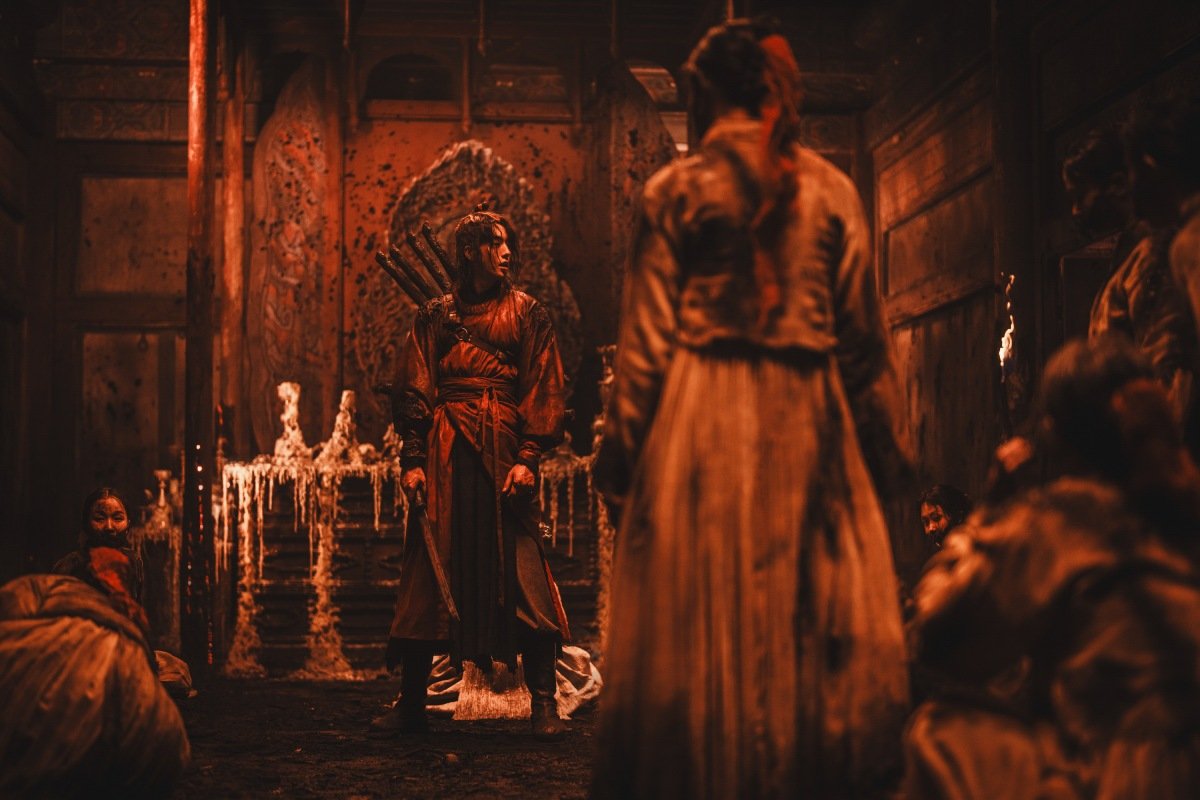
These writers have shown what they can do with “The Guest” (2018). This wasn’t quite that. Weirdly, for a drama moving this fast, entire stretches still managed to drag. The monsters have grip, giant claws and all, but fail to capture attention. Or admiration. One of the spirit monsters is a giant CGI snake, very reminiscent of a British wizarding franchise. Not impressive by a long shot. The cinematography, however, is strong. Director Choi Jung-kyu clearly knows how to frame a shot because the scenery is more than stunning and the wide camera shots look amazing. The same vision could have gone into better effects instead of another CGI creature that feels overly familiar.
The actors carry the show. This essentially brings back the human core the drama kept sidelining otherwise. Cho Seung-woo, as the King, is the clear standout. There’s never quite a certainty over whether to root for him or against him, which is exactly the point. His whole performance is built on withholding, which is more the kind of restraint the whole drama needed. Nam Joo-hyuk delivers a similarly strong performance: his Gu-cheon is layered and executed with real finesse. A huge point in the show’s favor.
Roh Yoon-seo, as Saeng-gang, is the trickier case. There’s real feeling in the performance, and the show gives her agency, which is very refreshing. But her delivery occasionally slips to become too modern for a Joseon court setting. This is her first historical drama and it shows in places.
“The East Palace” had everything it could have wanted. But the one thing it actually needed was patience. Racing through the plotlines, the show treats the human wreckage that made the ghost a ghost in the first place, as a side-quest.
It’s not a bad watch at all. The performances make it worth the eight episodes. But somewhere “The East Palace” is hiding a better show, one that is willing to sit with its emotional center instead of sprinting past it. That’s the one worth waiting for.



