
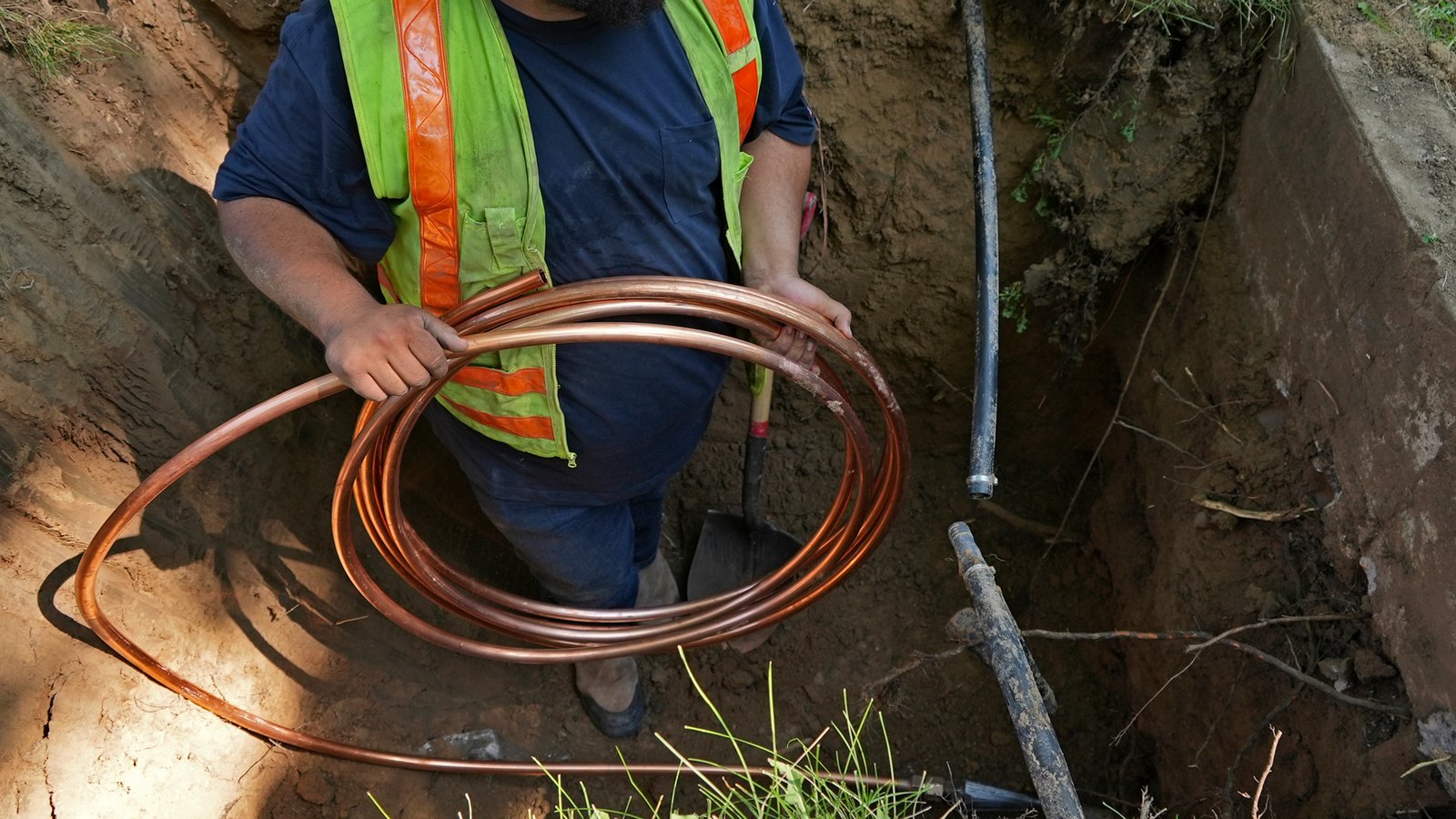
The lead crisis in the city of Trenton is real, and it lives in our homes.
Children with elevated blood lead levels face measurable, lifelong detriments to learning, behavior and earning potential. Lead dust from deteriorating paint accounts for as much as 90% of elevated blood levels in children, and is especially harmful to those under 6, whose developing brains suffer ill effects. Lead also harms pregnant women, older people and anyone living in aging housing stock.

Generations of pottery manufacturing and other industry left contamination in soil and as dust, and the East Trenton neighborhood is so polluted that last year it was designated a federal Superfund site. As Dr. Mona Hanna, M.D., who exposed the Flint, Mich., water crisis, put it: “If you were going to put something in a population to keep them down for generations to come, it would be lead.”
While Trenton’s industrial past makes the problem especially visible in the state’s capital city, lead contamination is a statewide crisis. New Jersey is home to an estimated 1 million-plus lead-contaminated housing units. At least 25% of those are homes to children under 6, the population most vulnerable to lasting neurological harm. From the older row homes of Camden and Paterson to the aging housing stock in Newton and Red Bank, no corner of the state is untouched.
Fortunately, New Jersey has the most robust lead remediation network in the country. At the same time, its existence is threatened by the expiration of federal stimulus funds.
Testers from the community
The story of lead in New Jersey is not one of a community helplessly waiting for rescue. For nearly 45 years, Isles, a Trenton-based community development nonprofit, has been on the ground doing the long, unglamorous work of getting lead out of homes.
We began addressing lead contamination in the early 1980s, when our first community garden projects uncovered elevated levels in the soil. For the past 17 years, healthy homes and lead remediation have been a core part of our mission. Our community health workers, many of them Trenton residents, test more than 250 homes each year for lead, give residents information on how to keep their homes safe and healthy and provide them supplies like water filters or vacuums to help protect their families.

Most important, we also provide services to remove lead paint hazards from homes. Over the past decade, Isles has tested more than 2,500 homes and made nearly 1,000 units lead-safe through free hazard-control work, with many of those homes in the East Trenton neighborhood. Even during the height of the COVID-19 pandemic, we adapted with virtual healthy homes assessments and no-touch lead tests.
Isles is not alone in this work. Across New Jersey, more than 50 community organizations coordinate services through the Department of Community Affair’s Lead Remediation and Abatement Program. More than 1,400 units were made lead-safe in 2025 alone.
Income-qualified residents can receive as much as $30,000 in lead hazard control work for their home or apartment for free. Families whose children test high for lead and receive a Health Department violation notice can receive up to $40,000 to remove the source. Landlords seeking a state-issued Lead-Safe Certificate can take advantage of the program if their tenants meet income requirements.
Lead blood testing for children and pregnant women is covered by Medicaid and available through public health providers, hospitals and county health departments.
Isles has also helped shape lead policy, working alongside other nonprofits to secure long-term state funding for remediation, a law requiring rental units to be lead-safe before occupancy and landmark legislation protecting pregnant women from lead exposure. Far from being a fragmented or hidden patchwork, lead testing and remediation in New Jersey is an active, statewide system that thousands of low-income residents use every year.
Funding countdown
If the infrastructure exists, then, what is the threat?
The threat is a funding cliff at the end of the year.
With federal American Rescue Plan Act funding expiring at the end of 2026, the state’s annual investment in lead remediation will fall back to just $10 million per year without legislative action. That $10 million was a figure set when the program was much smaller, and is wholly inadequate to sustain the network built over the past several years. If that happens, New Jersey stands to lose roughly 100 jobs, see 10-30 community groups shut down or scale back their lead work and leave large parts of the state — including the communities that need help most — without accessible remediation services.
Meanwhile, an estimated dozen children are lead-poisoned in New Jersey every day.
This is a solvable problem, and the funding mechanism exists.
In 2003, the Legislature established the Lead Hazard Control Assistance Fund, tied to revenue from paint sales tax and inspection fees. That fund generates an estimated $19 million per year. The money, though, has been routinely diverted to the state’s general fund rather than used as intended. Fully realizing the lead assistance fund at current revenue levels would allow New Jersey to make 1,400 to 1,600 additional homes lead-safe each year and chart a course to eliminate residential hazards statewide in 20-40 years.
The pieces are in place: certified contractors, trained community-based organizations, an existing dedicated revenue stream and decades of proven results. What is missing is a commitment from the Legislature to protect this infrastructure from collapse before the 2027 state budget is finalized by July 1.
Trenton, and every other New Jersey city built on aging housing stock and an industrial past, does not need to be saved by short-term attention, a federal designation or a one-time grant. The work has been happening here every day for decades, and it will continue. The scale at which it can continue depends on the choices our state lawmakers make in the month ahead.
New Jersey has built something rare and effective. Now is the time to fund it.



