
This article originally appeared on Inside Climate News, a nonprofit, non-partisan news organization that covers climate, energy and the environment. Sign up for their newsletter here.
A Republican-led effort to end the Delaware River Basin’s fracking ban fell short after an amendment to the federal Water Resources Development Act was not brought before a congressional committee.
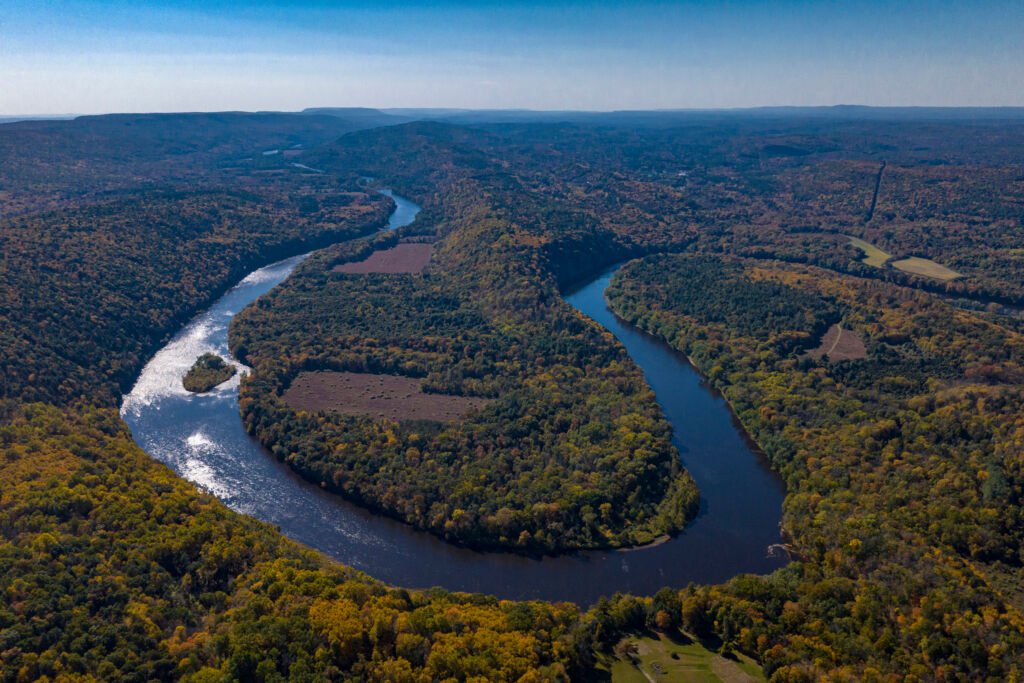
The amendment, authored by Rep. Scott Perry, a Pennsylvania Republican, would have stripped the Delaware River Basin Commission, an interstate regulator, of its authority to stop hydraulic fracturing in the 330 mile-long watershed from upstate New York to the mouth of the Delaware Bay. The region supplies drinking water to millions of people.

The measure would have preemptively stopped any fracking bans by two other regulators, the Susquehanna River Basin Commission in central Pennsylvania, and the Potomac River Basin Compact in Washington, D.C., and surrounding states. Perry’s office did not respond to requests for comment.
It appears that the rules governing the three commissions will remain unchanged, according to the Delaware River Basin Commission, which oversees and manages the water supply and represents Pennsylvania, New York, New Jersey, Delaware and the federal government.
“Our understanding is the House intends to consider WRDA 2026 under a suspension of rules, meaning that no further amendments would be offered and preserving the status quo in the three Mid-Atlantic river basins. But that may be subject to change,” said Beth Brown, a commission spokeswoman.
The House Infrastructure and Transportation Committee advanced the act in a 66-0 vote on July 14.
‘Protecting our communities’
The amendment’s withdrawal prior to the committee vote was an “amazing success,” according to Maya van Rossum, leader of the Delaware Riverkeeper Network, a nonprofit group that advocates for the river and its tributaries.
“We made clear to members of Congress that the DRBC frack ban was critical for protecting our communities, was based on sound science, and the reality of devastation we can see playing out elsewhere in the region and the nation when fracking for fossil fuels happens,” she said.
The amendment targeted a fracking ban that dated to 2010 and was formalized in 2021. The Delaware River Basin Commission concluded that fracking would have “significant, immediate and long-term” risks to roughly 15 million people who use the water for drinking, agriculture and industry. New York City, Trenton, Philadelphia and Wilmington, Del., rely on the river basin.
Perry has tried to overturn the ban before. In 2025, he introduced the DRILL Now Act, designed to prevent the commission from “enforcing regulations more stringent than those set by the State in which they are enforced.”
“We must prevent unelected bureaucrats in the various river basin commissions from restricting Pennsylvanians to exercise their mineral rights,” Perry said at the time. “My legislation ensures that Pennsylvania continues to be a leading producer of natural gas.”
$40 billion locked up
The Marcellus Shale Coalition, a trade group for Pennsylvania’s natural gas industry, said it strongly supported the amendment. The ban “has done irreparable harm to many landowners, and it is past time for Congress to remedy this injustice,” said Jim Welty, the coalition president.
“It has never been the job of a river basin commission to regulate economic activity. It is their job to manage the water resources within their basin for the benefit of all parties,” Welty said in a statement. Last year, the trade group estimated that the ban prevented access to $40 billion worth of gas, calculated at 2025 prices.
Steve Miano, an environmental lawyer with Hangley Aronchick Segal Pudlin & Schiller in Philadelphia, said doing away with the ban would violate the river basin commission’s federal compact, tasking it with ensuring water quality and quantity and resolving any disputes among member states.
“There would still be a legitimate argument that Congress can’t undo this authority of the DRBC to regulate because it was granted that authority by the Supreme Court,” he said. “There could well be a fight in federal court over whether Congress can strip the DRBC of its ability to do something that is in their compact.”
President Donald Trump has called for the accelerated supplies of domestic fossil fuels, citing an “energy emergency.” Environmentalists challenge that assertion.
Ending the ban could poison water far from gas drilling sites, according to Josh Fox, a filmmaker and environmental activist whose 2010 documentary “Gasland” included footage of a resident setting fire to his methane-contaminated kitchen tap water in heavily fracked Susquehanna County in northeast Pennsylvania.
“If you are fracking on the Pennsylvania side, all of that wastewater goes right into the river. You have a buffer zone right now between any fracking that takes place in PA, and the Delaware River. That area is the watershed for New York City, Philadelphia, southern New Jersey,” he said.



