
In today’s era of live-action adaptations of anime, “5 Centimeters Per Second” is among the latest to receive this treatment and does so with satisfying results. Directed by Yoshiyuki Okuyama and based on Makoto Shinkai’s acclaimed anime film of the same name, this feature aims to reimagine the story for a new generation while expanding on elements of the original that the creator felt were incomplete, resulting in a version that feels more fully realized and emotionally resonant. In this reinterpretation, the triptych structure is reshaped into a more continuous narrative flow.
5 Centimeters Per Second is screening at Nippon Connection
The story follows Takaki Tono and Akari Shinohara, whose lives became deeply intertwined in childhood but gradually drifted apart over time. Now adults, they reflect on their memories, reaching back to elementary school, when the two formed a close bond and developed feelings for each other, and fell in love. Their most deeply personal memory is their tender last meeting in Iwafune during a snowy evening. In the present, Akari still looks back on this as a beautiful chapter in her life that she’ll forever cherish, while Takaki remains lost and emotionally distant, a state that has followed him since his teenage years.
What made the original feature so impactful is thoughtfully translated into live action, preserving its emotional and thematic core without resorting to being a redundant shot-for-shot remake. Furthermore, drawing on Yoshiyuki Okuyama’s background in photography, this adaptation maintains a distinct visual identity, even as it recreates some of the anime’s most visually iconic moments. It helps that with its longer runtime, it is given more room to develop both its leads and supporting characters, deepening the drama while humanizing them to great effect.
Moving past those aspects, when viewed on its own merits, Okuyama’s “5 Centimeters Per Second” stands as an emotional triumph. Rather than relying on manipulative tactics, melancholy is depicted with nuanced realism, sincerely capturing the quiet, internal grief that can come with drifting apart over time and with the regrets tied to the past. The stark contrast between the purity of childhood and the anxieties of adulthood further underscores these feelings. It recognizes that sometimes events unfold beyond our control, and that we have to accept this to move forward and achieve a sense of closure.
These elements make “5 Centimeters Per Second” deeply sad, but also profoundly human. As the film highlights, the falling cherry blossoms represent beauty within the moment, but also a growing separation. The fascination with deep space exploration in the narrative thematically represents internal loneliness and points to an uncertain future. Though unrequited love can hurt and the pain may linger over time, people can still continue to live and grow while cherishing those memories and the positive impact those individuals had on their lives. It all comes together through slick direction, greatly elevated by Fumiko Suzuki’s screenplay.
Takaki Tono and Akari Shinohara reminisce about their shared memories and reflect on them in different ways. Yet, both remain equally sympathetic figures, as the story regards them with equal empathy for how they face reality. Hokuto Matsumura and Mitsuki Takahata feel entirely natural in their roles, with equal praise extending to their childhood counterparts, Haruto Ueda and Noa Shiroyama. Yuzu Aoki, who plays Takaki in his teenage years, is also appropriately restrained, reflecting the character’s increasingly distant emotional demeanor.
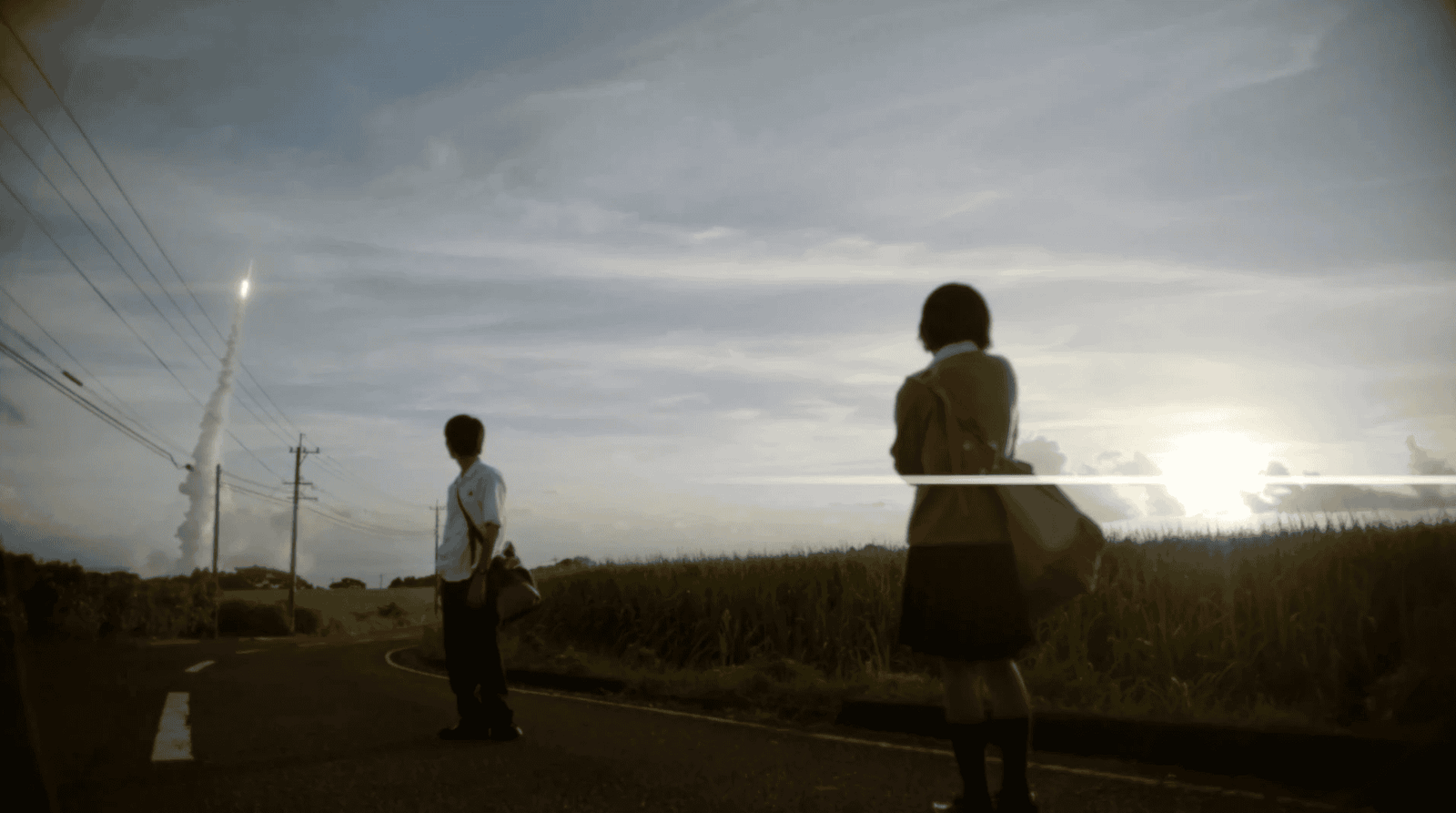
With the other characters given more room to develop, the supporting actors, including Aoi Miyazaki, Mai Kiryu, and Hidetaka Yoshioka, gain more substantial material to work with. Perhaps one of the most striking emotional examples is Nana Mori as Kanae Sumida, whose love for Takaki is ultimately unrequited. The weight she brings to the role makes the iconic rocket launch scene feel just as memorable as it was in the anime, if not even more so.
Along with staying faithful to the anime, Yoshiyuki Okuyama draws on his background in photography to adopt an art direction that is both visually distinct and strikingly beautiful. Cinematographer Keisuke Imamura crafts exceptionally composed visuals that further deepen the film’s atmosphere. Additionally, there are subtle touches of CGI that look nice and never distractingly stick out. Ayatake Ezaki’s music score is minimalist yet no less enchanting, and Kenshi Yonezu’s song “1991” is suitably bittersweet. Masayoshi Yamazaki’s “One More Time, One More Chance,” famously used in Makoto Shinkai’s original film, is also incorporated here.
What Yoshiyuki Okuyama offers with “5 Centimeters Per Second” transcends a conventional anime adaptation. It respectfully honors Makoto Shinkai’s original vision while blossoming into a feature that stands on its own. It’s a visual delight that also excels as a melancholic yet deeply touching story about the pain of growing distance and the quiet growth that comes with acceptance.



