
A few weeks before the horrific events of October 7, 2023, the Israeli Prime Minister, Benjamin Netanyahu, went to the United Nations General Assembly and heralded a new age. He brought a prop to the dais, as he often does—this time, a series of maps of Israel and the surrounding region, one of which highlighted a number of Arab countries in green. These included the United Arab Emirates, Bahrain, and Egypt, which already had normalized ties with Israel, and other nations which, at the time, seemed close to a diplomatic opening with the Jewish state, such as Saudi Arabia and Sudan. The Abraham Accords—the normalization pacts with a handful of Arab states which President Donald Trump had helped broker during his first term—were “a pivot in history,” Netanyahu said. His map was titled “The New Middle East.”
Netanyahu spoke breezily of bringing “prosperity and peace to this entire region” through trade corridors and security partnerships with Arab neighbors. Then he picked up a red marker. “A few years ago, I stood here with a red marker to show the curse, a great curse, the curse of a nuclear Iran,” Netanyahu said, referring to an earlier episode at the U.N., when he had drawn a line atop a cartoon image of a bomb to illustrate the supposed threat posed by Tehran’s enrichment activities. “But today, I bring this marker to show a great blessing, the blessing of a new Middle East, between Israel, Saudi Arabia, and our other neighbors.” He then drew a diagonal line from “Asia” through the U.A.E. to Saudi Arabia, Jordan, and a greater Israel—Palestinian territories didn’t exist on the map—toward the Mediterranean ports of southern Europe.
In the years since, Netanyahu has reshaped the Middle East more than any other leader. But what has emerged bears little resemblance to his professed vision. Conflicts driven by Israel’s security interests—the war against Hamas in Gaza, an extended U.S.-backed bombing campaign against Iran, constant Israeli forays into Syria, and, as part of a campaign against Iran’s proxy Hezbollah, an invasion of Lebanon, where thousands of people have been killed and more than a million forcibly displaced just in recent weeks—convulse the region. The Persian Gulf is not a link between Asia and Europe but a fault line; the crucial artery of the Strait of Hormuz remains blocked by Iran’s embattled rulers, in the wake of the U.S.-Israeli war on their country. In 2023, Netanyahu may have hoped that Israel’s further integration into the Middle East would marginalize the Iranian regime, but the war may have given Iran’s rulers more leverage in the region. They apparently consider the regime’s survival a victory in itself, and believe both that Trump is more impatient for a deal than they are and that their newfound ability to shut the strait is another weapon to deploy when pressured by adversaries. Meanwhile, Israel’s war on Gaza has chilled any prospect of normalization with Saudi Arabia, triggered a warrant for Netanyahu’s arrest from the International Criminal Court, and inflamed global public opinion against his government. Under Netanyahu’s watch, Israel is becoming not the central node in a Middle East stitched together by booming trade but a global pariah.
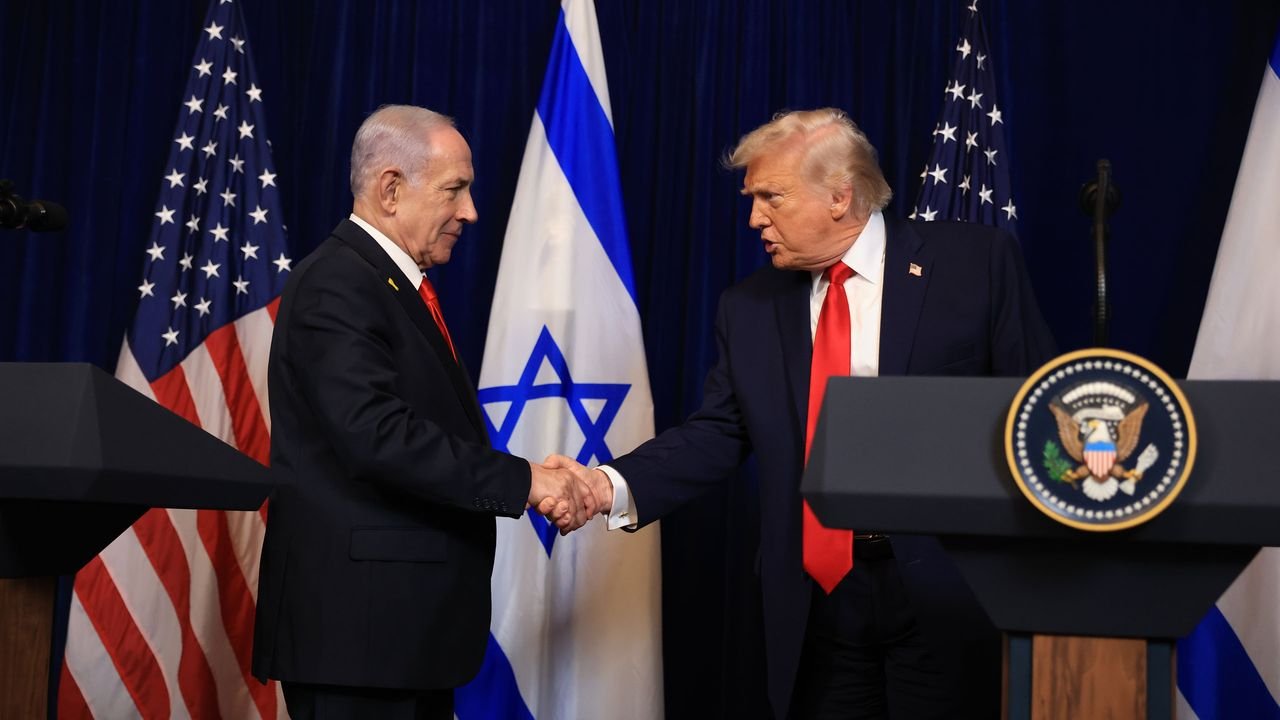
Trump’s own grand plans for the Middle East appear to be crumbling, too. He lamented this week that the protracted talks with Iran are starting to get “very boring.” The President clearly wants a way out of the war, but the rounds of negotiations with a regime that he has failed to defeat have yet to yield one. On Monday, he said that diplomatic progress was being made at a “rapid pace”; by the next day, Iranian officials had suspended the dialogue because of Israel’s expanding campaign against Hezbollah. Axios reported that, on Monday, an enraged Trump had an “expletive-laden” phone call with Netanyahu. “You’re fucking crazy,” Trump allegedly said, according to an unnamed U.S. official summarizing the conversation. Referring to Netanyahu’s ongoing corruption trials, which Trump has advocated against, he reportedly added, “You’d be in prison if it weren’t for me. I’m saving your ass. Everybody hates you now. Everybody hates Israel because of this.” (On Wednesday evening, the State Department announced a new ceasefire between Israel and Lebanon, contingent on the “evacuation” of Hezbollah operatives present in an area of southern Lebanon that is, at present, under Israeli control, and the “complete cessation” of attacks from the militia. On Thursday, the strikes continued.)
The Israeli Prime Minister has clashed with a succession of U.S. leaders, of course, starting with President Bill Clinton, and always seems to come away undeterred from pursuing his maximalist agendas. In the shadow of Israel’s wars, Trump’s Board of Peace, his signature diplomatic project in the region, which was set up last year to shepherd Gaza’s reconstruction, is stalled and bereft of funds, and is looking like the farce that its many critics predicted it would be. During a phone call last month with regional leaders, including top officials from countries such as Saudi Arabia, Qatar, and Pakistan, Trump tried to cajole them into joining the Abraham Accords as part of a broader bargain for regional peace. According to reports, the plan was met with silence on the line. “That vision of the new Middle East with Israel integrated is not on the table now,” Paul Salem, a Beirut-based analyst for the Center for Strategic and International Studies, a Washington think tank, told me. He added that, for some countries in the Gulf, closer ties to Israel may still be a goal, “but it’s not something that can be done with Netanyahu and his current government.”



