
Welcome back to Foreign Policy’s Latin America Brief.
The highlights this week: The new economics of Brazilian soccer, changing Cuban migration patterns, and a far-right surge in Colombia’s presidential elections.
The FIFA World Cup kicks off next Thursday in Mexico City. Before play begins, rosters already reveal a story about the transformation of Brazilian soccer. This year, 25 players in Brazil’s top club division have been called up for the national teams of other countries, more than triple the previous record.
Brazil’s professional soccer sector has long been protectionist. But in the last decade, it internationalized—opening up to foreign players, coaches, and money. This year, the national team will be coached by a foreigner for the first time in decades.
Brazil’s protectionist streak hardened after its third World Cup title in 1970, when officials concluded that “we’ve done it all with Brazilian coaches and we don’t need the rest of the world,” Brazil-based soccer writer Tim Vickery said.
By around 2015, that thinking had changed. Brazilian teams were underperforming in the South American club tournament relative to how much money they had. And Brazil had suffered a humiliating 7-1 loss to Germany in the 2014 World Cup. “It was fairly obvious that Brazilian needed an external shock,” Vickery said.
Brazilian clubs tried out foreign coaches, and one dazzled: Jorge Jesus, a Portuguese coach who joined Rio de Janeiro-based club Flamengo in 2019 and won title after title.
“Brazilian football had gotten very defensive,” Vickery said, but Jesus allotted more players to the attacking wing than Brazilian coaches typically would. “They won in style and swagger,” and “that opened the floodgates for more foreign coaches,” he added.
Brazil’s top league began raising the limit for foreign players that could play for each club during a match, which went from three in 2013 to nine today. In 2021, Brazil passed a law that made it easier for private investors to buy shares in soccer clubs that opted to become for-profit entities.
For international players, “undoubtedly the most important factor is the revenue of Brazilian clubs,” Rodrigo Capelo, a Brazilian sports journalist, said. In 2024, Brazil’s top-division clubs together raked in $1.9 billion, around 10 times the revenue of their equivalents in Chile or Colombia—helped by the 2021 law as well as booming sponsorships from betting companies.
Brazilian clubs began performing better internationally and have now won the top South American club championship seven years in a row. At last year’s FIFA Club World Cup, Brazilian teams beat Paris Saint-Germain, Chelsea, and Inter Milan.
Most foreign players in Brazil are from other South American countries. They can often earn more at top Brazilian clubs than at home and sometimes more than at smaller European clubs. A handful of European players later in their careers have also begun playing in Brazil.
Colombian winger Andrés Gómez, who will represent his country in the World Cup, moved from French club Rennes last year to play for Vasco de Gama in Rio de Janeiro. He told Globo Esporte that playing in Brazil helped him gain visibility, saying, “The Colombian national team coach saw the physical level demanded by Brazilian soccer, which is world-class.”
Brazil’s newfound openness to international soccer personnel and funding is a pro-market transformation in what is still a fairly closed country. Winning streaks by Brazilian teams that moved toward privatization provided fuel for Argentines advocating for their own soccer sector to privatize.
Still, some Brazilian clubs that received big injections of foreign cash since 2021 spent it quickly and are now in financial trouble.
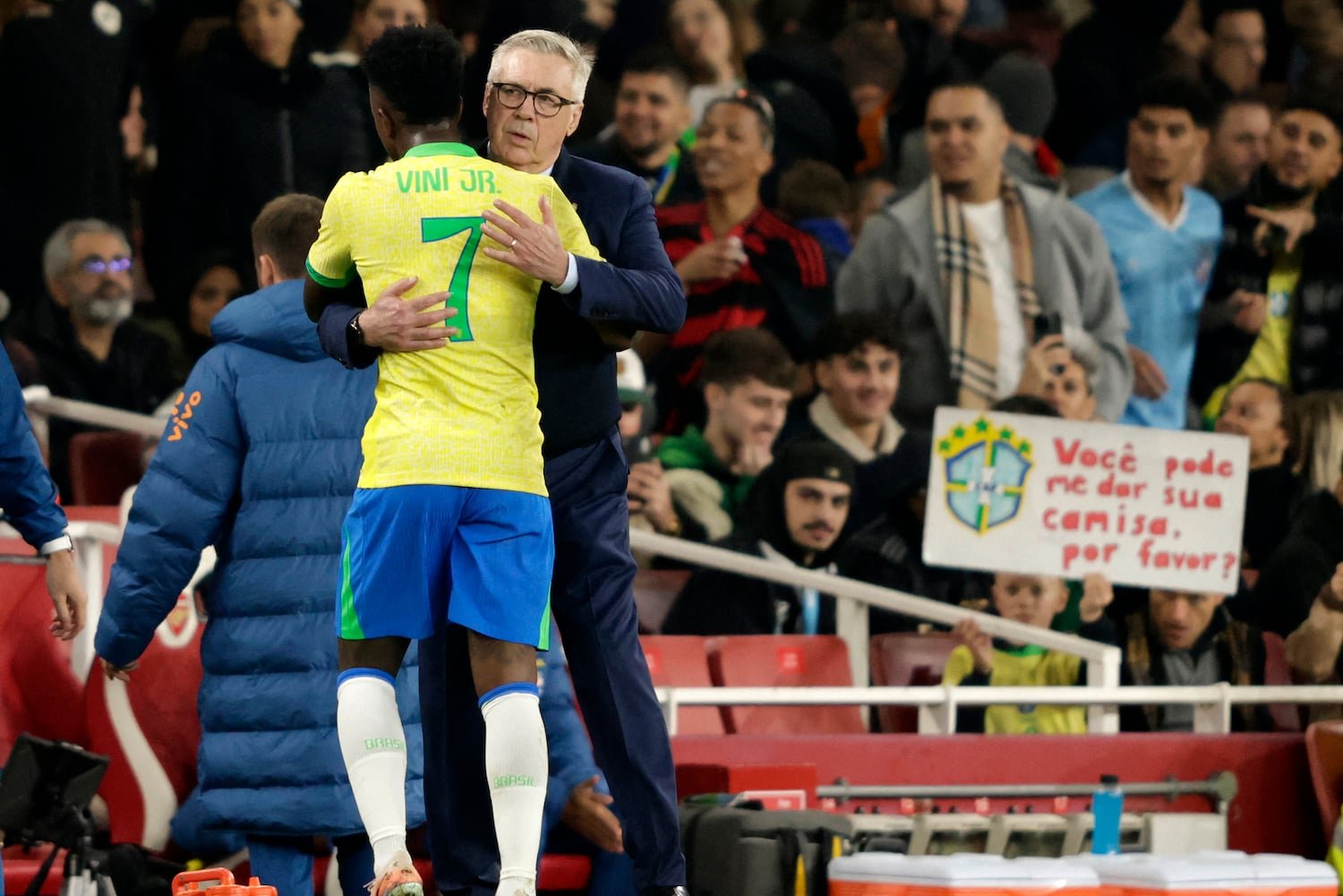
This year’s World Cup may show whether internationalizing Brazilian soccer can help the national team’s performance. The team’s new coach, Italian Carlo Ancelotti, has earned dozens of European club titles. Ancelotti is used to handling big egos and has endeared himself to Brazilians by learning Portuguese.
“I don’t think any Brazilian is unsatisfied with the national team in Ancelotti’s hands,” Capelo said, adding that represents “a strong cultural shift for us.” Still, “I don’t know if he is capable of carrying out a revolution with the current generation of players.”
The world will soon find out.
Friday, June 5, to Sunday, June 7: Acting Venezuelan President Delcy Rodríguez concludes a trip to India.
Sunday, June 7: Peru holds a presidential runoff election.
Thursday, June 11: Mexico plays South Africa in the opening game of the FIFA World Cup.
Cuba’s growing diaspora. Amid U.S. migration restrictions on Cuba and a severe economic crisis, those emigrating from Cuba have sought other destinations in recent years. U.S. border officials’ encounters with Cubans fell by 85 percent from fiscal years 2024 to 2025.
Meanwhile, data published in Foreign Policy last week shows that tens of thousands of Cubans chose to enter or apply for residency in Mexico, Brazil, and Uruguay. Spain, where last year’s numbers are not yet available, has also seen steady growth in Cuban arrivals. These countries all have left-leaning presidents that are not allied with Trump, Diana Roy and Gil Guerra wrote.
Cubans still experience obstacles to accessing basic services in those countries, though. Mexico’s refugee service suffered funding cuts in 2025 due to the withdrawal of U.S. aid, Human Rights Watch reported last week, adding that “the almost complete absence of government support means that many find themselves without access to shelter or food.”
Thousands of Cubans also arrived in Mexico last year because they were deported from the United States, according to Human Rights Watch.
People protest over a lack of chicken amid food shortages caused by blockades in La Paz, Bolivia, on June 3. Marvin Recinos/AFP via Getty Images
Bolivia’s blockades. Bolivian President Rodrigo Paz cut his salary by half and switched out three of his ministers as nationwide protests against his government continue. Paz has refrained from carrying out a militarized crackdown; at one point, he sent in police to clear blockades of main streets in the capital only to see them quickly go back up.
Demonstrators object to Paz’s cuts to government spending and are calling for measures such as raises for teachers. Though they are protesting economic hardship, the blockades are hampering key services and have cost the Bolivian economy an estimated $2 billion so far, according to the country’s National Chamber of Industries.
Unconventional festival. A festival took place in Rio de Janeiro last week to celebrate healthy masculinity. Arts and cultural figures from a rapper to an evangelical pastor took part in panels, musical performances, and workshops with schoolchildren.
At a time when misogyny and far-right content are thriving online, the event aimed to promote how care and vulnerability can lead to better relationships and other benefits, said organizer Gary Barker, of nonprofit Equimundo. “Fear and hate get followers immediately. Peace and love take a little bit longer,” he said.
For years, Equimundo has worked with Brazilian groups, such as Instituto Mapear and Papo de Homem, that try to enlist men to combat gender-based violence. The festival aimed wider: It was paired with a conference that discussed which government and corporate policies could help engage men in work for gender equality, featuring participants from Argentina, Chile, and Mexico.
Though some of the nonprofit’s work involves influencers and digital campaigns, meeting offline has unique value, Barker said: “There is nothing like talking to a wide-eyed 10-year-old.”
What years did Mexico’s national men’s team advance the furthest in the World Cup?
1966 and 1970
1966 and 1986
1974 and 1994
1970 and 1986
Mexico reached the quarterfinals both years. Those were tournaments that—like this one—the country played on its home turf.

Colombian presidential candidate Abelardo de la Espriella speaks to supporters behind bulletproof glass in Barranquilla, Colombia, on May 31.Rodrigo Buendia/AFP via Getty Images
Far-right Colombian presidential candidate Abelardo de la Espriella experienced a late surge in the first round of the country’s presidential election last Sunday, earning 43.7 percent of the vote and advancing to a June 21 runoff against left-wing Iván Cepeda, who won 40.9 percent of the vote.
Right-wing candidate Paloma Valencia and centrist Sergio Fajardo followed in third and fourth, respectively.
The presidential runoff will be a fight for centrist voters—and an uphill battle for Cepeda, as Valencia already endorsed de la Espriella. An Atlas Intel poll on Monday and Tuesday found that de la Espriella led Cepeda by more than 7 points, with only 3 percent of Colombians saying they were undecided.
De la Espriella has pledged to cut 40 percent of Colombian government spending, bomb gang sites, and carry out large-scale detentions of people linked to crime groups. Cepeda has pledged to largely continue current President Gustavo Petro’s policies, including large minimum wage hikes and a security strategy that aims to strike cease-fires with armed groups.
Cepeda’s campaign mostly catered to its leftist base, the editorial board of El Espectador wrote this week, arguing that he erred by refusing to attend debates as his campaign leaders behaved with the “arrogance of expecting an overwhelming victory.”
On Sunday, Petro claimed without evidence that the election results were fraudulent, an assertion that Cepeda rejected the next day. How he distances himself from Petro’s communication style and security policies will be key in his chances for the second round, according to analysts.
While Colombia’s centrist politicians did not immediately endorse candidates for the runoff, someone else wasted no time: U.S. President Donald Trump, who posted a lengthy endorsement of De la Espriella on social media.



