
The Trump administration on Wednesday said it was announcing $700 million in “new funding” for mental health and addiction programs, with an emphasis on combating homelessness resulting from severe, untreated mental illness.
But behavioral health experts instantly cast doubt on the claim, identifying the $700 million not as new funding but as the long-awaited release of existing grants that Congress had previously authorized and that the federal government already planned to spend.
Many of the funding notices posted this week by the Substance Abuse and Mental Health Services Administration, in fact, had been delayed several months, worrying state behavioral health officials and local addiction treatment or mental health organizations that rely on federal dollars.
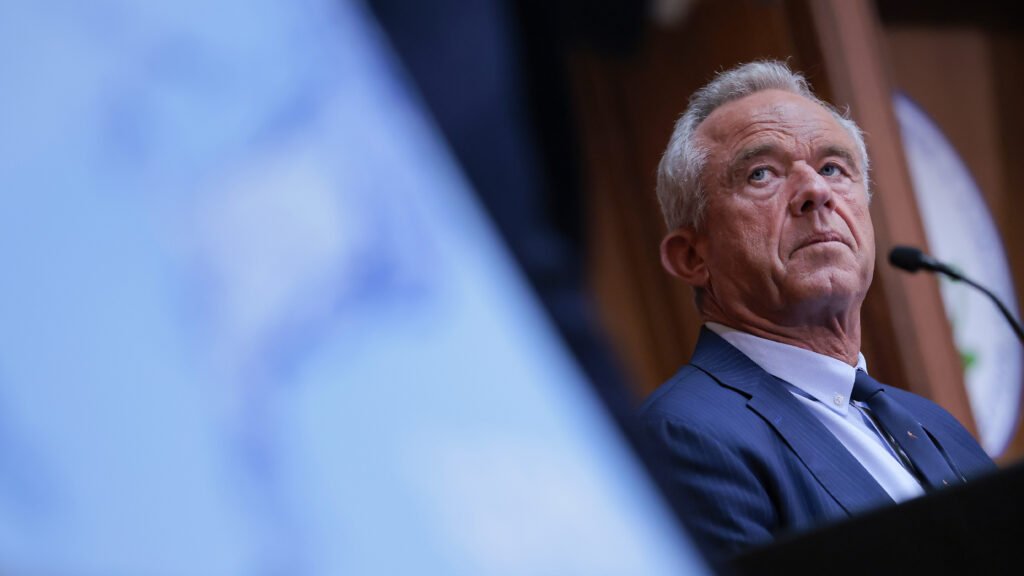
Still, during an announcement in Clinton, Mich., Health and Human Services Secretary Robert F. Kennedy Jr. cast the funding notices as unique Trump administration accomplishments.
“Through more than $700 million in new investments, we are advancing President Trump’s Great American Recovery Initiative and addressing the addiction and serious mental illness that fuel homelessness across America,” he said in a statement.
The SAMHSA funding announcement listed many programs that have existed for years and were previously offered as funding opportunities during the Biden administration, including grants for opioid response in Native American tribes; expanding access to drug courts that offer treatment instead of incarceration; and mobilizing communities to “increase access to long-term recovery support for people with substance use disorders.”
Addiction researchers said they were relieved to see the funding notices posted. However, Andrew Kessler, a behavioral health advocate and political consultant, said Kennedy’s hope that the funding could help develop innovative new approaches ignored the field’s decades of experience. He also pointed out that most Americans impacted by addiction are not unhoused.
“The treatment and recovery community have an excellent grasp on what works. Our evidence base is extensive,” he said. “Our biggest challenges remain a shorthanded workforce, poor reimbursement, and not enough resources to handle the challenges we face.”
The Trump administration did announce $96 million in funding for a new initiative known as Safety Through Recovery, Engagement, and Evidence-based Treatment and Support, or STREETS, which will target substance use and severe mental illness among the homeless.
“STREETS is designed to help people living with addiction and serious mental illness off the streets and into treatment, and recovery and stability,” Kennedy said.
Experts told STAT that the funds for STREETS also appear to be pulled from other existing programs and do not constitute “new funding,” as the administration claims. SAMHSA, the agency within HHS tasked with overseeing most substance use and mental health policy and grants, has not received a funding boost in years.
During the announcement, Kennedy, speaking alongside his Great American Recovery Initiative co-chair Kathryn Burgum, said the Trump administration would stress collaboration with faith-based organizations. Notably, however, the STREETS funding announcement said only cities, counties, and Native American tribal organizations would be eligible for the funding, meaning religious organizations cannot apply directly.
Kennedy also used the opportunity to renew the administration’s attacks on harm reduction, strategies that aim to reduce death and disease among people using drugs without demanding instant abstinence. Many such strategies, like syringe exchange or the use of fentanyl test strips, are widely acknowledged to be effective, while others, like supervised consumption, remain highly controversial.
Broadly, however, the health secretary acknowledged that the funding was unlikely to significantly alter the public health landscape.
“We have a huge drug problem here in our country,” he said. “$700 million is not going to solve that problem. But the good news is, there’s about $50 billion that have been put aside during the litigation by the states against the opioid companies, and that money is now going to be available to the states over the next 20 years.”
STAT’s coverage of chronic health issues is supported by a grant from Bloomberg Philanthropies. Our financial supporters are not involved in any decisions about our journalism.



