
Early work on British Columbia’s $3-billion Fraser River Tunnel Project has been progressing since January, but the province government has decided to exercise a termination option in its contract with joint venture contractor Cross Fraser Partnership after being unable to reach a deal on price, Ministry of Transportation and Transit officials announced June 15.
British Columbia plans to again go out to bid for the work in order to get the best value, officials said, adding that they would use a new procurement model aimed at allowing for more competition and involvement from local contractors. And while Minister of Transportation and Transit Mike Farnworth said they had already “received good value from the contractor and have made steady progress with the design, thanks to their work,” officials are seeking to maximize their value further.
“This project is critical to British Columbia’s future, and we are taking this back to a competitive process to seek the best possible value for taxpayers,” Farnworth said in a statement. “We know the market is hungry for work on major infrastructure projects, and engagement with industry confirmed there is strong interest in competing for this project.”
When the project originally went out in 2023, officials structured it as a single progressive design-build procurement. The new strategy will break the remaining work into a series of smaller procurement packages, which officials compared to the approach used on the Surrey Langley SkyTrain project and the Fraser valley Highway 1 Corridor Improvement Program.
New RFQs Issued, Five-Contract Structure
Officials are issuing RFQs to identify qualified contractors for different phases of the project, the Ministry of Transportation and Transit tells ENR. There will be five main contracts for the next phase: the immersed tube tunnel and the south portal on Deas Island; the north portal in Richmond; completion of paving, mechanical, electrical and plumbing work in the tunnel; the new Deas Slough Bridge; and other highway and civil works related to the project.
Procurement for the first two contracts were initiated June 16. For these, the ministry is using a design-bid-build model with target price contracts.
Cross Fraser Partnership is a team of Bouygues Construction Canada Inc., Fomento de Construcciones y Contratas Canada Ltd., Pomerleau BC Inc. and Arcadis Canada Inc. None of the firms immediately responded to inquiries about the situation. The team includes Canadian units of businesses headquartered in France, Spain and the Netherlands in addition to the Saint-Georges, Quebec-based Pomerleau.
Looking for quick answers on construction and engineering topics?
Try Ask ENR, our new smart AI search tool.
Ask ENR →
“We are well placed to leverage improving market competitiveness,” Farnworth said. “Moving to a revised procurement model creates more opportunities for Canadian and local contractors to participate while ensuring this nation-building project is delivered in the most fiscally responsible way possible.”
British Columbia officials selected Cross Fraser in July 2024 over two other shortlisted teams. They included Daewoo-GS JV, a team of Daewoo Engineering and Construction Co. Ltd. with GS Engineering and Construction Corp., Hatch Ltd. and Ramboll A/S; and Fraser River Tunnel Constructors, a team of Acciona Infrastructure Canada Inc., Aecon Constructors, Flatiron Constructors Canada Ltd., Strukton Immersion Projects BV, AECOM Canada Ltd. and Tunnel Engineering Consultants VOF.
Work Continues Despite Change in Project Delivery
The Fraser River Tunnel Project is replacing the George Massey Tunnel, a crossing under the Fraser River that carries British Columbia Highway 99 between Deas Island and Richmond, B.C., in the Vancouver area. The existing four-lane tunnel was completed in 1959, and is frequently a bottleneck for traffic with an average speed of 18 mph. The planned 2,625-ft-long, eight-lane immersed tube tunnel is intended to increase the average speed to 50 mph, and meet modern seismic performance standards.
Despite the procurement refresh, ministry officials say the project is continuing and major construction is expected to start in 2027.
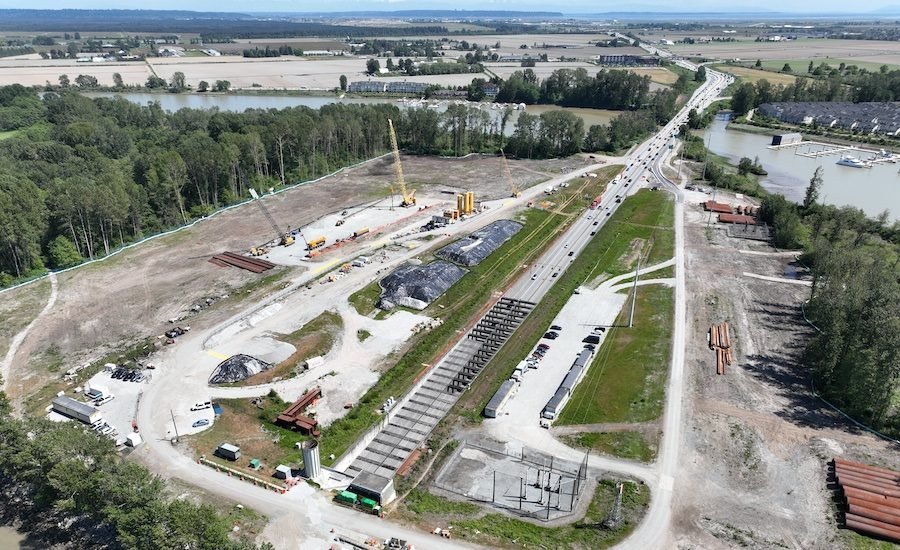
Early site preparations began on the site early this year, and province transportation officials said completed work included design, technical investigations and utility relocations will continue to support the project. While the new procurement is underway, work will continue, including construction of three temporary jetties for material deliveries, a trestle bridge, access roads and retaining walls.
Source: www.enr.com



