
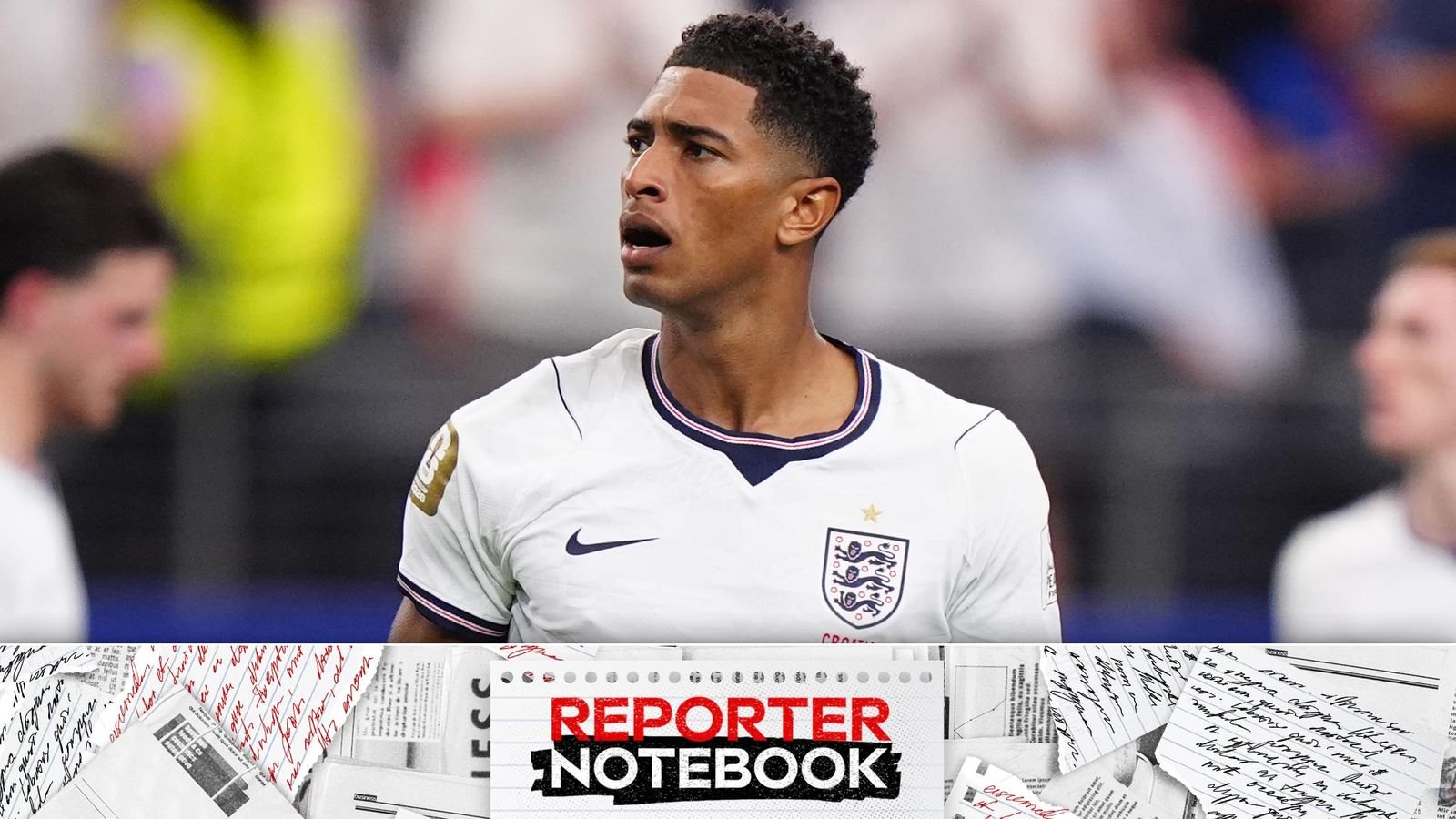
For many, the debate about who should be England’s No 10 at this World Cup is now over, after Jude Bellingham put in a 10/10 performance against Croatia.
The Real Madrid man was outstanding in the first game in Dallas, both with and without the ball. In the second half, he scored England’s momentum-changing third goal, with a run that owed all to his drive, desire and downright brilliance.
After a questionable first 45 minutes by England, it was the man from Madrid who took the game by the scruff of the neck and, like a force of nature, dragged the team’s intensity to new levels.
Less than two minutes after Thomas Tuchel had delivered his half-time speech calling for more positivity, more passion and more attacking freedom, Bellingham delivered precisely what the head coach had called for. He won the ball, surged forward and slotted home, in off the back post.
Gary Neville said after the 4-2 win in Dallas: “Let’s be clear, Jude Bellingham is not a sub. He’s a star. That’s it. He’s a star.”
At the same time, Toni Kroos, a five-time Champions League winner, said: “He can be an incredibly complete player and the best in his position. He has all the attributes.” Rio Ferdinand added: “Jude Bellingham is the only one, alongside Harry Kane, who at the biggest moments, his presence gets bigger in the stadium.”
But – and here’s the really significant bit – those are the words from the pundits, not from England’s team boss. And it was noticeable that Tuchel was mixed in his review of Bellingham’s performance, causing many to wonder if Bellingham is far from being guaranteed the No 10 shirt going forward
For sure, Tuchel did praise Bellingham’s performance: “You can rely on Jude in these moments. He loves these pressure games. That brings out the best in him,” he said.
But those words fell way short of the adulation Tuchel heaped on Harry Kane, by way of contrast: “A complete performance. Absolute leader. He’s all in. Physically, mentally, it’s the full package at the moment. He wants it and he leads by example.”
Kane was brilliant in the game for sure, but for most onlookers, he was on a par with Bellingham. So why the subtle difference in tone?
Crucially, without being prompted, having been asked about Bellingham, it was Tuchel himself who changed the subject and decided to reference Morgan Rogers at that moment. This was again from the post-match news conference.
“It’s an easy decision to let him [Bellingham] play and trust him,” he continued. “The tough decision was to say to Morgan Rogers he will not start, because he deserves 100 per cent to start and he did ever so well for us and me.”
And there it is. When asked about Bellingham’s brilliance, Tuchel naturally and purposely brought the conversation round to Rogers. It is the latest – and maybe the clearest – example of why Rogers is just as important a player for Tuchel and England at this World Cup as is the superstar from Spain.
To understand why, you need to understand Tuchel. He has no interest in a player’s name or reputation. He cares only about what that player can do for him and the team, how their character melds with the group, and how they fit into the greater plan.
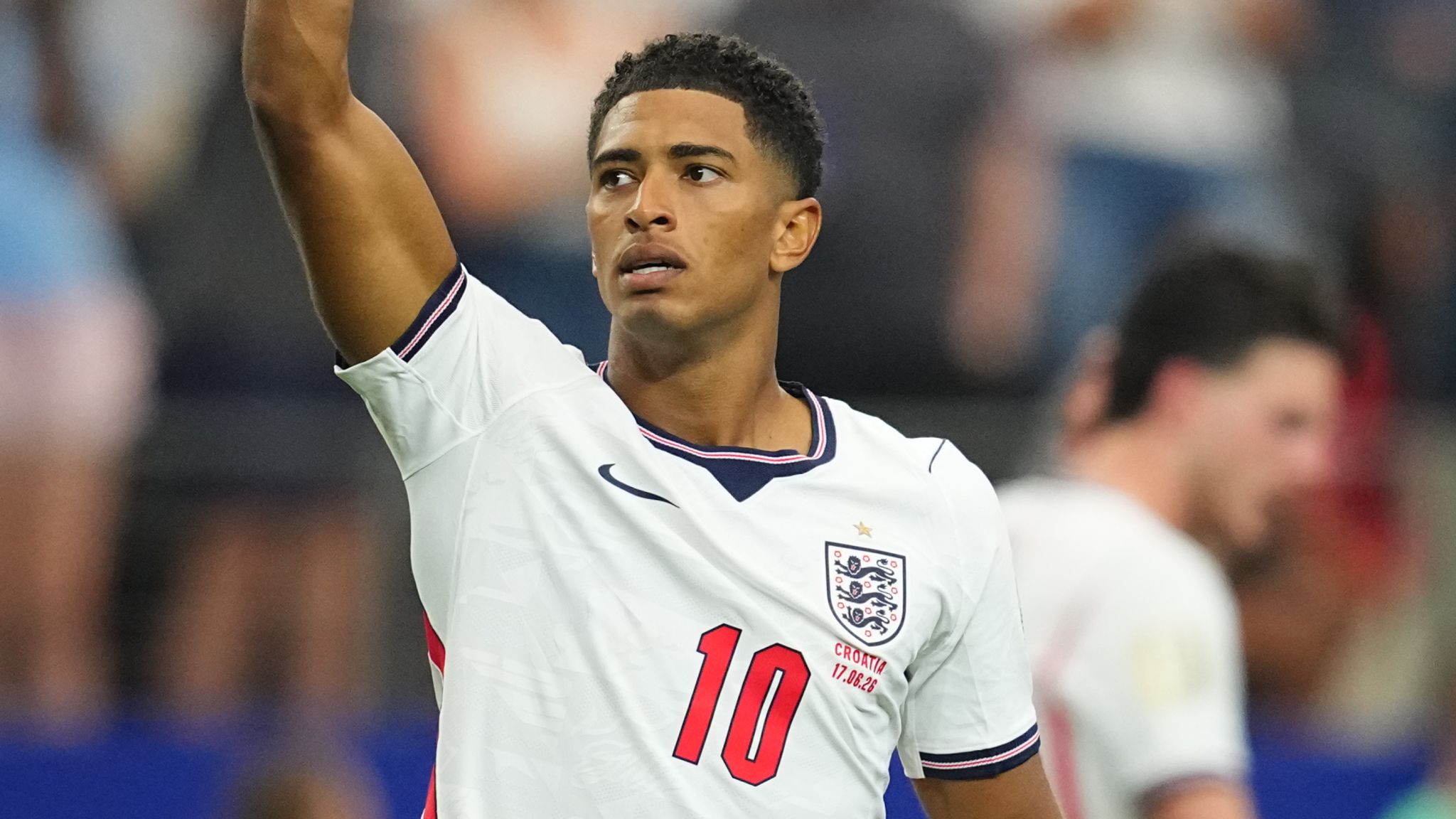
Bellingham celebrates his goal against Croatia
Note, the greatest compliment he paid Bellingham after the Croatia win had nothing to do with his personal brilliance or his goal. Instead, it focused on his preparedness to follow orders.
“Also, because of the last 17 days, how he bought into the idea of team spirit, the idea of brotherhood and the idea of how we want to play football, which is a slightly different position to his position in Real Madrid,” said Tuchel.
Throughout his entire 18-month tenure, Tuchel has battled with Bellingham, locked horns with him and motivated him with constructive – sometimes blunt – criticism.
He has tried to mould him to his way. Maybe even to break his individuality. Remember when, 12 months ago, Tuchel said his own mother sometimes finds Bellingham “repulsive” on the pitch? Tuchel apologised, said he didn’t mean it as it came across. But it belied Tuchel’s clear feeling that the midfielder needed to change his attitude.
Bellingham and Rogers are very different players. They each bring something different to England. Bellingham is all flair, arrogance and individuality.
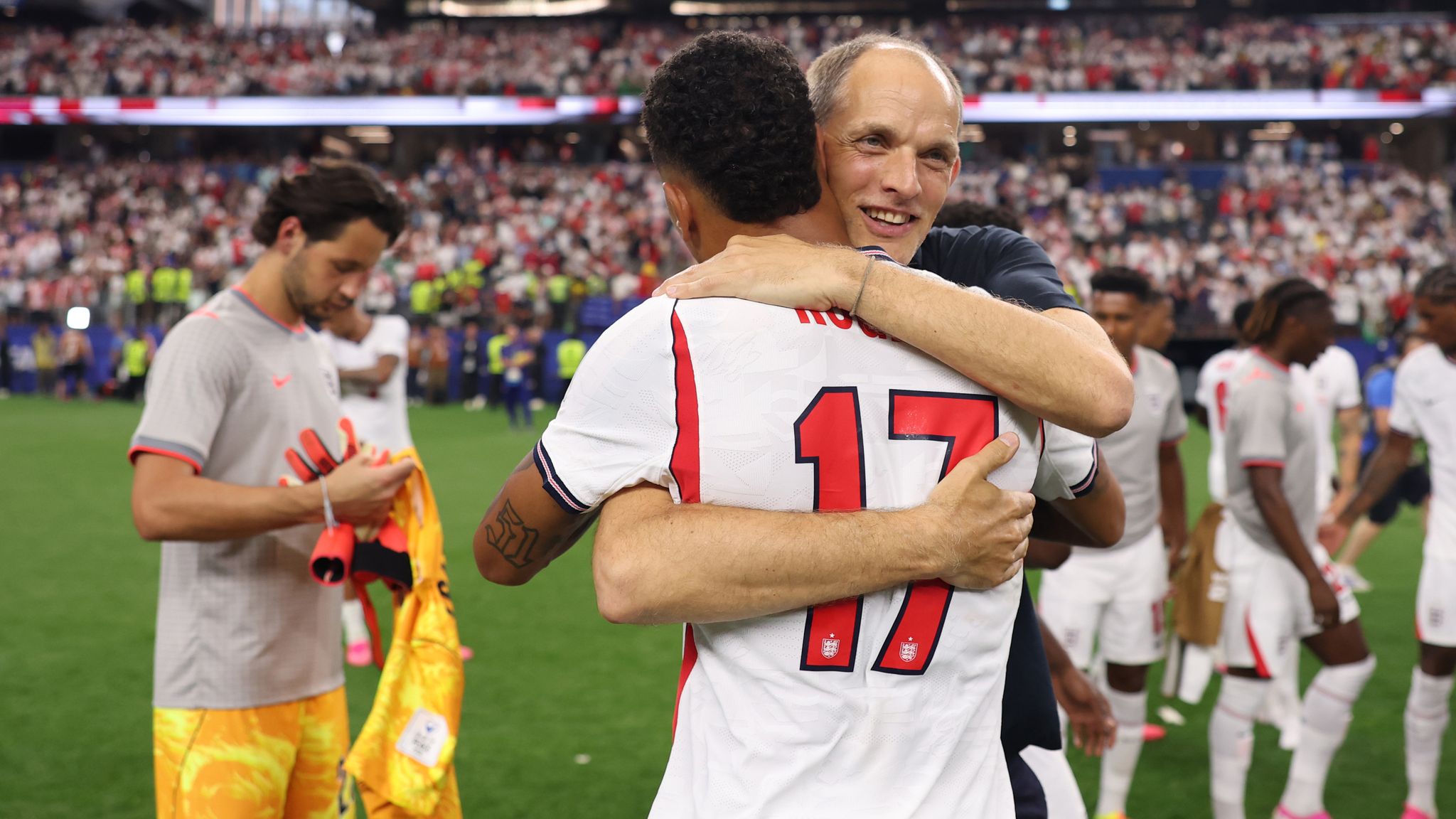
Thomas Tuchel hugs Morgan Rogers after the Croatia game
Rogers is all about bringing the very best out of his team-mates. Bellingham is brilliant. Rogers makes those around him brilliant. With his unselfish running and clever awareness of space.
Tuchel, remember, is constantly calling on his players to pass the ball forward, break the lines, look for the gaps that can build momentum and pressure.
That is what Rogers does week in, week out, for Aston Villa. He is definitely a little more direct than Bellingham, who plies his trade among the ball-hogging Galacticos in Madrid, who love a square pass.
It is also clear that Tuchel thinks Rogers links up better with Kane and Declan Rice, who are guaranteed England starters. The statistics will tell you that in 38 games together, Kane and Bellingham have combined for just one goal from open play.
By contrast, Rogers has the football intelligence to drift to the right when playing with Rice, to allow the Arsenal man to move forward down the left flank, where he is more adept. Rogers often pushes up high into a No 9 position, either to support Kane directly, or to allow the captain to drop a little deeper and dictate play.
All of that is straight out of Tuchel’s playbook.
So while we are all marvelling at Bellingham’s brilliance, and belting out ‘Hey Jude’, which will surely be one of the tunes of the summer, do not forget just how important his childhood friend and rival for the No 10 shirt will be for England at this World Cup.



