
By Lou Cai
Adapted from Kim Seung-ok’s acclaimed novel of the same name, Kim Soo-yong‘s “Night Journey” was quite ahead of its time when it premiered in 1977. Restored by the Korean Film Archive in 2011, the film remains a striking portrait of female desire and loneliness, exposing the hypocrisy of patriarchal South Korean society with a frankness that still feels modern today.
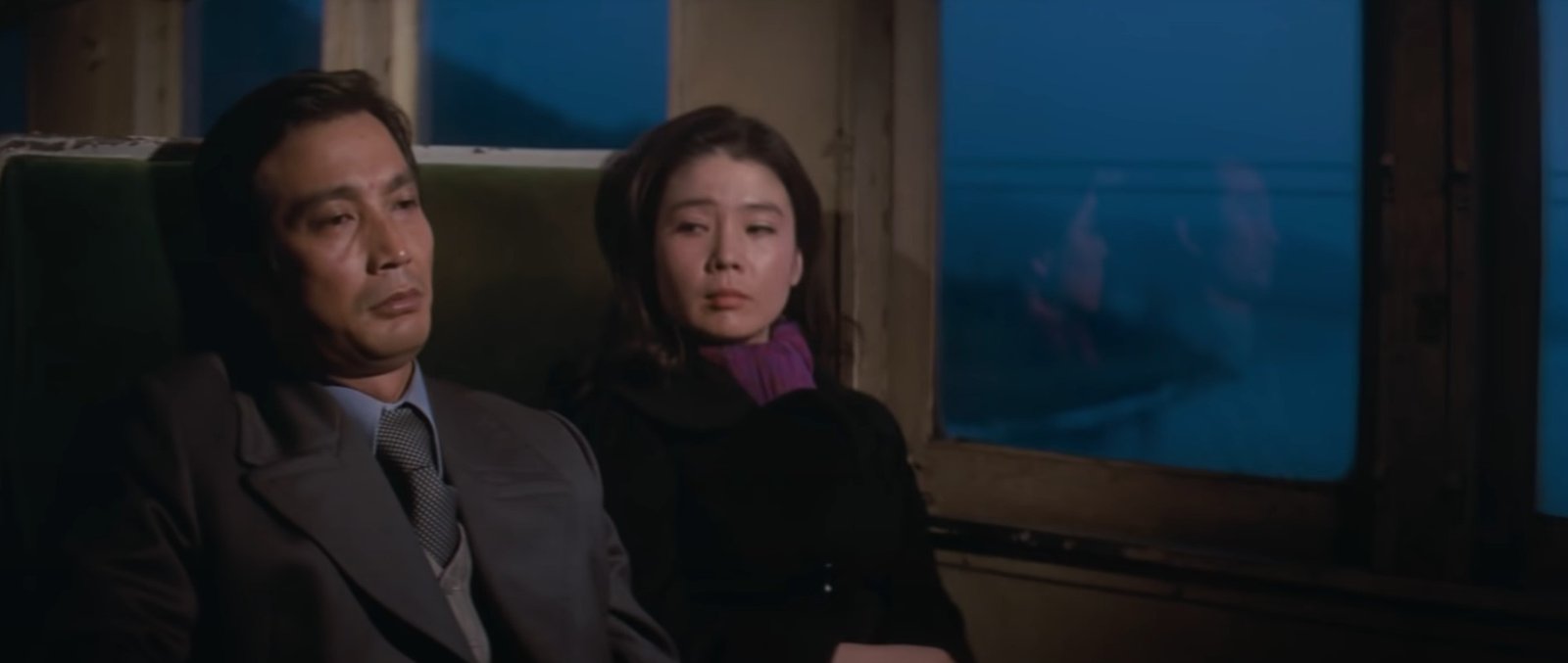
Yun Jeong-hee stars as Lee Hyun-joo, a bank clerk living a double life. By day, she is called the “last old maid” in the office, but by night, she becomes the secret lover of her supervisor, Park Dae-ri (Shin Seong-il). Every evening, she returns home early, cleans the apartment, prepares dinner, and waits while watching TV. Only late at night does her drunken lover stumble home, have rough sex with her, and pass out in bed. Caught between social expectations, Hyun-joo longs to escape the secrecy of the relationship through marriage. However, she is equally terrified of becoming trapped in the repetitive life of a housewife.
During a short holiday, she returns to her hometown and rides bicycles with her younger sister along the beach. It also brings back memories of her former lover, who had once been her schoolteacher. The two had a forbidden relationship before he joined the army and was later killed in the Vietnam War. Back in Seoul, Hyun-joo wanders through the city alone before ending up drinking by herself at a bar. When Dae-ri finally decides to marry because her absence has become inconvenient, Hyun-joo finally decides to leave. The holiday is over.
Although “Night Journey” unfolds at a gentle pace, it never feels slow. As a journey to explore herself, the film becomes Hyun-joo’s reflection on her past, present, and future. What makes the film feel so radical is the way Kim shifts the gaze. On one hand, Hyun-joo is viewed through the eyes of men. In the office, she is ridiculed as an old virgin; while she walks on the streets at night, she immediately becomes an object of fantasy, inviting endless gazes and assumptions. Through Hyun-joo’s eyes, the men around her become equally absurd. They are almost always drunk, wandering aimlessly from bar to bar, eagerly grabbing every opportunity to flirt with, mock, or harass women.
One particularly disturbing sequence sees Hyun-joo sexually assaulted by a stranger on a pedestrian bridge. Kim deliberately leaves her response emotionally ambiguous, making it difficult to distinguish fear from submission. It is an extremely uncomfortable scene, but one that reveals the complicated relationship between violence, desire, and the social repression imposed upon women.
The film’s cinematography is equally accomplished. Soft, understated colors dominate the frame, interrupted only by flashes of vivid color on Hyun-joo’s costumes, whether it is a bright blue towel, a pair of red leather gloves, or a pale yellow blouse. Together, they quietly reveal the rebellion beneath her composed appearance. In contrast to its gentle images is an unexpectedly suspenseful score by Jeong Yoon-joo. Whenever Hyun-joo is walking alone, the background music grows dark and unsettling, initially feeling almost out of place before gradually becoming another reminder of the invisible social pressure constantly surrounding her. Ree Kyoung-ja’s editing is memorable as well. Frequent flashbacks blur together memories and reality, allowing fragments of Hyun-joo’s happiest and most painful experiences to surface while drawing us deeper into her conflicted inner world.
Familiarised by the performance in Lee Chang-dong’s “Poetry” (2010), Yun Jeong-hee apparently has developed her powerful acting in the early stage of her career. She subtly transforms Hyun-joo through something as simple as a pair of glasses. At work, she is restrained and quietly professional; with her lover, she reveals both desire and humiliation. While wandering alone through the city, she regains her curiosity and liveliness. Watching her shift between these different selves is one of the film’s greatest pleasures. Shin Seong-il is equally unforgettable. One of the film’s most chilling moments comes when Hyun-joo accidentally refers to him as her lover in the office. Without hesitation, he mocks her and invents an excuse to distance himself. The speed with which affection turns into humiliation perfectly exposes the cowardice and hypocrisy at the heart of his character.
More than fifty years after its release, “Night Journey” still feels modern, both in its themes and filmmaking. Centred on a female protagonist, Kim Soo-yong boldly exposes the moral hypocrisy and decaying gender values hidden beneath South Korea’s rapid modernisation. The society surrounding Hyun-joo constantly demands that she remain both sexually pure and sexually available, independent enough to work yet obedient enough to settle into marriage. The contradictions she faces feel no less relevant today, making it a classic that continues to speak to contemporary audiences.



