
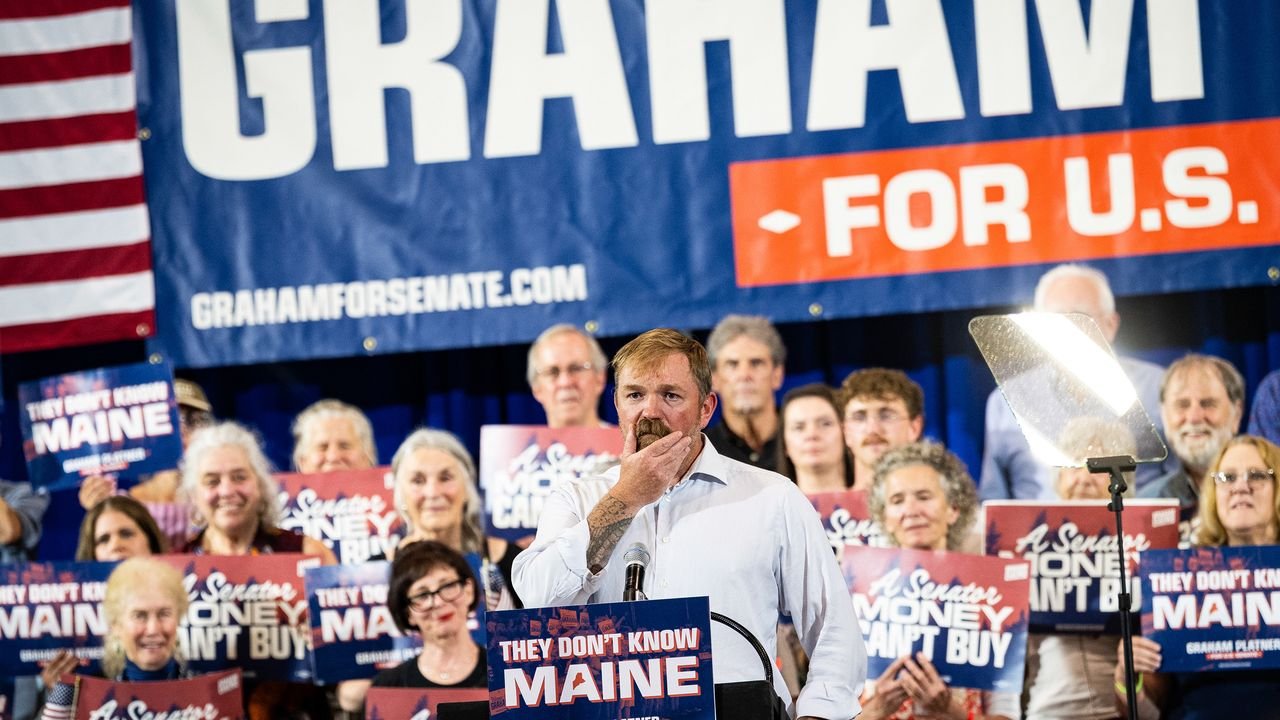
A little more than a month ago, the Times published a bombshell story about Graham Platner, a military veteran and an oysterman who was the presumptive Democratic nominee for Senate in Maine. The paper shared the accounts of three women who had dated Platner within the past fifteen years and had found his behavior unsettling. The over-all picture was not without nuance, but the story contained some disturbing allegations, including that Platner had been physically “rough” with one of the women, Lyndsey Fifield. Platner acknowledged that he had been a “far from perfect boyfriend” during a “very dark period” of his life, but he strenuously denied having been violent, and his campaign sought to discredit Fifield by pointing out that she is a longtime right-wing operative. In the wake of the allegations, I wrote that Platner had, in many ways, been running against a myth of personal perfection in politics; he had previously weathered storms, around offensive Reddit posts and a tattoo that resembles a Nazi insignia—which he claimed to have got in ignorance—that, per conventional wisdom, ought to have blown him off course. I argued that he was about to find out the extent to which voters were willing to forgive him his baggage.
A few days later, Platner won his primary with seventy-two per cent of the vote, a margin that would have been astonishing a year ago, when no one knew who he was, and that qualified as convincing enough when measured against headier expectations that preceded the Times story. (Janet Mills, the Maine governor, who had been Platner’s chief rival, had long since suspended her campaign, citing a lack of funds, but she let it be known that she was still gratefully accepting votes.) “The national pundits, the political establishment, they keep looking for that one story, that one headline, that one moment in my life that they can define the campaign by,” Platner said, in a victory speech. “But in trying so hard to understand me, they fail to understand that this is not about me at all. This is a movement about us.” After that, his campaign seemed to stabilize; polls showed him locked in a squeakily tight race with Susan Collins, the Republican incumbent. On Monday, however, another shoe dropped: Jenny Racicot, the most recent of Platner’s girlfriends to have spoken with the Times, further alleged, in interviews with Politico and other outlets, that, in 2021, Platner became intoxicated, went over to her home uninvited, and raped her, before falling asleep in her bed. Racicot told Politico—which corroborated her account by reviewing messages that she sent before and after Platner started running for office—that she had initially not wanted to be known as a rape victim, but had changed her mind after discourse about Fifield’s political affiliations dominated the reaction to the Times story. “One of the reasons I didn’t come forward sooner was, the huge moral conflict that I had between supporting his politics, but not supporting him as a person,” Racicot added. “I just want the truth out there.”
Platner’s campaign denied any nonconsensual behavior, and characterized the allegations as having been “coached and coordinated by out of state establishment operatives.” Nonetheless, in a video message, Platner nodded to “political reality” and said that he would take some time to “reflect” on his path forward. Quickly, that path appeared to close. Chuck Schumer, the Senate Minority Leader, and Kirsten Gillibrand, the leader of the Senate Democratic campaign arm, pledged to starve Platner of funding if he stayed on the ballot. Schumer has never been a huge fan of Platner. But many of those who are, or were, also called on him to drop out, including Ro Khanna—the California congressman who rallied with Platner the day after the initial Times story was published, despite finding its claims troubling—and Senators Elizabeth Warren and Bernie Sanders. Hasan Piker, a left-wing influencer seen as a lightning rod for anger at the Democratic establishment, said on a live stream that Racicot’s allegation was a “holy shit” moment, and chided a commenter for speculating that “Mossad paid her ass.” Our Revolution, the Sanders-aligned progressive group, cut Platner loose, too. If it was too soon to say how exactly Maine voters might feel about this latest baggage, the writing appeared to be on the wall.



