
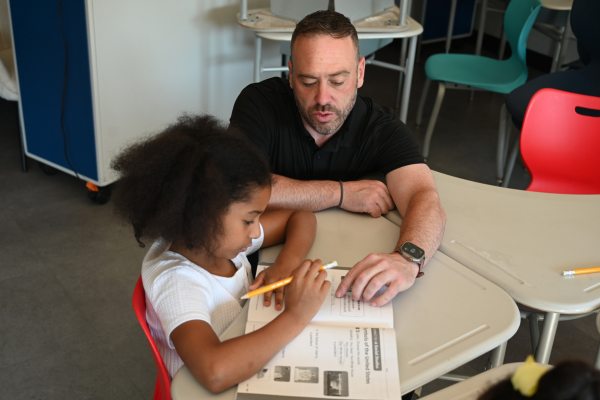
Designing the Framework of Summer Learning
Summer does not have to be a pause in learning. It is one of the most powerful and underused resources in education, capable of shaping minds, communities, and possibilities for generations. With clarity of vision and strategic intentionality, a district can transform these months into a catalyst for ongoing growth for its students. Reimagining this time presents a profound opportunity for educators and community leaders to maximize this unique window and transform student outcomes.
The urgency of this work is underscored by decades of research on summer learning loss. Longitudinal data from the National Summer Learning Project demonstrates that extended breaks from structured learning contribute significantly to cumulative achievement gaps, particularly among historically underserved student populations (Augustine et al., 2016).
Crucially, research from randomized controlled trials proves that students with high attendance in high-quality, five-to-six-week summer programs see significant, sustained academic gains in both mathematics and reading that persist into the following school year.
In the Allentown School District in Pennsylvania, we moved beyond the mindset that summer programming should be defined solely by remediation. Instead, our summer learning model serves as a direct extension of our strategic plan, Lighting the Way: A Blueprint for Innovation and Excellence 2030. Grounded explicitly in empirical evidence, our district is realizing this vision this summer by serving more than 1,900 students over a robust five-week period, blending rigorous academic instruction with engaging enrichment programs to create lasting opportunities for growth and acceleration.
Beyond Remediation: A Theory of Action in Allentown
To move past the traditional summer school model, we have designed an experience focused on key student transitions and evidence-based practices that promote long-term success.
Longitudinal data from the National Center for Early Development and Learning and foundational studies on adolescent development consistently show that major educational transitions, such as entering kindergarten or moving into middle school, can significantly influence a student’s academic trajectory (Rimm-Kaufman et al., 2000; Eccles & Wigfield, 1997).
To support our students during these critical junctures, we have implemented targeted transition programs, including:
- The Kindergarten Readiness Academy, which provides our youngest learners with the foundational literacy, language, and social-emotional skills they need for a confident, successful start to their school journey.
- Grade 6 summer bridge programs designed to help students smoothly navigate the transition to middle school while building academic readiness and meaningful social connections.
- Algebra readiness and enrichment that ensures our students have equitable access to one of the most important gateways to advanced coursework, STEM pathways, and postsecondary opportunities.
Our commitment extends beyond academics because high-quality enrichment is not a mere “add-on” to learning, but a vital driver of student engagement. When we provide students with creative, hands-on experiences, we see a direct correlation with increased engagement and improved attendance.

For all students in our summer programs, our framework integrates robust, district-wide enrichment that operates alongside our academic pathways. Through our innovation and technology experiences, students across all summer programs engage in authentic learning while exploring emerging technologies, including artificial intelligence. These opportunities foster the creativity, problem-solving, and critical thinking skills that are essential in a rapidly evolving world.
Rather than separating enrichment from core instruction, we have deliberately woven these experiences into each student’s daily schedule. For instance, elementary students participate in world language, physical fitness, and arts rotations that support cognitive development. Simultaneously, our middle school bridge students couple their accelerated algebra coursework with identical innovation tracks and swimming instruction to support whole child development.
Anchored in Evidence-Based Practice and Academic Quality
Intentional design requires more than good intentions; it requires alignment with practices proven to produce results. To ensure robust academic quality, we have anchored our curriculum in clear, data-driven benchmarks.
Our early elementary program is grounded deeply in foundational literacy development and rigorous reading benchmarks. At the secondary level, students participate in a redesigned Algebra I and algebra readiness experience focused on conceptual understanding rather than isolated skill remediation.
We also do not ask students to relearn an entire year of content in five weeks. Instead, we prioritize the most essential literacy and mathematics standards. This focused approach allows our educators to provide targeted instruction that addresses individual student needs while introducing the exact concepts students will encounter in the upcoming school year. By emphasizing acceleration over remediation, our students will begin the next academic year with confidence, stronger foundational skills, and a readiness to engage with grade-level content.
These findings reinforce a simple truth: Impact requires intentional design.
Institutional Synergy: The Power of Partnership
Transformational work is never accomplished in isolation. Meaningful progress requires collaboration, shared responsibility, and collective expertise.
Our partnership with the District Summer Learning Network (DSLN) has been instrumental in bringing this vision to life. Through this collaboration, our leadership team was challenged to establish an ambitious goal for summer 2026: to provide a coherent, high-quality learning experience across all grade spans that accelerates academic growth, strengthens key transitions, and expands access to enrichment and innovation for every participating student.
Rather than planning in isolation, we used DSLN’s Three Pillars Framework to guide our design process. This framework helped us balance rigorous academic programming with intentional attention to whole child development, ensuring students experience both challenge and support throughout the summer. The DSLN roadmap transformed the aspirations outlined in our Lighting the Way strategic plan into actionable strategies, measurable outcomes, and executable pathways.
Our Commitment to Lasting Impact
A national study by the American School District Panel identifies rigorous summer programming as one of the single most effective levers available to districts seeking to accelerate student achievement. Yet the data also reveal a stark reality: While the vast majority of public school districts nationwide offer some form of summer programming, fewer than one in five elementary programs meet the minimum recommended instructional hours for sustained, measurable academic benefits (Diliberti et al., 2025).
These findings reinforce a simple truth: Impact requires intentional design.
Our decision to implement this intensive, five-week summer learning framework is firmly rooted in extensive evidence. The goal is not merely to prevent learning loss but to create meaningful opportunities for growth, acceleration, and exploration. Summer learning is not an ending. It is an investment in what comes next. It is an opportunity to accelerate potential, expand possibilities, and continue lighting the way toward a brighter future for every single student we serve in Allentown.
References
Augustine, C. H., McCombs, J. S., Pane, J. F., Schwartz, H. L., Schweig, J., McEachin, A., & Siler-Evans, K. (2016). Learning from summer: Effects of voluntary summer learning programs on low-income urban youth’s learning opportunities and outcomes. RAND Corporation. https://www.rand.org/pubs/research_reports/RR1557.html
Eccles, J. S., & Wigfield, A. (1997). In the mind of the actor: The structure of adolescents’ achievement task values and expectancy-related beliefs. Personality and Social Psychology Bulletin, 21(3), 215–225. https://doi.org/10.1177/0146167295213003
Diliberti, M. K., DiNicola, S. E., & Schwartz, H. L. (2025). Districts continue to invest in summer programs: Selected findings from the American School District Panel. RAND Corporation. https://www.rand.org/pubs/research_reports/RRA956-32.html
District Summer Learning Network. (2024). The three pillars framework: Academic quality, partnerships, and whole child development. FHI 360. https://dslnhub.fhi360.org/about-us/
Rimm-Kaufman, S. E., Pianta, R. C., & Cox, M. J. (2000). Teachers’ judgments of problems in the transition to kindergarten. Early Childhood Research Quarterly, 15(2), 147–166. https://doi.org/10.1016/S0885-2006(00)00049-1
Make the most of your summer.
The District Summer Learning Network (DSLN) is a nationwide community of districts and states committed to designing summer programs that accelerate learning, nurture the whole child, and build lasting community partnerships. FHI 360 has partnered with AASA to extend DSLN’s reach and impact and improve outcomes for more students.
Reach out to our team to learn more about DSLN!



