
Base fitness is the bread and butter of all endurance sports. Without a big base, you won’t have a peak. But base fitness only takes you so far.
At a certain point in your race/season, you’ll face a very specific challenge. It might be a huge climb in the middle of the race or the ability to finish with a strong kick at the end; whatever the challenge, it’s up to you (and your coach) to determine your strengths and weaknesses and how to best attack it.
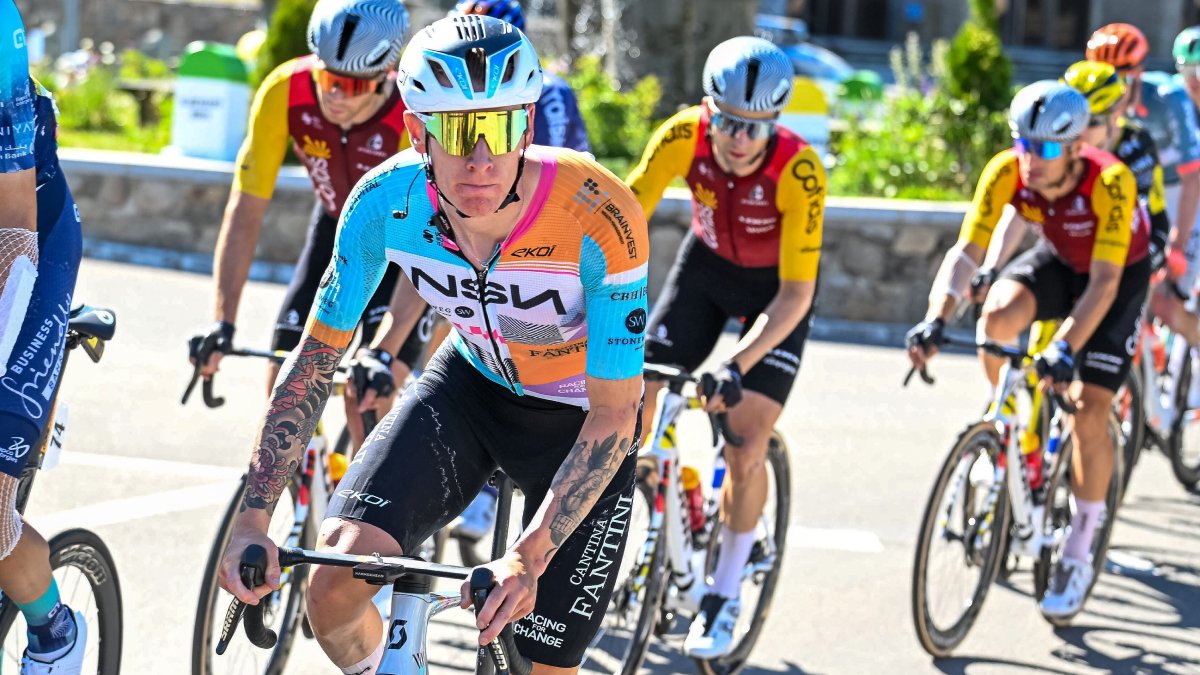
That’s how NSN Cycling Team approaches the Tour de France. Instead of expecting every rider to excel at every stage, they use TrainingPeaks to understand each rider’s specific strengths and how to use them to their advantage.
NSN describes itself as a team of “aggressive opportunists.” Whether the opportunity comes in a sprint, a breakaway, or a difficult rolling stage, the goal is to have the right rider prepared when the moment arrives.
You can take the same approach to your own training. Here’s how.
1. Train for what your race will demand
Every Tour de France stage presents a different challenge. For example, sprinters need power after hours of racing while breakaway riders have to sustain a high workload and still respond to changing paces.
Your event has specific demands, too. A marathon tests your ability to hold pace late in the race when your legs are about to give out, while a triathlon requires you to run after the bike has already worn you out.
Ask yourself: What will I need to do when my race gets hardest?
The answer depends entirely on your strengths as an athlete and will shape the types of workouts you need to overcome that challenge.
TrainingPeaks Structured Workout Builder is a great way to create sessions that reflect that demand. If your race includes a long climb, build sustained efforts at the intensity you expect to hold. If you need a strong finishing kick, add short, fast intervals late in the workout. Triathletes can schedule brick sessions that practice running immediately after the bike.
The closer your training matches the challenge, the more prepared you will be when it arrives.
2. Understand your strengths
NSN reviews Peak Power Curve trends, the relationship between heart rate and power, and workload progression to understand what each rider does best.
You can take the same approach. In Analyze 360, cyclists can compare the power curve from a single ride with their 90-day curve to see where they approached or exceeded their recent bests. The shape of the curve can also reveal whether your strengths lie in short sprints, one- to five-minute attacks, or longer sustained efforts.
Then, compare that profile with what your race will demand. If your goal includes a 12-minute climb, focus on that section of the curve rather than only looking at your five- or 20-minute power. If your power drops sharply after short efforts, you may need more sustained work. If your longer-duration power is strong but your sprint is limited, short accelerations may deserve more attention.
Runners can use the same principle by reviewing pace across different workout lengths and distances. Knowing your strengths and gaps helps you focus your training where it will matter most.
3. Look beyond one great number
Pace and power show what you produced. Heart rate helps show what it cost.
NSN compares heart rate with power and tracks progress through key training blocks. You can evaluate the same relationship using Analyze 360 metrics such as Efficiency Factor and Aerobic Decoupling.
Efficiency Factor shows how much pace or power you produce relative to heart rate. If you can produce the same output at a lower heart rate over time, your efficiency may be improving.
Aerobic Decoupling shows whether heart rate and output remain aligned during a steady effort. If your pace or power remains consistent while heart rate steadily rises, you are working harder to maintain the same output.
Use these metrics to ask:
- Can I produce the same output with less physiological effort?
- Can I maintain it later in a workout?
- Can I finish the final interval with the same control as the first?
One standout number shows what you can do once, but trends in output and effort are a better indication of your overall fitness.
4. Arrive ready to perform
Fitness only helps if you are fresh enough to use it.
NSN balances training load with HRV, resting heart rate, mood, stress and fatigue to understand whether riders are ready to perform.
In your Athlete Home, Performance Insights such as Fitness, Fatigue and Form help you see whether you are building fitness, absorbing your workload or carrying too much stress. You can also connect a compatible device to bring in recovery metrics such as sleep, HRV and resting heart rate.
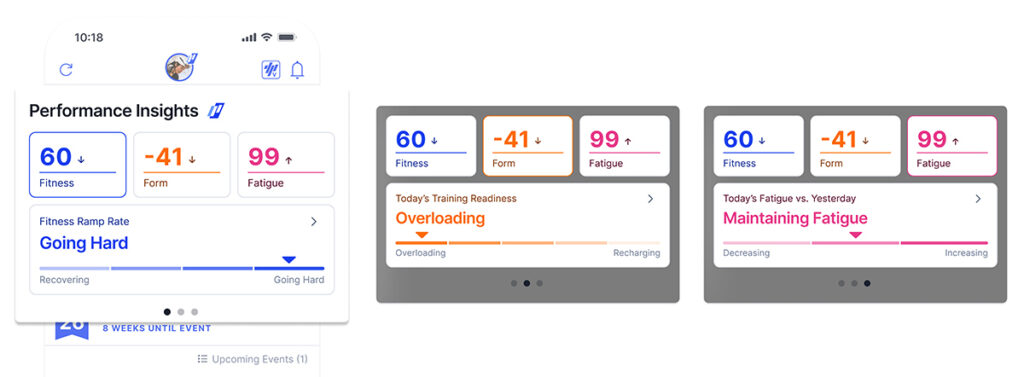
Add the human side by logging your RPE and subjective feeling after each workout. One difficult session does not necessarily mean you are losing fitness, just as one great session does not guarantee you are ready to race. Look for patterns across your training and recovery data.
Tip: Athlete Home offers Training Insights, which gives you a 7-day average of your RPE and Feeling.

5. Be ready for your moment!
NSN doesn’t expect every ride to perform the same way on every stage. Instead, the team identifies each rider’s strengths, develops the abilities their role demands and monitors whether they are ready when an opportunity appears.
Use your TrainingPeaks calendar to bring those pieces together. Add your goal event, work backward from race day, and schedule the workouts that address its most important demands. As training progresses, compare what you planned with what you completed and adjust when your performance or recovery trends suggest the plan needs to change.
Approach your next race the same way NSN approaches the Tour: understand the challenge, identify your strengths, and be ready to capitalize on opportunities.



