
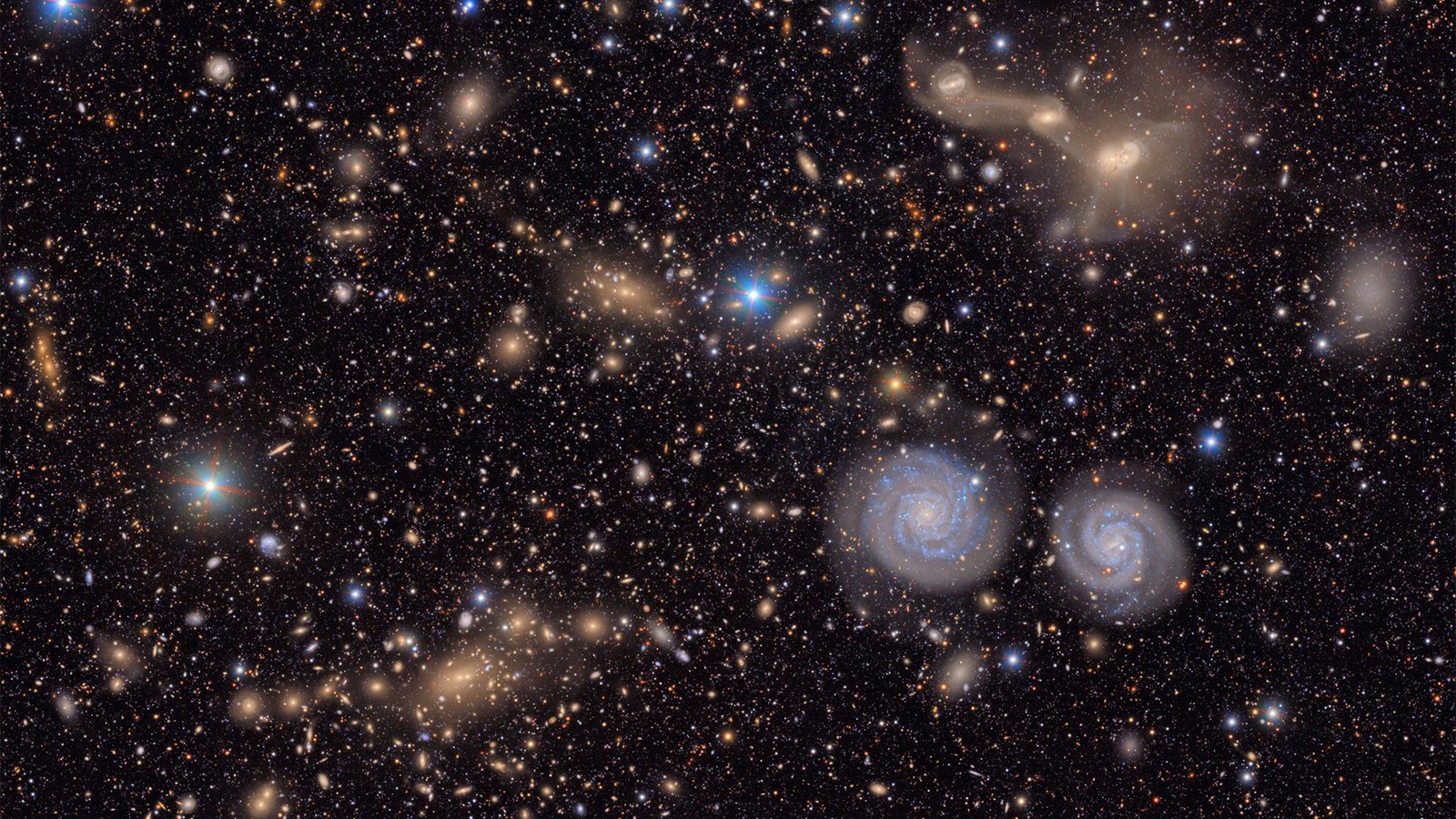
A Rutgers University scientist is helping to usher a new era of space study via an observatory in Chile outfitted with the world’s largest digital camera.
Saurabh W. Jha, a Rutgers University physics and astronomy professor, says the NSF-DIOE Vera C. Rubin Observatory is capturing never-before-seen images of the beyond as it points at the southern sky.
The facility is named in part for the U.S. National Science Foundation and the U.S. Department of Energy, which contributed to the construction of the observatory and its telescope, and are main sponsors of the 10-year research project called the Legacy Survey of Space and Time.
Rutgers astronomers were involved in the planning. Anyone around the globe is able to study and use the data collected.
“So far our views of the sky have really been images,” Jha told NJ Spotlight News. “What the Rubin Observatory and its Legacy Survey of Space and Time are going to do is make a movie of the universe.”
The images come from a 3,200-megapixel automobile-size camera — the world’s largest — that is fitted to the telescope. Scientists hope to map the Milky Way, create a solar system inventory and examine the mysteries of dark matter, holds galaxies together, and dark energy, which pushes the cosmos apart.
“Over its 10-year survey we’re going to observe millions of exploding stars,” he said. “And those exploding stars tell us things about what we don’t see.” The data, he said, “should revolutionize our understanding of astronomy and cosmology, and our place in the universe.”

We’re in this together.
For a better-informed future.
Support our nonprofit newsroom.



