
After the earthquakes, however, the regime seemed newly vulnerable. Despite its efforts to suppress the media, images of the destruction spread online, along with anguished calls for help. Rescue workers from around the world rushed to Venezuela but found that equipment was outdated and scarce. Fuel was in short supply, and cranes stood idle beside flattened buildings.
With the regime so ill-prepared, the Venezuelan people were left to gather whatever tools they could to dig their relatives and neighbors from the rubble. From D.C., Machado mobilized teams to set up aid centers. If a hospital needed a computer to read CT scans, or a rescuer was held up at the border, her people would assist. Still, Machado’s phone filled up with desperate calls. “I know that you will help us,” one elderly woman said.
The morning after the earthquakes, Machado told Secretary of State Marco Rubio that she had resolved to go back. She insisted that it was in everyone’s interest—including the United States’. Though there was no guarantee that the regime wouldn’t arrest her, U.S. officials acknowledged that she had a right to return.
Early the next day, Machado went to the Manassas Regional Airport, in Virginia, and boarded a small jet with a few aides. She planned to fly to the island of Curaçao, then proceed to Venezuela. About an hour into the flight, though, a message came through: the plane was not authorized to land in Curaçao. Machado dismissed the message, convinced that it was a misunderstanding. Then, a few minutes later, the pilot got a direct order. The plane’s landing rights had been revoked, apparently under political pressure. They had to return to Manassas at once.
For Machado, it was another setback in a long campaign. She remains the most popular politician in Venezuela, but she can’t lead unless she goes back. The Trump Administration, which substantially controls the Venezuelan state, seems convinced that her return would deepen the country’s tumult—destabilizing both the regime and the United States’ aims there. “Politics is a contact sport,” James Story, the former American Ambassador to Venezuela, told me. “The regime sees Machado as an existential threat. Her return raises the question: Who’s in charge?”
Machado’s office in Washington sits not far from the White House, in a nondescript building off Connecticut Avenue. When I visited, soon after she arrived in D.C., the office had a transient air. The space belonged to a lobbying group for maritime workers: paintings of sailing ships hung above Chippendale-style furniture. Aside from some placards with slogans for her party, there was no indication of who the new occupant was. “It’s our shadow embassy,” David Smolansky, one of her advisers, told me, with a thin smile. The office was staffed with longtime Machado aides, who had left families behind in Venezuela. Most had fled the country after the 2024 election, but there were some she hadn’t seen in nearly a decade. Smolansky had escaped across the Brazilian border in 2017, dressed as a priest and carrying a Bible.
From the office, Machado shuttled to meetings with foreign ministers, Trump’s Cabinet officials, Congress members on both sides of the aisle, and various benefactors. During my visit, she walked down the hallway with Crown Prince Reza Pahlavi, the son of the Shah of Iran. Trump hadn’t yet declared war on Iran, but the country was roiling with protests, which had been harshly suppressed. Pahlavi and Machado posed for pictures and agreed to issue a joint statement, endorsing the “liberation of Iran and Venezuela from oppression.”
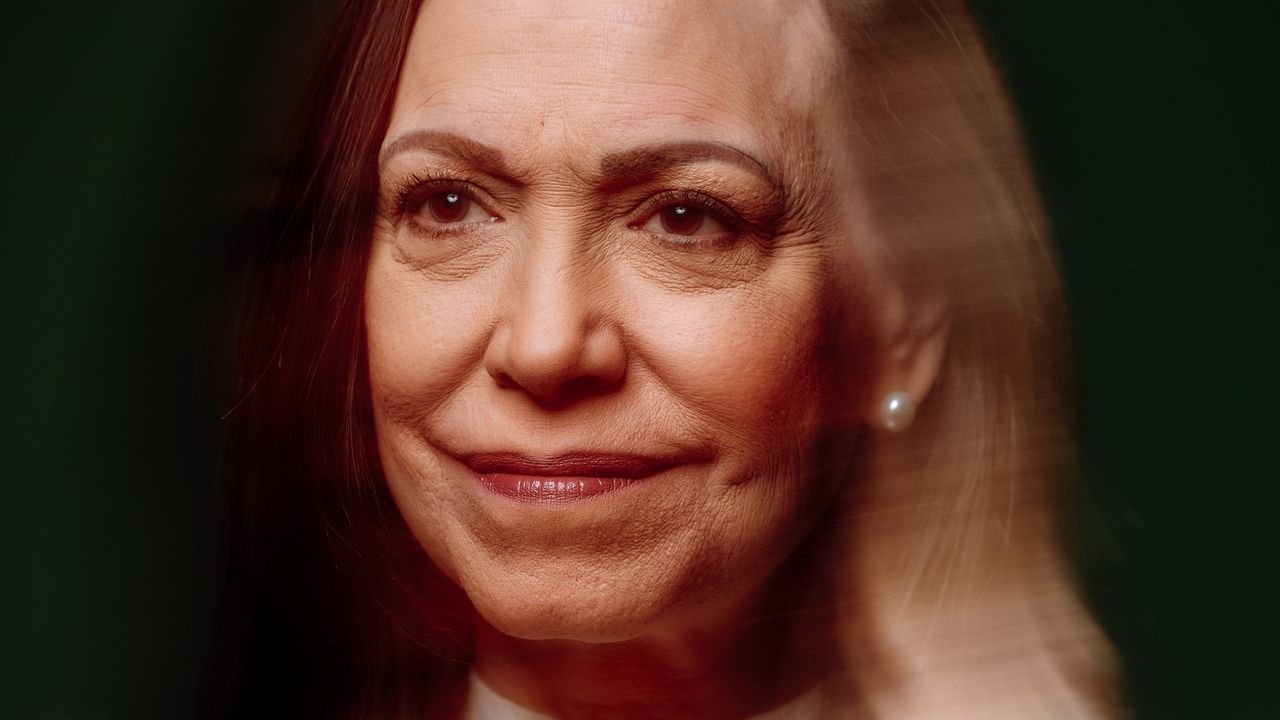
Machado, fifty-eight, wore a red cashmere sweater and black pants; her brown hair hung to her shoulders. In person, as onstage, she tends to talk in absolutes. “I have a mandate from the Venezuelan people to free this country together,” she told me. “We will accept nothing less than full democracy.” Critics had described Trump’s invasion as a violation of Venezuelan sovereignty. “My answer is: Well, what is the basis of sovereignty?” she said. “I believe it is the will of the people.”



