
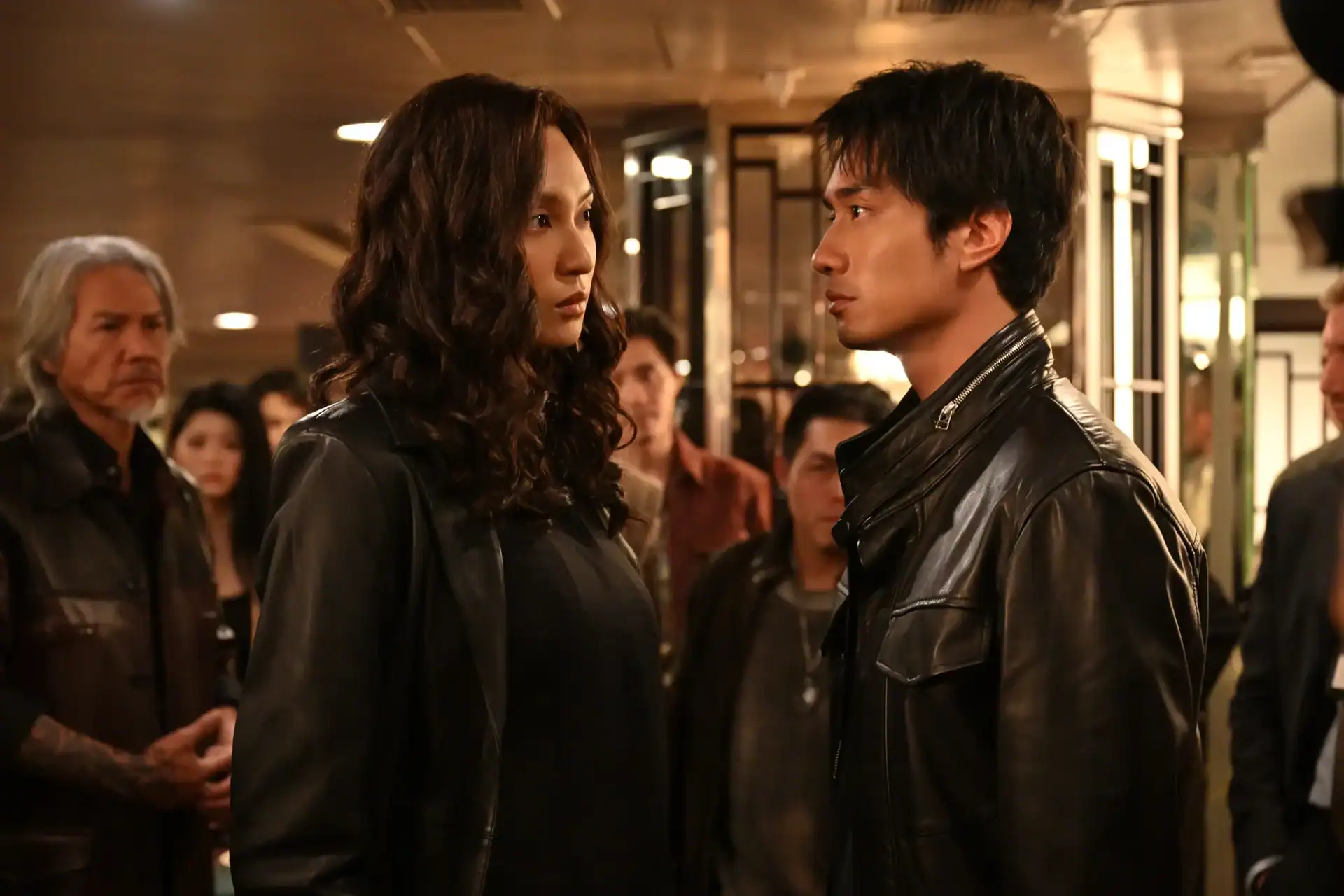
“Cold War 1994” (“Hon zin 1994”) is a Hong Kong action drama directed by Longman Leung. It serves as a belated prequel to the successful films “Cold War” (2012) and “Cold War 2” (2016), which Leung co-directed with Sunny Luk. More impressive than the plots or cinematic impact of those two films, however, was their illustrious cast, featuring Hong Kong icons Chow Yun-fat, Aaron Kwok, Tony Leung Ka-fai, Andy Lau, and the charismatic pop singer Charlie Young, known among other roles for Wong Kar-wai‘s “Ashes of Time” (1994).
Fourteen years have passed since the first installment of the saga, yet many of the familiar faces remain. Every few years, critics and fans proclaim the imminent revival of Hong Kong action cinema’s Golden Age, but those hopes rarely materialize. If there is a true successor to the landmark films of John Woo, Ringo Lam, and their contemporaries, it is probably Andrew Lau‘s outstanding “Infernal Affairs” trilogy, although even that is now more than two decades old. It deserves particular mention here because the “Cold War” series clearly follows a similar blueprint, albeit without the narrative brilliance, gripping storytelling, or emotional depth of Lau’s films. The decision to produce a prequel also appears to stem from the same impulse: to provide greater context for the events of the first two installments by revisiting the past.
To put it simply, the film succeeds only to a certain extent. Its biggest weakness lies in the filmmakers’ curious casting choices. While Terrance Lau—at 38 still something of a rising star in Hong Kong cinema—and Hollywood veteran Daniel Wu bring fresh energy to the film, much of the remaining cast feels oddly selected. Considering that the story moves 23 years into the past, several characters simply do not look young enough to convincingly portray their earlier selves, nor do they align particularly well with their counterparts from the previous films.
A second weakness, one that has become increasingly noticeable in recent Hong Kong action cinema, is the tendency to tell fundamentally straightforward stories in an unnecessarily convoluted manner. At several points, it becomes genuinely difficult to follow who is working for whom, who is corrupt, who remains loyal, and—most importantly—why. Character motivations shift so frequently that coherence is sacrificed in pursuit of constant plot twists. The film is further burdened by an overabundance of supporting characters who ultimately contribute little to the story. Female characters are also largely sidelined, with the notable exception of Triad leader Jodie Yuen. She is portrayed by Louise Wong, who previously starred in Leung’s acclaimed Anita (2021) as legendary singer Anita Mui.
On the positive side, Longman Leung and his three co-writers vividly recreate the atmosphere of Hong Kong in 1994, just three years before the territory’s handover to the People’s Republic of China. The conflicting emotions of relief over the imminent departure of the unpopular British colonial administration and uncertainty about Hong Kong’s political future are woven effectively into the narrative. The film explores how competing political and business interests maneuver to secure influence before 1997, how corrupt senior police officers enrich themselves, how the Triads infiltrate both politics and law enforcement, and how flexible the morality of both the old establishment and the emerging financial elite can be.
As is customary in Hong Kong action cinema, honest police officers sacrifice themselves in the name of justice while ordinary citizens either remain unaware or choose to look the other way. Although these themes are hardly new, they are handled competently, and the action sequences are entertaining, even if they never approach the exhilarating heights of the genre’s classics from the 1980s.
Veteran cinematographer Anthony Pun, now the visual architect behind many of Hong Kong’s biggest blockbusters and the director of “Cesium Fallout” (2023), once again delivers excellent work, while the production design is outstanding. This comes as little surprise, given that Longman Leung himself built his career as a production designer. The film’s return to the mid-1990s also allows the recreation of the legendary Kai Tak Airport, whose dramatic location amid the city’s skyscrapers remains one of Hong Kong’s most iconic images. For viewers who remember the city before 1998, these sequences evoke a powerful sense of nostalgia.
Speaking of nostalgia, veterans Chow Yun-fat and Aaron Kwok appear in several newly filmed scenes—perhaps four or five minutes in total—reflecting on the events of 1994 from the perspective of 2017, the present-day setting established by the earlier films. The film also includes enjoyable cameo appearances by martial arts legend Yuen Biao and actresses Karen Mok and Cecilia Yip, while eagle-eyed viewers may even spot Sammo Hung in a framed photograph. Perhaps this nostalgic appeal has helped the film perform solidly at the box office, where it has grossed approximately $47 million since opening on May 1. In any case, the story is far from over: a sequel to the prequel, “Cold War 1995“, has already been announced for next year, with its first trailer appearing in the post-credits scene. Be warned, however—it contains a major spoiler.



