
Understanding Balochistan Separatism: History, Grievances, Violence and the Search for a Political Solution
Balochistan separatism is commonly explained through two sharply opposing narratives. One presents it as a national-liberation movement resisting political exclusion, resource exploitation and military repression. The other portrays it as a foreign-supported insurgency that employs terrorism to weaken Pakistan.
Neither narrative, standing alone, adequately explains the conflict.
The debate includes historical disputes, constitutional questions, human-rights allegations, regional rivalries, economic inequality and increasingly sophisticated militant violence. It is also essential to distinguish among peaceful Baloch activists, parliamentary nationalist parties, supporters of greater provincial autonomy and armed organizations demanding complete independence.

A Reddit Discussion Reflecting the Wider Debate
This article was prompted by a discussion in the r/Pakistan community titled “Can someone explain Balochistani Separatism to me? Unbiased as possible.” The original poster, a Pakistani American, asked whether Baloch separatists were aligning themselves with the Taliban and requested an explanation of the conflict’s ideological and historical layers.
The comments did not produce a single consensus. Instead, they reflected many of the competing interpretations surrounding Balochistan:
- Reddit user beefythickgentleman argued that separatism was once an extremely marginal movement but may have expanded because of military operations since 2006. The commenter also alleged Indian funding and emphasized that separatist organizations remain fragmented.
- User 123abc65890 argued that repeated military intervention, security checkpoints, alleged disappearances and failures to address resource grievances had transformed what was once a more limited tribal conflict into a broader Baloch national issue. The user also provided extensive personal observations about travel and security conditions in coastal Balochistan.
- User bobslayteam, identifying as Baloch and familiar with the province, argued that the present movement is increasingly influenced by educated, middle-class young people rather than only traditional tribal chiefs.
- User killerwhale007 described conversations with residents of the coastal town of Ormara and argued that restrictions on local access to land, coastal areas and economic opportunities contribute to resentment.
- User UndeniableTruth- maintained that grievances over underdevelopment are real but argued that active support for armed rebellion remains limited across the wider Baloch population.
- User Visual-Meaning-6132 offered perhaps the most useful framing: Balochistan contains millions of people with widely differing opinions, and opposition to separatism should not be interpreted as satisfaction with the government’s treatment of the province.
These comments are useful because they demonstrate that disagreement is not simply between the Pakistani state and armed separatists. It also exists among Pakistanis, among Baloch communities and among people who recognize legitimate grievances but disagree over independence and violence. The comments remain personal opinions and anecdotes rather than independently verified evidence.
What Is Balochistan Separatism?
Balochistan separatism refers to movements seeking sovereignty or national self-determination for the Baloch people, whose historical homeland extends across parts of Pakistan, Iran and Afghanistan.
Within Pakistan, some armed organizations seek an independent Baloch state. Other Baloch political movements demand greater provincial autonomy, constitutional protections, local control of resources, investigations into disappearances and stronger political representation.
These positions should not be treated as interchangeable. A person may oppose Islamabad’s policies without supporting Pakistan’s partition. Similarly, a person may support Baloch cultural and political rights while condemning attacks committed by separatist organizations.
Pakistan’s Balochistan province covers nearly 44 percent of the country’s land area, making it the largest province geographically. However, the 2023 national census recorded a population of approximately 14.9 million, making it comparatively sparsely populated.
The province possesses natural gas, coal, copper, gold, fisheries and a strategically important Arabian Sea coastline. Gwadar’s location near major maritime routes has also made the province increasingly important to Pakistan, China and other international investors.
The Contested Accession of Kalat
The historical dispute begins with the former Khanate of Kalat.
Following the end of British rule in 1947, Kalat initially sought a separate political status. The Khan of Kalat, Ahmad Yar Khan, signed the Instrument of Accession to Pakistan on March 27, 1948.
Pakistan’s official historical account states that the Khan agreed to join Pakistan after extended negotiations. The Balochistan provincial government also acknowledges that his brother, Prince Abdul Karim, rejected the decision and subsequently led an armed rebellion.
Baloch nationalist accounts argue that accession occurred under coercive political and military pressure and without adequate approval from Kalat’s representative institutions. Academic treatments continue to debate the legality, political context and degree of consent surrounding the accession.
For Pakistani nationalists, the accession represents the lawful territorial consolidation of the new country. For many Baloch nationalists, it represents the beginning of involuntary political subordination. This unresolved historical disagreement remains central to contemporary separatist narratives.
Successive Insurgencies
Pakistan has faced several episodes of Baloch armed resistance since 1948. Major periods of rebellion occurred in the late 1940s, the 1950s, the 1960s, the 1970s and again beginning in the early 2000s.
Earlier movements were frequently associated with individual tribes and influential tribal leaders. The contemporary insurgency increasingly includes educated and urbanized young participants, making it less dependent on the traditional tribal hierarchy.
The conflict intensified after the death of veteran Baloch leader Nawab Akbar Bugti during a Pakistani military operation in August 2006. His killing became a powerful symbol for nationalists, including those who noted that Bugti had previously served within Pakistan’s political system.
More recent insurgent organizations have also demonstrated greater operational coordination, media sophistication and willingness to conduct large-scale attacks. A 2025 analysis by the Combating Terrorism Center at West Point described a sharp escalation that included the March 2025 hijacking of the Jaffar Express and the seizure of hundreds of passengers.
The violence continued into 2026, with coordinated attacks and major counterinsurgency operations producing substantial militant, civilian and security-force casualties.
Why Does Resentment Persist?
Resource wealth without proportional local development
The most widely cited grievance is that Balochistan’s natural resources and strategic geography benefit Pakistan’s central institutions and external investors more than they benefit local communities.
Projects involving natural gas, copper, gold, ports and transportation corridors are promoted as engines of national development. Critics argue that local populations receive too few jobs, inadequate compensation and insufficient participation in project decisions.
This perception is reinforced by poor socioeconomic conditions. The World Bank has described Balochistan as facing some of Pakistan’s most serious educational and human-development challenges. A 2025 World Bank assessment reported that seven of Pakistan’s ten poorest districts were located in Balochistan.
The contrast between resource wealth and local poverty creates a politically powerful question: if the province contributes strategically important land and resources, why do many of its communities continue to lack reliable water, education, healthcare, electricity and employment?
Political marginalization
Many Baloch nationalists believe that major decisions concerning mining, infrastructure, security and land are made by federal authorities or the military establishment rather than by genuinely representative provincial institutions.
Pakistan has introduced revenue-sharing reforms, development programs and reconciliation packages. However, critics argue that implementation has been inconsistent and that provincial institutions still lack sufficient authority.
The role of tribal chiefs, known as sardars, adds another layer of complexity. The Pakistani state has frequently blamed tribal elites for resisting education, reform and modernization. Baloch critics counter that governments have historically supported cooperative tribal leaders while undermining independent political movements.
Both explanations may contain elements of truth. Local elite capture and excessive centralization can exist at the same time.
Enforced disappearances and security operations
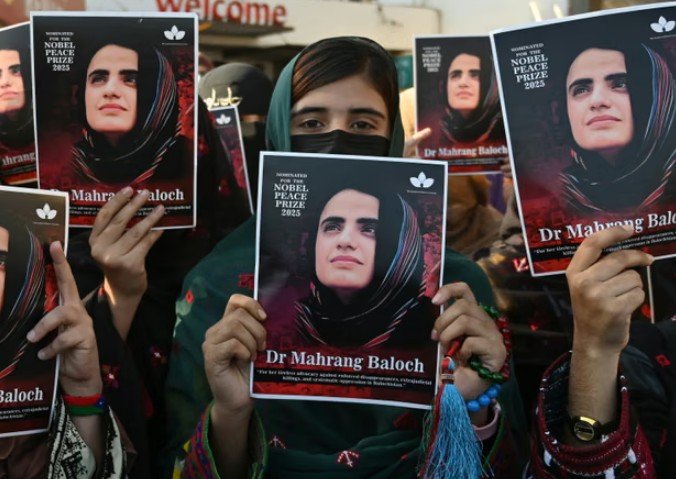
Alleged enforced disappearances are among the most emotionally powerful elements of the conflict.
Human Rights Watch has documented a long-running pattern of disappearances involving suspected nationalists, political activists and other residents of Balochistan. Its investigations have implicated intelligence agencies and the Frontier Corps in multiple cases, while emphasizing that the total number remains disputed and difficult to verify.
Human Rights Watch reported in 2024 that Balochistan had the highest reported number of enforced disappearances in Pakistan and called for investigations, accountability and redress for affected families.
Pakistani authorities have argued that some people listed as missing may have crossed borders, joined militant organizations, concealed their whereabouts or died during armed activity. Those possibilities do not remove the government’s responsibility to investigate cases transparently and inform families of the fate of detained or missing individuals.
Security checkpoints and extensive military deployment may provide operational control, but they can also deepen the perception that Balochistan is administered as a security territory rather than as an equal part of the federation.
The State’s Security Argument
Pakistan faces a genuine armed threat in Balochistan.
Organizations such as the Balochistan Liberation Army have attacked military personnel, police officers, transportation systems, infrastructure, Chinese nationals and civilians from other Pakistani provinces.
The United States National Counterterrorism Center describes the BLA as a secular ethnonationalist separatist organization and one of South Asia’s most capable militant groups.
In August 2025, the United States formally designated the BLA and its Majeed Brigade as foreign terrorist organizations, expanding earlier American terrorism-related designations.
Attacks on civilians, passenger trains, laborers or people selected because of ethnicity cannot be justified as political resistance. Such violence damages the separatists’ claim to represent the Baloch population and gives the state stronger grounds for security operations.
However, recognition of Pakistan’s legitimate security concerns does not justify enforced disappearance, torture, collective punishment or restrictions on peaceful political expression. The conduct of armed groups and the conduct of the state must be evaluated independently.
Are Baloch Separatists Allied With the Taliban?
This question requires an important ideological distinction.
The BLA and several other Baloch separatist groups are primarily secular and ethnonationalist. Their objective is political sovereignty for Balochistan.
The Tehreek-e-Taliban Pakistan, or TTP, is an Islamist militant movement seeking to remove Pakistani authority from parts of the country, impose its interpretation of Islamic law and ultimately transform Pakistan into an Islamic state.
The organizations therefore do not share the same ideology or ultimate political objective.
Militant groups with different ideologies may still develop temporary, localized or transactional relationships when they share an enemy, operate across the same smuggling networks or obtain weapons from overlapping sources. Evidence of tactical contact would not necessarily mean that Baloch nationalism has become a Taliban-style religious movement.
It is therefore misleading to describe Baloch separatists simply as allies of the Taliban without identifying the specific organization, relationship and evidence involved.
The Question of Foreign Support
Pakistan has repeatedly accused India of financing or supporting Baloch militant organizations and has accused authorities in Afghanistan of allowing militants to operate from Afghan territory. India and Afghanistan have denied or disputed these allegations.
Foreign intervention is plausible within South Asia’s competitive geopolitical environment. Rival governments have historically attempted to exploit one another’s internal conflicts, and armed groups often seek support wherever it is available.
However, foreign assistance alone cannot explain the endurance of Baloch unrest. External actors may intensify a conflict, but they are unlikely to sustain a separatist movement for decades without underlying political, economic and social grievances.
Reducing the entire conflict to foreign interference risks ignoring the conditions that facilitate recruitment. Ignoring possible foreign assistance, however, would also present an incomplete account.
How Much Support Does Separatism Have?
There is no reliable, independently verified measurement showing what percentage of Balochistan’s residents support:
- complete independence;
- greater provincial autonomy;
- peaceful nationalist politics;
- armed insurgency;
- or the existing federal arrangement.
Election results are imperfect indicators because of security conditions, political boycotts, disputed representation and low public trust. Videos showing crowds cheering either militants or government forces are also inadequate measures of province-wide opinion.
The most defensible conclusion is that dissatisfaction with the Pakistani state is probably broader than active support for armed separatism.
Some people may demand justice, jobs and resource control while opposing independence. Others may support independence but reject attacks on civilians. A smaller group may provide ideological, logistical or operational support to insurgent organizations.
This distinction was repeatedly debated in the Reddit discussion. Some commenters interpreted public cheering or militant visibility as evidence of growing support. Others argued that visible incidents involving dozens of people cannot establish the preferences of a province containing millions of residents.
What Could Reduce the Conflict?
A military response may disrupt individual militant cells, but the repeated reemergence of insurgency suggests that force alone cannot resolve the underlying political dispute.
A sustainable strategy would require:
- transparent investigations into disappearances and unlawful killings;
- prosecution of abuses committed by security personnel and militants;
- credible provincial and local elections;
- greater local participation in mining and infrastructure decisions;
- equitable distribution of resource revenues;
- protection of peaceful political activity;
- educational and employment opportunities for local youth;
- and sustained dialogue with constitutional Baloch representatives.
Peaceful activists should not automatically be equated with armed separatists. At the same time, separatist organizations must be held accountable for attacks on civilians, ethnic targeting, hostage-taking and destruction of public infrastructure.
Development will contribute to stability only when local communities view themselves as participants and beneficiaries. Roads, ports and mines may increase national output, but they will not create political integration if residents associate them with displacement, exclusion or military control.
Conclusion
Balochistan separatism is neither simply a foreign conspiracy nor an uncomplicated national-liberation struggle.
It is the product of a contested political history, repeated failures of integration, disputes over natural resources, weak development, military operations, human-rights allegations, regional rivalries and violent separatist tactics.
Pakistan has a legitimate responsibility to protect its citizens, infrastructure and territorial integrity. Baloch citizens have an equally legitimate right to due process, political participation, cultural security, local economic opportunity and a fair share of the wealth generated from their province.
The conflict is unlikely to end while Pakistan treats a predominantly political crisis only as a security operation. It is also unlikely to produce a legitimate political outcome while armed organizations target civilians or attempt to substitute violence for democratic consent.
The most credible path lies between unconditional militarization and violent secession: accountable government, constitutional reform, economic participation, protection of peaceful dissent and sustained political dialogue.
Disclaimer
This article is provided for educational and informational purposes. It does not endorse Baloch separatism, the Balochistan Liberation Army, the Taliban, terrorism, violence, collective punishment, enforced disappearances or any political or military organization involved in the conflict.
The Reddit comments referenced in this article are publicly posted user-generated opinions, interpretations and personal anecdotes. They have not necessarily been independently verified and should not be treated as representative of all Baloch people, all Pakistanis, the population of Balochistan or the official position of any government or organization.
Usernames are included solely to attribute viewpoints to their original public comments. Allegations concerning governments, security agencies, foreign states, tribal leaders or militant organizations may be disputed and should be evaluated against primary records, credible investigative reporting and independent research.
The article seeks to explain competing perspectives rather than determine the legal validity of territorial claims or assign collective guilt to any ethnic, provincial, political or national community.



