
Danny Pang began his career as an editor, working on productions including “The Storm Riders” in 1998. The Thai gangster movie “Bangkok Dangerous”, which he directed together with his twin brother Oxide Pang Chun in 1999, earned them the Best Director award and brought international attention to the Pang Brothers. Their next horror production, “The Eye”, was another success in 2002, while Pang also received a nomination for Best Editing.
After years without a truly noteworthy project following “The Eye 2” and “Re-cycle”, Pang returns with “Reborn”, a supernatural urban tale involving a possessed rag doll. The production is also known internationally as “Deadly Doll”. The Hong Kong version runs for just over eighty minutes, compared with the considerably longer mainland Chinese cut. Furthermore, as if to confuse viewers even more, the Chinese titles differ between the two releases. The Hong Kong title can be loosely translated as “Hollow Hearted Person”, while the mainland title translates as “Deadly Doll”.
Buy This Title
by clicking on the image below
Stay at home housewife Syut Ching, her busy breadwinner husband Ho Wah and their seven year old son Wan initially appear to be a typical family. Syut depends heavily on information she finds online when raising her son. Besides refusing to give him fast food, she prefers using medicated oil whenever he becomes ill, as she strongly believes that antibiotics prescribed by doctors are poisonous.
Wan eventually becomes seriously ill and, without receiving proper medical treatment, tragically dies. Meanwhile, Ho Wah seems emotionally distant and offers Syut little affection or support throughout the ordeal.
Heartbroken and unable to accept her loss, Syut continues going to Wan’s school to pick him up and begins seeing him everywhere in their home. While searching online for support, she comes across Aunt Mui, a medium who claims that she can help people reconnect with lost loved ones.
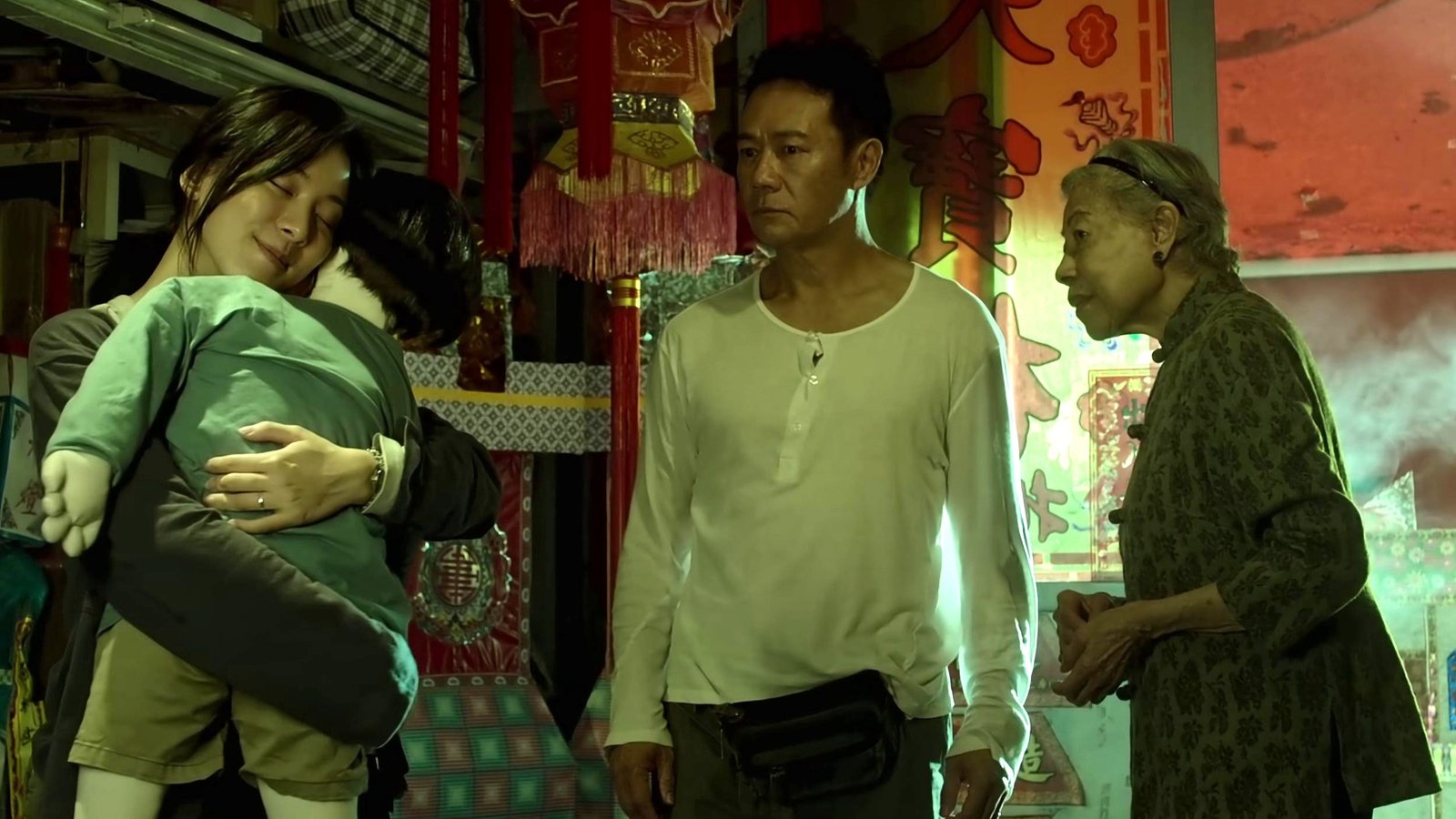
During their visit, the unsettling Aunt Mui presents Syut with a rag doll. Almost as if hypnotised, Syut immediately becomes attached to it and takes it home. Soon afterwards, she becomes a happy mother again, talking to the doll and carrying it everywhere as though her dead son has returned to life.
Looking back at Pang’s work following “The Eye” series, his output has been prolific but inconsistent, ranging from average to poor. “Reborn” follows the same pattern as many recent and uninspired horror productions. However, the twist at the end helps it stand out to a certain degree.
The pounding soundtrack brings back memories of “The Eye”, although there are hardly any jump scares this time. Nonetheless, Pang’s experience and skill as an editor remain evident throughout. The lighting, sudden zooms, emphasis on oppressive and cramped spaces, and controlled pacing all help give the production a touch of the atmosphere associated with older Hong Kong horror movies.
In terms of the performances, Eddie Cheung Siu-fai does his best with the script as Ho Wah, displaying moments of genuine emotion. However, the production essentially belongs to the female protagonist Syut Ching, portrayed by Venus Wong. Her transition from a typical mother into a woman consumed by grief is convincing, while she also exhibits an impressive emotional range.
Leung Lokman appears briefly as their son Wan, presenting him as sad and withdrawn. Equally convincing is veteran Law Lan, whose portrayal of the disturbing medium Aunt Mui is memorable and among the highlights. She commands attention every time she appears on screen.
Viewers looking for a horror story involving a grotesque killer doll, numerous jump scares or abundant gore will probably be disappointed. Beneath its supernatural surface, Pang’s story uses atmosphere and ordinary domestic environments to examine the tragedy of losing a child, as well as isolation, grief and emotional denial.
The true horror and suspense instead emerge from the behaviour of the family members and the traumas they attempt to conceal. At the same time, Aunt Mui, the sinister doll and the various twists all contribute to moving the suspense forward. The longer cut also features a different ending and presents Aunt Mui’s background through a considerably more sinister development.
Ultimately, “Reborn” is hardly a conventional horror movie. In fact, its alternative title and promotional posters are somewhat misleading. The approach is highly character driven, as Pang allows the actors and their emotional transformations to move the story forward instead of overwhelming the narrative with jump scares, evil spirits and curses.
Beneath everything else, “Reborn” deals with human transformation, self indulgence, grief and concealed trauma. Although it falls short as a straightforward horror experience, its focus on a family struggling with the loss of a child gives it a more psychological and emotionally grounded foundation.



