
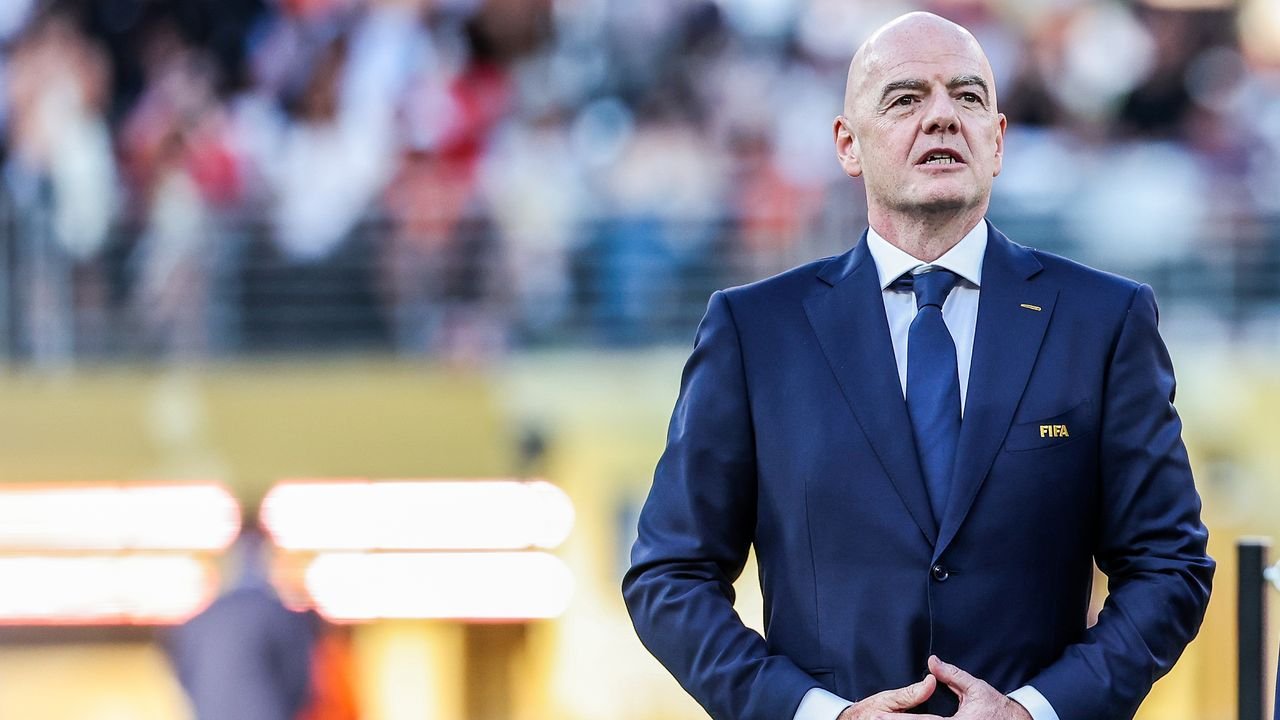
Some of the opposition was to be expected. UEFA, which is richer than FIFA, never passes up a chance to condescend to Infantino. Cordeiro, for his part, used to work at Goldman Sachs; he can count the money already piling up in FIFA’s coffers, and presumably he knows better than to trust the claim that even a passive private-equity investment promises to be a no-risk, no-involvement long-term deal. The plan was “mortgaging football’s future,” he said when he resigned. Still, the outcry—and the lack of outspoken public support even from those federations and allies that Infantino has made a show of propping up—had unusual force and breadth.
By Friday night, the scheme was dead. Infantino’s office released a statement withdrawing the plan. “Having listened carefully to all the views, it has become clear that the project has created divisions of a nature that, regardless of the level of support, are no longer in the interest of the objective set out in the first place,” the statement said.
It was assumed that Infantino would run for reëlection as FIFA’s president unopposed; now he’ll probably have a fight on his hands. That’s for the good. But as for the soul of football? Its defenders will have to do better than making Infantino squirm. The sport is already awash in cash from petrocratic sovereign funds. It caters to autocrats; it is plagued by racism; it’s threatened by climate change. (Whatever the financial incentives behind those hydration breaks, some of them seemed necessary.)
It’s easy, and quite convenient right now, to blame FIFA’s greed for all this. But it didn’t invent the scheme. Professional teams and leagues all over have been eager to access capital from outside investors, whatever the cost to sports’ gauzy ideals. Private equity even has a solid foothold in college sports now. Everything seems to be for sale, and has been for some time: teams, players, luxury stadium boxes, patches on kits, stadium signage. And perhaps more.
One thing I can’t forget from this summer’s World Cup is Kalshi’s marketing blitz. The prediction market was hardly the only company to plaster its logo on every available surface. It wasn’t even the only company to deploy Timothée Chalamet in coy ways. But as the tournament wore on, it became hard to escape the Kalshiness of the whole thing. Most days during the World Cup, a publicity e-mail would land in my inbox, alerting me to the latest legend who’d signed on with Kalshi: Messi, Luka Modrić. Then came the e-mails reporting the latest trading volume: $6.67 billion, then $14.6 billion, then, finally, twenty-six billion—or roughly seven times the G.D.P. of Cabo Verde.
Three million new users downloaded the Kalshi app during the World Cup. Exactly what they were doing when they opened it up is a question I’ll leave to the courts. (On Friday, the State of New York sued Kalshi, accusing it of running an “illegal gambling operation”; Kalshi, which classifies the service it provides as commodities trading, insists that it is not.) But the effect it has on the experience of following an event, the commodification of attention, and the real-time intensity of having a stake in the game is of a piece with what gambling provides. The World Cup might not be for sale any longer. But the very thing that makes sports common and meaningful—hope—appears to be. Which is the bigger problem? ♦



