
Recipe Highlights
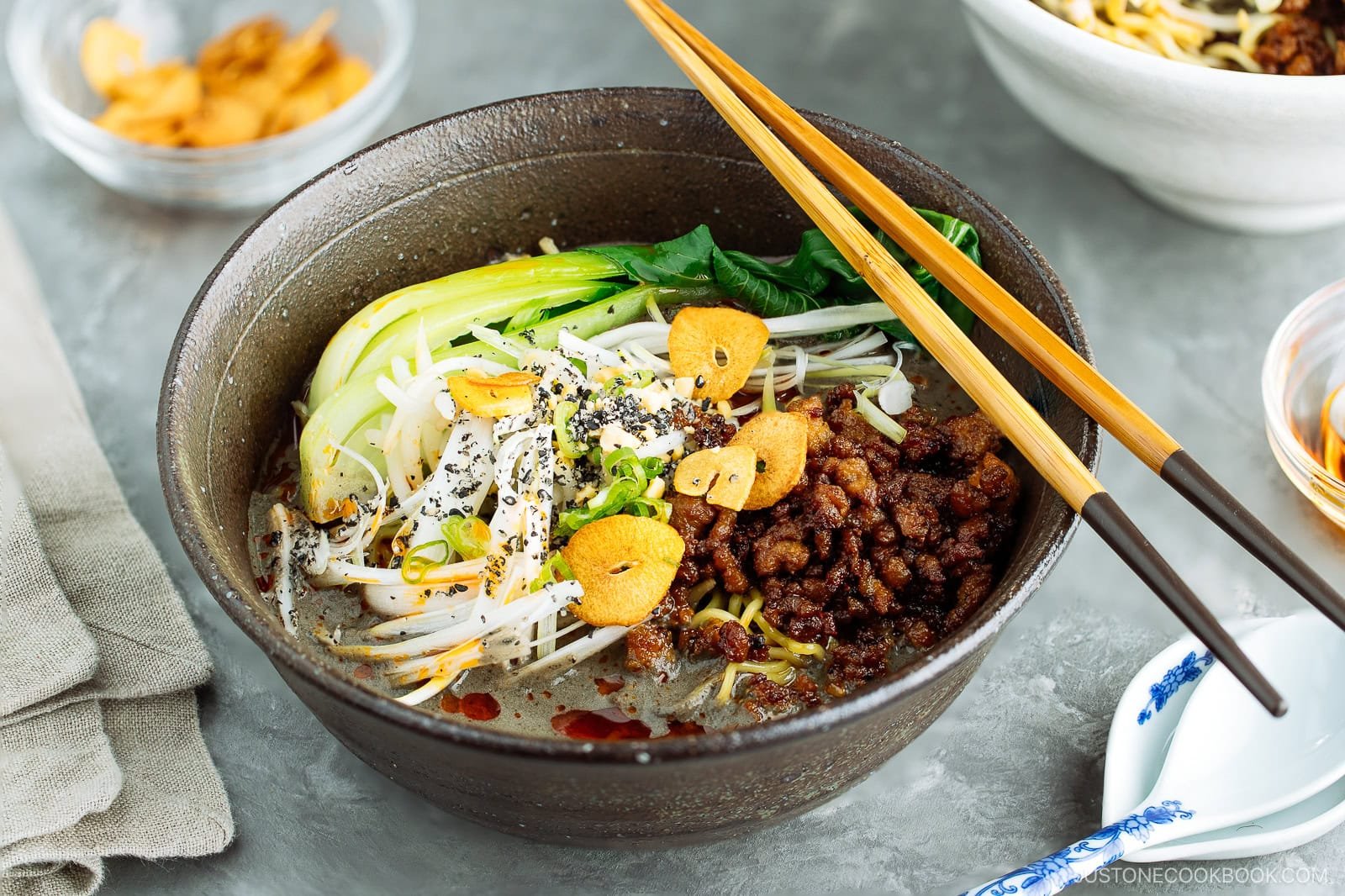
Black sesame tantanmen (dan dan noodles) first won me over at Double Happiness (ダブルハピネス), a Chinese-style restaurant in my hometown of Yokohama. While we look forward to eating their black sesame noodles every time we’re in Japan, this is my take on recreating their signature dish at home.
Here’s why I keep coming back to this recipe:
- Quick to make, no hours-long simmer required
- Savory, crunchy, fresh toppings in every bite
- Serve hot or chilled—up to your preference how to serve this creamy soup
- So good you’ll want seconds (or thirds!)
If you love Japanese ramen recipes, try my Miso Ramen Recipe, Hiyashi Chuka (Cold Ramen), and Easy Tonkotsu Ramen next!

What is Black Sesame Tantanmen?
Tantanmen (dan dan noodles) traces back to China’s Sichuan province, where dandan mian (担担面) is served with a meat sauce seasoned with numbing Sichuan peppercorn.
When the dish made its way to Japan, it was adapted into Tantanmen (担々麺), now a staple style of ramen. The Japanese version tones down the heat with more broth, sesame paste, and mild chili oil.
This version uses black sesame paste, instead of white, for a unique color and flavor.
Ingredients for Black Sesame Tantanmen
Soup
- Black sesame paste – buy online or make my Black Sesame Paste recipe
- Unsweetened soy milk
- Chicken stock
- Seasonings – rice vinegar, soy sauce, sugar, kosher salt
Meat sauce
Noodles & toppings
- Ramen noodles – look for medium-thick, wavy noodles
- Shanghai bok choy
- Bean sprouts
- Green onions
Garnishes
Find the printable recipe with measurements below.
How to Make Black Sesame Dan Dan Noodles
- Make the soup. Whisk black sesame paste into soy milk until smooth. Warm in a pot with the chicken stock over medium heat. Season with rice vinegar, soy sauce, sugar, and salt. For cold noodles, chill the soup in iced water.
- Cook the meat sauce. In a pan or wok, sauté grated garlic and ginger in toasted sesame oil until fragrant. Add the pork, sake, and black pepper. Once the pork is brown, stir in two bean pastes (tianmianjiang and doubanjiang), soy sauce, and sugar.
- Prep the toppings. Crush the peanuts and grind the sesame seeds. Julienne the white parts of the green onions and soak them in iced water. Slice the green parts into thin rounds.
- Blanch and boil in one pot. Bring a pot of water to a boil. Blanch the bok choy for 2 to 3 minutes. Add the bean sprouts in the last 10 seconds. Remove the vegetables, then cook the noodles in the same pot.
- Assemble hot or chilled. For the hot version, pour the soup over the noodles. For the cold version, chill the noodles in iced water first, then add the cold soup. Top with meat sauce, vegetables, and garnishes.


Make Ahead Tips
- Chill the soup first – For the cold version, refrigerate it the day before. I chill half and keep the rest hot—I like mine cold, but Mr. JOC prefers his hot.
Storage and Reheating Tips
To store and freeze: Store the soup and toppings in separate airtight containers.
- The soup keeps for up to 4 days in the refrigerator or up to a month in the freezer—whisk well after thawing since the soy milk may separate.
- Garlic chips are best kept at room temperature in an airtight container and used within a month. Refrigerating or freezing them will soften the crunch. I recommend adding a Desiccant Packet for extra freshness and crispness.
- Fresh toppings like green onions and crushed peanuts keep for 3 to 4 days in the fridge and are best added just before serving.
To reheat: Warm the soup in a pot over medium heat. Cook fresh noodles right before serving.

Variations
This recipe is flexible—here are a few ways to make this bowl your own.
- Swap the protein. Ground chicken, turkey, or beef is a flexible stand-in for the pork.
- Adjust the heat. I mix spicy and non-spicy doubanjiang to match my kids’ tolerance, then top with chili oil to taste. Up the heat by adding Sichuan peppercorn.

- Use black tahini. If you can’t get black sesame paste, black tahini, sold on Amazon, is a good substitute, although the flavor isn’t as deep.
- Make it vegan. Use crumbled firm tofu instead of pork and vegetable stock instead of chicken stock. Check that your doubanjiang has no animal ingredients.
What to Serve with Black Sesame Tantanmen
These noodles are satisfying on their own, but classic sides turn them into a complete ramen shop meal.
- Gyoza – A classic ramen pairing. Dip the dumplings in sweet chili sauce like they do at Double Happiness.
- Karaage – Japanese fried chicken adds a crunch that pairs well with the creamy broth.
- Spicy Edamame – Refreshing, with a bit of a kick, these edamame are a great side for spice lovers.
- Japanese Cucumber Salad – Cool, crisp cucumbers seasoned in tangy rice vinegar cleanse your palate between bites.


FAQ
Where can I buy black sesame paste?
Most Japanese and Asian grocery stores carry black sesame paste in a jar. You can also find it on Amazon.
Can I use another kind of milk?
I recommend unsweetened soy milk here. Cow’s milk, almond milk, and oat milk overpower the black sesame. In a pinch, use lightly sweetened soy milk, though the taste will shift.
Is this black sesame tantanmen recipe a black sesame ramen recipe?
Yes —In Japan, kurogoma tantanmen (黒胡麻担々麺) or black sesame dan dan noodles are considered a type of ramen. Sometimes the dish is sold under “black sesame ramen” or “black sesame paste noodles” as well.
I’d love to hear how yours turned out! 💛 Please leave a star rating and comment below to share your experience. Your feedback not only supports Just One Cookbook but also helps other home cooks discover recipes they can trust.
Black Sesame Tantanmen (Dan Dan Noodles)
To Make the Soup
- In a measuring cup or bowl, add ½ cup unsweetened soy milk and 1½ Tbsp black sesame paste and mix until smooth. Nami’s Tip: Press the paste against the side of the cup to help it dissolve.
- Transfer the sesame mixture to a pot and add 2 cups chicken stock/broth. Warm it over medium heat. Nami’s Tip: Add more chicken stock for a thinner soup—my family likes it creamier.
- Add 1 Tbsp rice vinegar (unseasoned), 1 Tbsp soy sauce, and 1 tsp sugar.Nami’s Tip: Increase the seasoning if you added more chicken stock.
- Stir to dissolve the sugar, then taste the soup. Add up to ½ tsp Diamond Crystal kosher salt if needed. Heat until steaming, then remove from the heat.Nami’s Tip: Stock saltiness varies by brand, so taste before adding all the salt.
- For hot noodles: Cover the pot to keep warm.For cold noodles: Pour the soup into a glass measuring cup. Cool in a bowl of iced water, then refrigerate until ready to serve (keeps up to 24 hours). I chilled half for myself and kept the rest hot for Mr. JOC.
To Make the Meat Sauce
Grate 1 clove garlic. Peel 1 inch ginger and grate it, measuring 1 tsp ginger with juice.
- Heat 1 Tbsp toasted sesame oil in a large frying pan over medium heat. Add garlic and ginger and cook, stirring frequently, until fragrant. Watch closely so they don’t burn. Add 6 oz ground pork, breaking it into small pieces as it cooks.
Add 1 tsp sake and ¼ tsp freshly ground black pepper and mix until incorporated.
Cook until the meat is no longer pink. Add 2 tsp tianmianjiang (sweet bean sauce), 1 tsp doubanjiang (spicy chili bean paste), 1 tsp soy sauce and 1 tsp sugar. Combine until the meat is evenly coated with the sauce.
To Prep the Toppings
- Grind 1 Tbsp peanuts with a mortar and pestle, or crush them in a plastic bag with a rolling pin. Grind 1 Tbsp toasted black sesame seeds, leaving some unground for texture.
Cut 1 head Shanghai bok choy lengthwise into quarters.
Cut 4 green onions/scallions crosswise in half to separate the green and white parts. Cut the white parts in half lengthwise, then slice into julienned strips.
- Soak in iced water for 15 minutes. Drain and set aside. Cut the green parts into thin rounds.Nami’s Tip: Soaking removes the bitterness and makes them crisp.
To Blanch and Boil
Bring a pot of water to a boil. Add the bok choy and blanch it for 2–3 minutes (depending on its size). Add 2 oz bean sprouts to the same pot and cook for another 10 seconds. Remove both the bok choy and bean sprouts and drain completely.
- Cook 12 oz fresh ramen noodles in the same pot according to the package instructions. Nami’s Tip: Cook the noodles 15–20 seconds less than the package instructs. The residual heat keeps cooking them.
For hot noodles: Serve immediately in a ramen bowl.
For cold noodles: Soak the noodles in iced water until chilled and drain well. Transfer them to a large bowl.
To Assemble the Tantanmen
- For hot soup: Pour in the hot black sesame soup. Place the bok choy, bean sprouts, and meat sauce on top. Garnish with peanuts, sesame seeds, the green onions (both green and white parts), and garlic chips. Drizzle with up to 2 tsp la-yu (Japanese chili oil) per bowl and serve.
- For cold soup: Pour in the chilled black sesame soup. Place the bok choy, bean sprouts, and meat sauce on top of the noodles. Garnish with peanuts, sesame seeds, green onions (both green and white parts), and garlic chips. Drizzle with up to 2 tsp la-yu (Japanese chili oil) per bowl and serve.
To Store
- Store the soup and toppings in separate airtight containers. The soup keeps for up to 24 hours in the refrigerator or up to a month in the freezer.Garlic chips are best kept at room temperature in an airtight container and used within a week; refrigerating or freezing them will soften the crunch. Fresh toppings like green onions and crushed peanuts keep for 3 to 4 days in the fridge and are best added just before serving.
To Reheat
- Warm the soup in a pot over medium heat, whisking occasionally, until steaming—the soy milk may separate, so whisk well. Cook fresh noodles according to the package instructions and assemble as directed. For the cold version, no reheating needed—just cook fresh noodles, chill them in iced water, and serve with the cold soup.
- Noodles: Fresh tantanmen noodles in package is sold at Japanese grocery stores. For gluten free, you can get GF noodles on Amazon.
- Black sesame paste: Find 100% pure black sesame paste sold at Japanese grocery stores and on Amazon. You can also make my Black Sesame Paste recipe at home with a 3-cup food processor. Another option is black tahini sold on Amazon, although it’s less flavorful.
- Doubanjiang: Use the spicy or non-spicy type or the gluten-free kind. You can find the non-spicy type online.
- Garlic chips: You can make these at home with my Garlic Chips recipe.
- La-yu: Find it at a Japanese grocery store or make it yourself with my Homemade La-yu recipe.
Variations
- Adjust the heat. I mix spicy and non-spicy doubanjiang to match my kids’ tolerance, then top with chili oil to taste. Up the heat by adding Sichuan peppercorn.
- Swap the protein. Ground chicken, turkey, or beef is a flexible stand-in for the pork.
- Use black tahini. Swap in black tahini, sold on Amazon, though the flavor won’t be as deep.
- Make it vegan. Use crumbled firm tofu instead of pork and vegetable stock instead of chicken stock. Check that your doubanjiang has no animal ingredients.
- Make it gluten-free. Use rice noodles, gluten-free soy sauce, and gluten-free doubanjiang. Skip the tianmianjiang and add a pinch of sugar to compensate.
Calories: 788kcal, Carbohydrates: 77g, Protein: 30g, Fat: 39g, Saturated Fat: 9g, Polyunsaturated Fat: 8g, Monounsaturated Fat: 17g, Cholesterol: 64mg, Sodium: 1132mg, Potassium: 659mg, Fiber: 5g, Sugar: 6g, Vitamin A: 2631IU, Vitamin C: 36mg, Calcium: 196mg, Iron: 3mg
Did you make this recipe?
Tag @justonecookbook on Instagram so we can see your delicious creation!
Editor’s Note: This post was originally published on August 8, 2018, and republished with clearer instructions and extra helpful tips on August 2, 2026.



