
In late July, when Michigan’s governor, Gretchen Whitmer, endorsed Haley Stevens in the state’s Democratic Senate primary, it was unclear what the move meant. Was Whitmer’s intervention an indication of the Democratic establishment’s confidence that Stevens, a centrist congresswoman who’d struggled to gain traction for much of the campaign, was now, just eleven days before the vote, on a path to victory, and just needed a final push to get over the finish line? Or was it a sign that the establishment was panicked that Stevens’s opponent, Abdul El-Sayed, a liberal former public-health official, was in the lead—and that the only way to prevent him from winning was a desperate, last-minute endorsement from the most popular Democrat in the state, who’d previously pledged to remain neutral? After last night, it’s clear that the latter was the case—and that the Hail Mary failed.
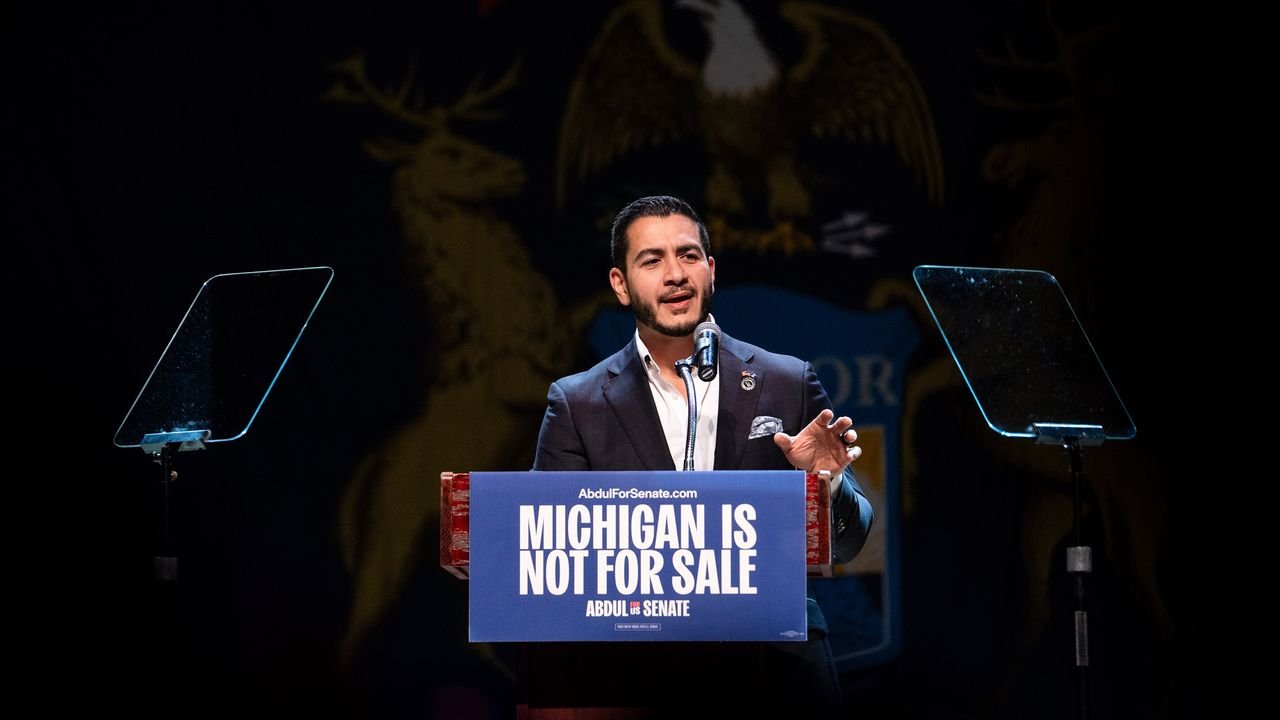
El-Sayed’s win over Stevens in Michigan, while not the blowout the final polls suggested it would be, is nonetheless the insurgent left’s most important victory of 2026—a year that has already featured many successful challenges to the Party’s establishment. So it’s fitting that El-Sayed is also the most politically talented of the group. He has the charisma of Graham Platner, the populist oysterman who won Maine’s Democratic Senate primary before withdrawing from the race after being accused of sexual assault, which he denied, but none of Platner’s skeletons: El-Sayed, a devout Muslim, does not drink, and he and his wife married when they were both in college. As a Rhodes Scholar with an M.D. and a Ph.D., El-Sayed is even more academically credentialled than Darializa Avila Chevalier, a Columbia grad and a doctoral student who unseated a five-term congressman in New York—plus, unlike Avila Chevalier, he’s a gifted orator who can think on his feet and doesn’t wilt under tough questioning. And, though some of El-Sayed’s detractors dismissed his campaign as an internet phenomenon—“I think there’s an extent to which Abdul is certainly winning in the online contest, but Haley is strongly winning with actual voters,” the Michigan congresswoman Hillary Scholten, who endorsed Stevens, said last week—El-Sayed ran an impressive real-life grassroots operation, with nearly five hundred campaign events in more than a hundred different towns and cities, that helped him overcome Stevens’s nine-to-one TV-spending advantage.
As much as El-Sayed’s win is a testament to his talents, it’s also an indictment of the Democratic establishment. Stevens was elected to Congress in 2018, but her Senate campaign was centered on the work she did in 2009, as a twenty-five-year-old factotum on the Obama Administration team that orchestrated the rescue of the U.S. auto industry. Television ads backing Stevens featured Obama almost as much as they did the candidate herself, even though Obama did not endorse Stevens’s bid. When Stevens visited the Greater Emmanuel Institutional Church of God in Christ, a Black Pentecostal church on Detroit’s west side, on a Sunday in May, the church’s pastor introduced her as “the former chief of staff, I think, for President Barack Obama.” Stevens did not correct him. “I will be honored to continue to do the work that I did alongside the great President Barack Obama,” she told the congregation.
Stevens, who benefitted from about sixty million dollars in spending from outside groups, more than half of which reportedly came from the pro-Israel lobbying group AIPAC, had much less to say, at the church and in her campaign, about her four terms in Congress. Although she, like pretty much every Democrat these days, described herself as a “fighter” against President Donald Trump, it remained unclear to Michigan Democrats what, exactly, her fighting had got them. El-Sayed, by contrast, spoke openly about his fight against the Democratic establishment and about how he hoped his victory in the state he called “the carotid artery of American politics” would propel a progressive candidate to capture the Party’s Presidential nomination in 2028.



