
Do you like where you live? I sure do. I live in a house built 100 years ago. It’s got a porch swing out front. It’s in a quiet neighborhood with brick streets. You could say it’s my ideal habitat.
And no, I don’t mean it’s in a subdivision called “The Habitat” — although, thanks to the long Florida tradition of developers naming their project for what they’ve paved over, it could be.
No Florida creature has lost more of its habitat to such developers than our state animal, the Florida panther. Thousands of acres have been wiped out by new homes, stores, offices, mines, and even one college campus.
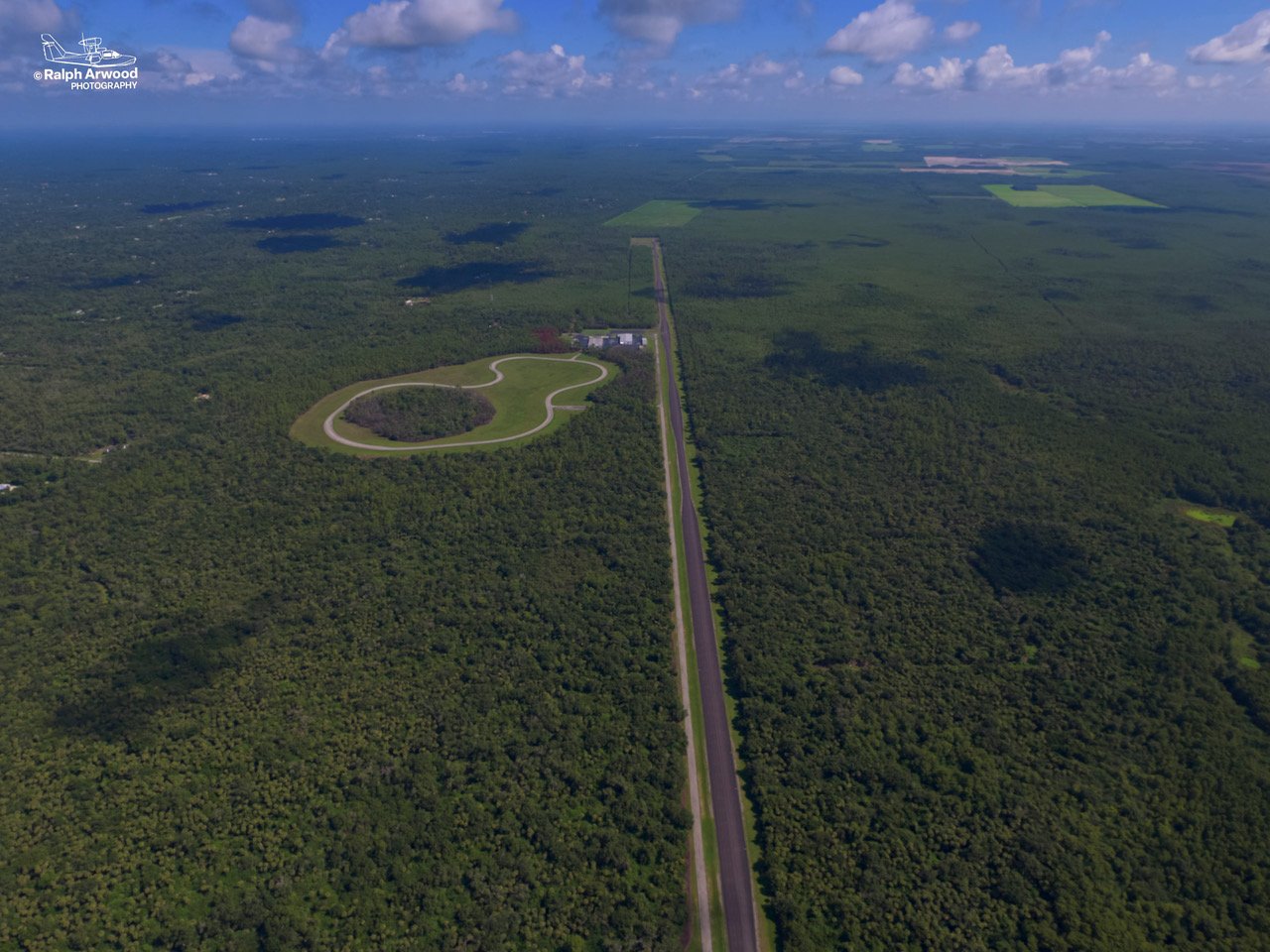
Now here comes one of the most egregious I’ve ever seen. A company called the Hyper Club LLC has proposed what Gulfshore Business describes as “a private motorsports club that would add driving circuits, resort-style amenities, and up to 100 residential units.”
“Racecar” is my favorite palindrome, even better than “radar.” But people with a lot of roaring racecars would be my least favorite neighbors.
That these folks would be doing regular recreations of “Days of Thunder” is not the big problem. The big problem is where it would happen: 530 acres smack in the middle of what’s left of panther habitat.
The proposed subdivision would center on an automotive test track built in the 1980s. Its neighbors include the Florida Panther National Wildlife Refuge, the Picayune Strand State Forest, the Fakahatchee Strand Preserve State Park, and Collier County’s own Dr. Robert H. Gore III Preserve.
“Think of all the work that went into assembling all those preserve properties,” said Matthew Schwartz, executive director of the South Florida Wildlands Association. “And they want to plop their project right in the middle of it.”
Schwartz has rounded up nearly 10,000 signatures on a petition to reject the project. But this is a worrisome time for environmental advocates like him because the Trump administration recently altered the definition of what constitutes “harm” under the Endangered Species Act.
Under the old definition, “harm” could include alteration or destruction of habitat for the species. Under the new one, the only way anyone can cause harm in the habitat is by killing or injuring the wildlife covered by the law — nothing more.
Imagine if someone drove a bulldozer through my porch swing and kept going through my living room, bathroom, and bedrooms, but didn’t touch me. To the administration, that would mean the bulldozer didn’t cause any harm.
“That’s even more ridiculous than the Hyper Club,” Schwartz said.
Lord, Mr. Ford!
I’ve heard of Florida developments that were centered around golf, around flying planes, and even, believe it or not, around surfing. This is the first time I’ve heard of one focused on fast cars.
I’m picturing it as a place for people with such a need for speed they spend their nights watching “Ford vs. Ferrari” and “Grand Prix” and their days listening to driving songs like “Radar Love,” “Life Is A Highway,” and “Cadillac Ranch.” The air is filled with the smell of burning rubber and shouts of “Adrenaline is just fuel with feelings!” Vroom vroom!

“We saw this as probably the best potential site within Collier County, or in the Southwest Florida region, because it had so much history as an automotive test center,” one of the development partners, Bruce Bond, told the Naples Daily News.
About that history: The property belonged to the development company that bears the same name as the county, Collier. In 1985, it built the test track and sold it to the Ford Motor Co. as a winter alternative to Ford’s main test track in Michigan. Looking at the isolated spot they chose makes me echo Jerry Reed and say, “Lord, Mr. Ford!”
Sure enough, when I dug through old newspaper articles, I learned that the proposed test track unleashed a storm of controversy. It got built because the Florida chapter of the Audubon Society worked out a deal.
In exchange for Audubon dropping its objection to the track, the developer agreed to set aside 32,000 acres that would eventually be purchased by the federal government and become part of the Florida Panther National Wildlife Refuge.
In other words, the vast preserves around the track were to make up for the harm the track had done to panther habitat.
“Protection of this most sensitive piece of panther range is essential,” one Audubon official said at the time.
The track, built on just 53 of the 530 acres, includes a 1.2-mile handling course and a 2-mile straightaway. It hasn’t been in constant use since it was built. At one point, the track sat idle for two years.
The track was fenced off to keep wildlife out, but parts of the fence fell down, according to neighbors. You can see the result on a map the Conservancy of Southwest Florida compiled. It shows all the places around the track where radio-collared panthers have popped up.


“We do have a lot of concern about where [the development] is placed,” Amber Crooks of the Conservancy told me. “That’s 100% in the panther’s primary zone for adult breeding.”
Crooks pointed out that other species show up there too — bears, for instance, and the endangered bonneted bat. None of them would appreciate the noise, lights, and traffic produced by a residential development there, much less one full of racecars.
The hydrological alterations to the site and all the automotive pollution the Hyper Club generates could create problems too, she told me. Right next door, the state and federal government just spent more than $700 million turning 55,000 acres of the old Golden Gate Estates subdivision into the Picayune Strand flowway as part of the Everglades restoration project.
While all that restoration work has been going on, Crooks said, chunks of the nearby landscape are being developed into sprawling new communities with names like “Kingston” and “Bellmar.”
“You’ve heard of ‘death by a thousand cuts,’” Crooks said. “Now it feels like they’re lopping off whole limbs.”
Airport sounds
Bond has repeatedly insisted that everyone’s concerns about panthers are overblown.
“There really is not a risk to the panther or even to other animals in the area,” he told WINK-TV. And he maintained a straight face, too!
When I have questions about panthers, the first person I usually call is Deborah Jansen. She was present at the first official panther capture in 1981, and she spent the following decades studying them as a biologist at the Big Cypress National Preserve.

Although she’s retired now, Jansen was familiar with the controversy over the Hyper Club. Panthers, which tend to be nocturnal, will be disturbed by the increase in roaring engine noise and other residential activities, such as lights, she predicted.
“These are animals that tend to avoid humans,” she explained.
Jansen referred me to a friend of hers named Mac McCord. For the past seven years, McCord and his wife Lisa have lived on eight acres by the test track. The couple have put in a lot of work restoring their property, getting rid of exotic vegetation and planting natives galore, including 1,200 cypress trees.

They mounted motion-activated cameras all over their yard and snapped lots of pictures of panthers wandering through. One photo shows a female panther scratching at a tree trunk just 100 feet from the test track property line, McCord told me.
Before they bought their property, the McCords checked the zoning for the test track, which was classified as a “planned unit development.” Everything had been built there that was allowed under that zoning, so they weren’t worried about alterations.
When the test track was being used by auto manufacturers to check gas mileage, he said, “you really didn’t notice it.” Mostly the drivers would start a single car or truck off by going 70 mph and then let it coast to check its fuel usage.
But since Hyper Club took possession, he said, “now all you hear are high-powered vehicles. One weekend they had F1 race cars on the straightaway. It sounded like an airport.”
He and his wife have looked over the plans submitted by the Hyper Club, including its request for a change to the county zoning and a federal permit application to wipe out 142 acres of wetlands. The McCords are definitely opposed.
“This is just going to destroy everything we’ve worked for,” McCord said.

Copacetic with nature
I spent some time on the phone this week with Bond’s partner in hyping the Hyper Club, car enthusiast John DeAngelis. To my surprise, he did NOT keep repeating Sonic the Hedgehog’s catchphrase, “Gotta go fast!”
“We’ve never had any panthers on that site,” he insisted, echoing Bond. He boasted that the test tracks’ nine-foot fence stops them. I didn’t tell him that panthers can jump 15 feet straight up in the air. It’s the way they surprise their prey, and the occasional unwary landowner.
Later in the conversation, though, he told me, “We’ve had a couple of bear encounters.” Then he told me they were working to make their plans “copacetic with nature.”
As you’ve probably guessed, DeAngelis is NOT a trained biologist. He’s co-founder of a Naples construction management firm.
Bond isn’t a biologist either. He’s a financier who, according to DeAngelis, is known as “the Father of the ETF,” which stands for “exchange-traded funds.” He’s apparently made big B-U-X with the E-T-Fs. Bloomberg says he’s a billionaire.
What they have in common is a love for racing, and I do not mean “running a weekend 10K.”
I asked DeAngelis what kind of vehicles he owns. He quickly rattled off a list with the names “Ferrari” and “Porsche” prominently featured. Then he added, with a chuckle, “I have a few cars that teenagers would think are cool.”
Bond, who recently bought a home in Naples, belongs to a fast-car club in Chicago. He mentioned to DeAngelis his desire to start one in their neck of the woods, too. After all, it’s such a pain to rent out the Homestead-Miami Speedway for your birthday parties.
That led to their decision to buy the test track for $10 million and plan how to convert it, DeAngelis said. If they can get the zoning changed and the permits they need from state and federal agencies, he figures they could be up and running in 22 months. Pedal to the metal, man!
When I asked him to define what a finished Hyper Club would be like, he said, “It’s got like a golf course feel, but it’s for drivers.”
But it’s not for permanent residents, he said. The 100 homes they would build would serve as temporary quarters for visitors, well-heeled folks who own powerful cars and want to unleash all that horsepower.
He told me the development would feature shielded lights to prevent nighttime glare and that it would wipe out only 30% of the natural landscape, allowing 70 % to remain intact. But then he told me their vision for the future, and it’s more bad news for panthers.
DeAngelis told me so many people from Miami and Tampa would be attracted by the excitement of racing that the Florida Department of Transportation would have to build a new Interstate 75 exit ramp there.
He didn’t seem to comprehend that that would destroy even more panther habitat. That would not be copacetic with nature.
I don’t want to say that DeAngelis and Bond have more dollars than sense, but that thought did cross my mind. They’re quickly learning that they’ve riled up a big chunk of the public.
As we were talking, DeAngelis kept telling me how he and Bond are being sensitive to “the adjacencies.” Finally, I stopped him and asked what that word meant. Turns out that’s what he and Bond call the nature preserves next door to where they want to build.
Hey wait, that’s what they can call their development: The Adjacencies! It’s perfect.
But if they’re smart, they will instead withdraw their proposal and sell the property to some agency to preserve it for the panthers. That, to me, would make for a perfect finish.



