
There’s friction among Republicans, too. Last month, Vice-President J. D. Vance, who had been tasked with negotiating a way out of the war with Iran launched by Trump and encouraged by Netanyahu, called out figures within the Israeli “system” for “manipulating and trying to change American public opinion” in favor of continuing the conflict. When some Israeli cabinet members were agitating against U.S. diplomacy with Tehran in June, Vance scolded them, arguing that Trump was “the only head of state in the entire world who is sympathetic to the nation of Israel at this moment in time.”
In July, at an event hosted at the Council on Foreign Relations, in Washington, D.C., I asked Yechiel Leiter, Israel’s Ambassador to the United States, about Vance’s remarks and the impression that Israel is gradually becoming more isolated. He said he hadn’t “detected a scintilla of antipathy towards Israel” after “dozens of meetings” with Vance. He blamed Israel’s travails in the court of global public opinion on a young generation overly influenced by social media. “People’s minds are being poisoned by all sorts of ideas,” he said, and rejected the suggestion that Israel was alone. Leiter pointed to burgeoning defense ties with India and close coöperation with the United Arab Emirates and Azerbaijan. “We have many friends,” he said.
But the ranks of Israel’s detractors have unquestionably grown. Pew also surveyed public opinion about Israel in thirty-five other countries and found broadly negative attitudes toward Israel prevailing. The numbers of respondents in major Western countries, such as the United Kingdom, Germany, and Italy, who disapprove of Israel spiked by almost ten points from when Pew had conducted the same survey last year. Various governments have tried to impose consequences on Israel, largely through symbolic measures. Countries such as Brazil and South Africa recalled ambassadors; Spain and Norway recognized a Palestinian state at the U.N. and cajoled European partners to ratchet up sanctions on Israeli settler entities and to reconsider existing agreements with Israel. Others, including a coalition of Global South countries known as the Hague Group, urged embargoes on weapons sales and the enforcement of International Criminal Court warrants, and have repeatedly called out Israel’s alleged violations of international law as well as U.S. hypocrisy in shielding Israel from censure and helping equip its military.
Netanyahu and his allies dismiss criticism as the product of entrenched antisemitism and cast institutions like the United Nations as irredeemably biased. They also launched social-media broadsides at a host of foreign leaders, including nominally pro-Israel centrists such as the French President, Emmanuel Macron, who had irked Netanyahu by trying to restore international attention to the moribund two-state solution for Israelis and Palestinians. Israel has traditionally avoided official dialogue with far-right parties in Europe, where many factions have direct antecedents in post-Second World War neofascist movements. But last year Sa’ar instructed Israeli diplomats to set up channels to France’s National Rally, Spain’s ultranationalist Vox party, and the far-right Sweden Democrats—all of which espouse virulently Islamophobic platforms.
The fact that Israel’s current leadership apparently feels more solidarity with European nationalists than with the Continent’s political establishment is a strange irony of the moment. The country’s diaspora minister, Amichai Chikli, lamented the “post-national” cosmopolitanism of Jewish communities in the West, arguing that it was better for Israel to court far-right activists in Europe, who are supposedly closer to “ordinary people” and who may find common cause with Israel in their animus toward Muslim immigration and political Islam. Last month, members of Netanyahu’s Likud Party, including Sa’ar and the defense minister, Israel Katz, hosted a visit by the Dutch far-right leader Geert Wilders. He posted an image of himself eating falafel in Jerusalem and toured an illegal West Bank settlement alongside a well-known settler leader against whom the Dutch parliament had passed a resolution urging European Union sanctions. Sa’ar called Wilders “a courageous leader and a true friend of Israel.”
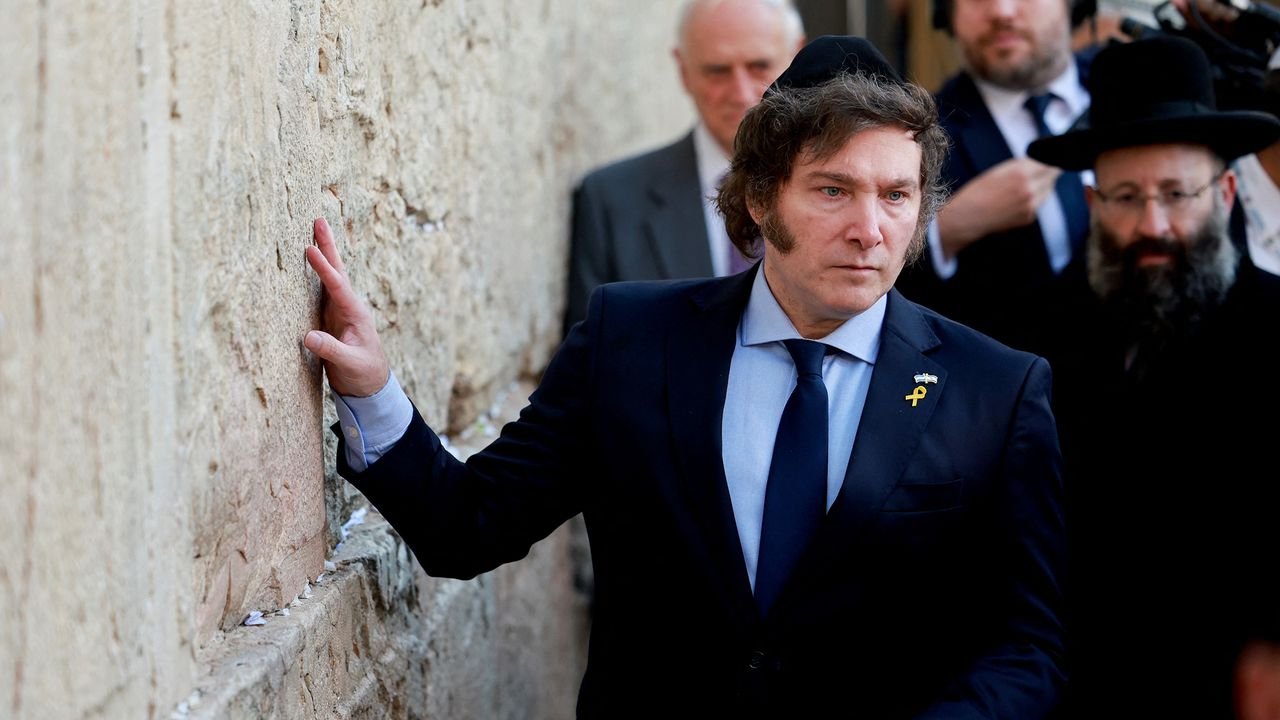
In Latin America, Israel plays into the region’s profound political polarization: leftists still summon a Cold War history of Israeli assistance to a clutch of U.S.-aligned military dictatorships; the right sees both the Palestinian cause and armed groups such as Hamas and Hezbollah (which is linked to deadly terror attacks in Argentina) in the same light as the anarchic, leftist militants it has long sought to quash. The dynamic is leading to foreign-policy whiplash. Last December, Bolivia’s new right-wing government restored ties with Israel that had been suspended by its leftist predecessors. Chile’s Kast, who took office in March and is an admirer of the late dictator Augusto Pinochet, sent an ambassador to Israel to take the place of the one his center-left predecessor had recalled a couple years earlier. Milei has visited Israel three times since taking office in 2023, and earlier this year, in Jerusalem, he was presented with the Presidential Medal of Honor, the country’s highest civilian award. In March, during a speech at Yeshiva University, in New York City, Milei said that he was “proud to be the most Zionist President in the world.” A month later, he and Netanyahu announced the advent of the Isaac Accords, a vague framework of agreements aimed at deepening ties between Israel and Latin America and inspired by the Trump-led Abraham Accords between Israel and a handful of Arab states. In the past two years, several right-wing Latin American politicians have made their way to the Western Wall in Jerusalem, including Flavio Bolsonaro, the son of the jailed former Brazilian President Jair Bolsonaro. The younger Bolsonaro is running for the Presidency in October. If he defeats the current President, the leftist Luiz Inácio Lula da Silva—who infuriated Israeli officials when he compared the war in Gaza to the Holocaust—he has vowed to follow some of his neighbors and move Brazil’s Embassy to Jerusalem.



