
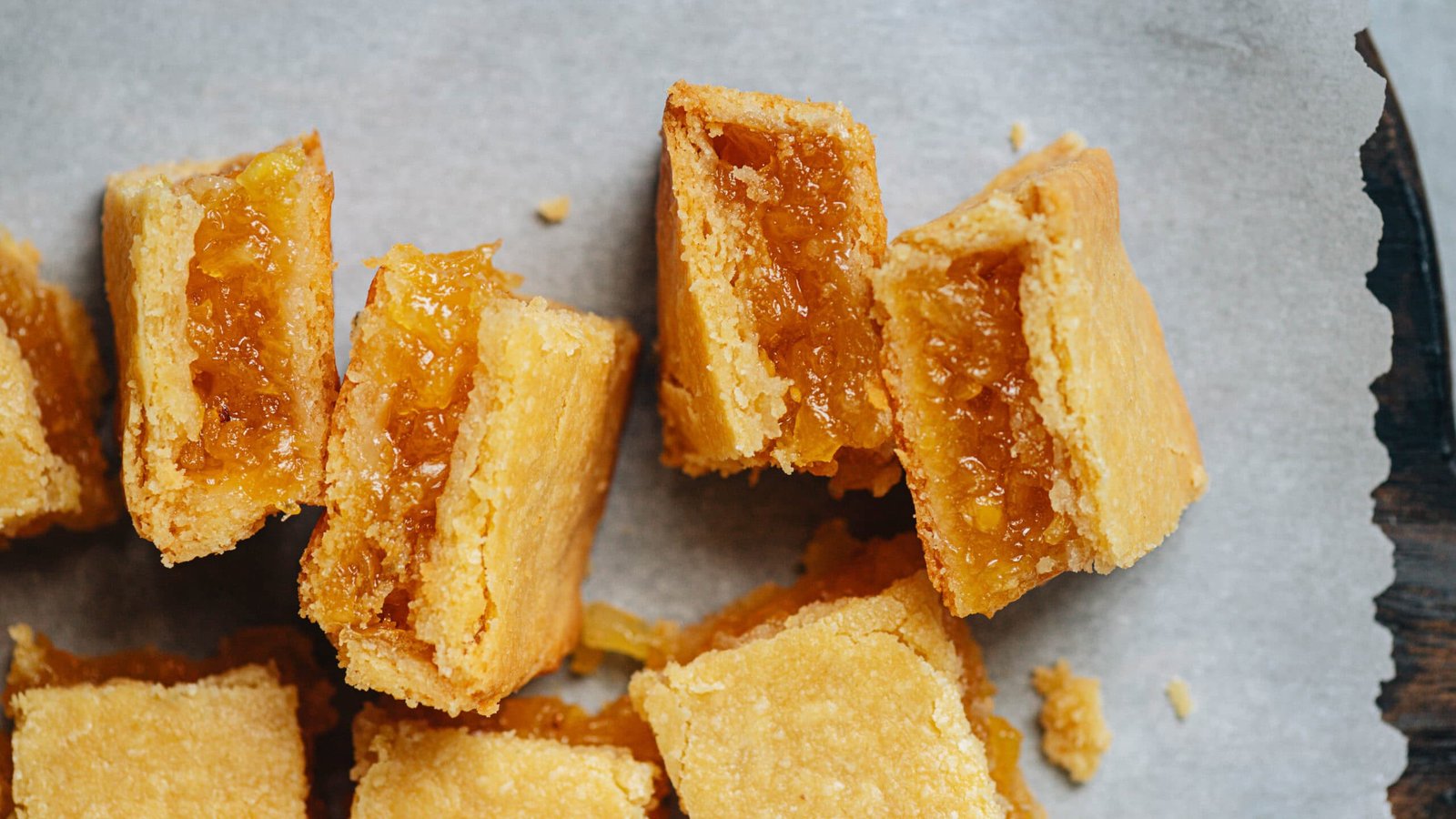
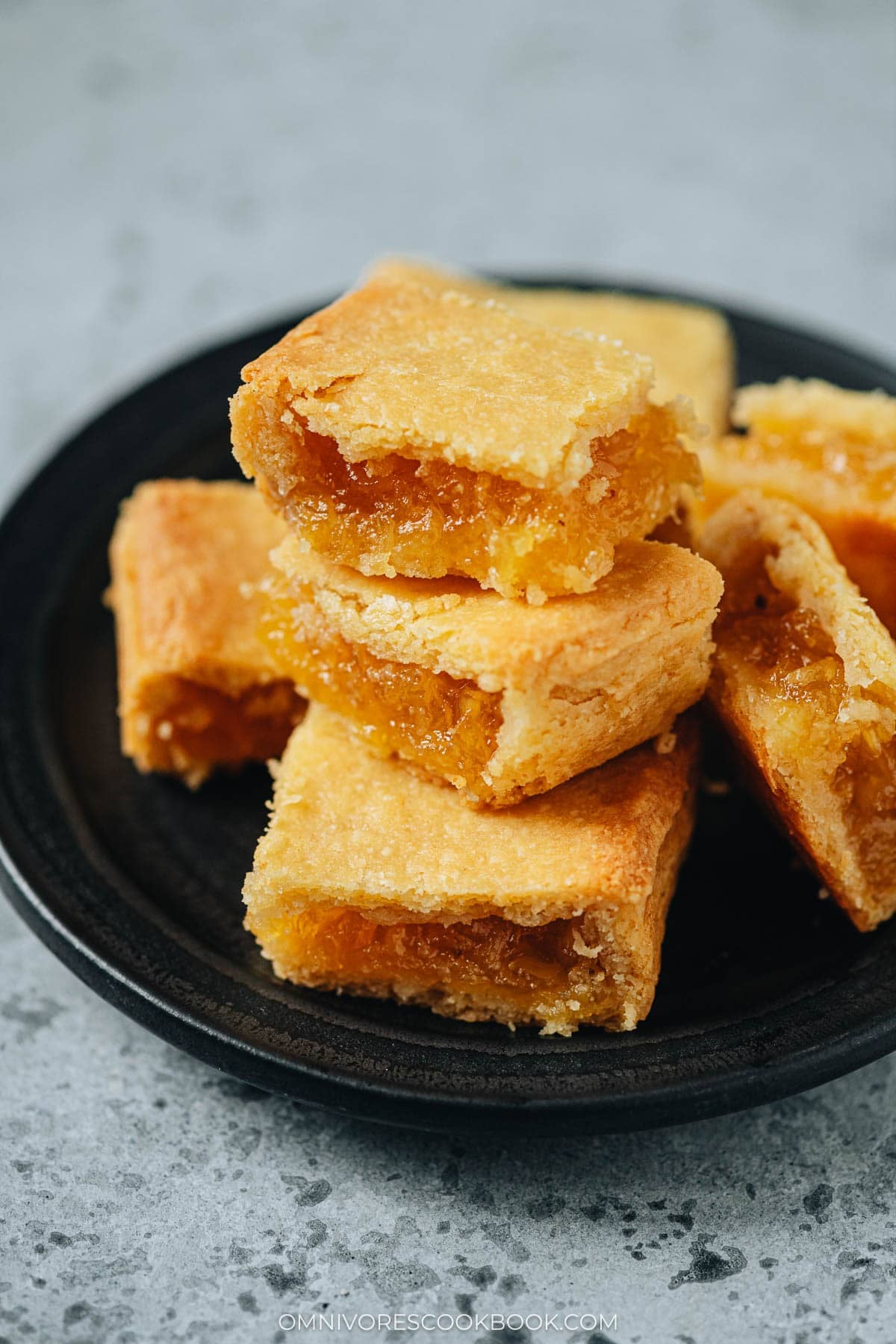
Taiwanese pineapple cake is a small square pastry from Taiwan that has become a Chinese and East Asian holiday gift staple, and the name is a little misleading because the pastry is closer to a buttery cookie shell wrapped around a thick fruit jam than any kind of layered cake. If a fluffier Chinese pastry sounds more appealing than a jam-filled one, my pineapple buns are a bakery-style bun with a soft brioche base and a crackly sweet topping, and my Hong Kong egg tart is the closest pie crust cousin I have on my blog.
You need to know that this pineapple cake was one of my favorite childhood desserts. Growing up in China in the early 90s we did not have many sweet snacks around the house, but every Lunar New Year and holiday season my mom would come home with a box of Taiwanese pineapple cakes for us to share.
The gold foil wrappers and the way one pastry shattered into buttery crumbs the moment I bit through the shell are the sensory details I still remember from childhood, and making them in my own kitchen turned into a holiday tradition after I moved to the US and could not find the exact ones my mom used to buy.
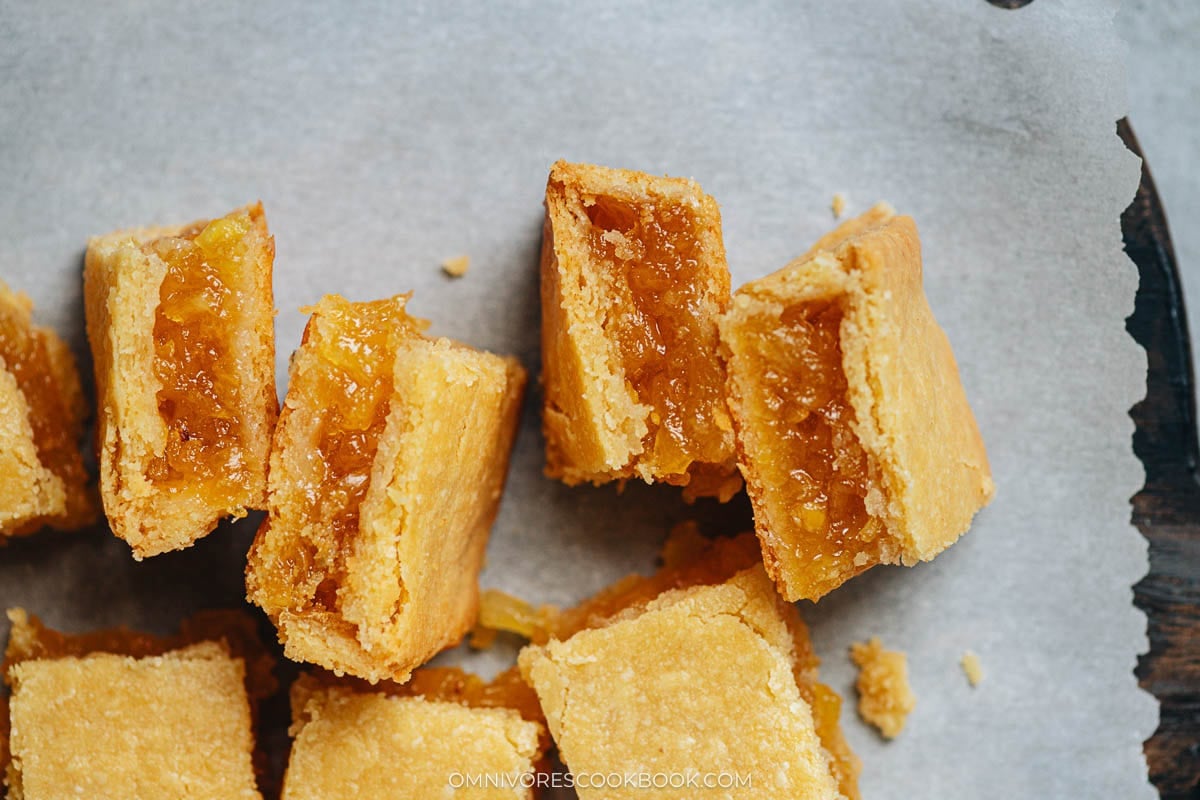
I tested the traditional method with the square metal mold multiple times and the dough kept breaking apart when I pressed it into the corners. My workaround skips the mold entirely: I shape a homemade foil pan around an upside-down loaf pan, bake the pineapple cake as one large loaf, then cut it into 12 small squares once it cools. The finished pieces look almost identical to the mold version, hold more filling per bite, and skip the specialty tool I would only pull out once a year. So I recommend you to set aside a weekend afternoon and follow my instructions below to make this decadent Taiwanese Pineapple Cake recipe.
Ingredients
Making this Taiwanese pineapple cake recipe is a project I really enjoy because the results are so delicious and indulgent. The best part is that I use simple pantry staples to make it.
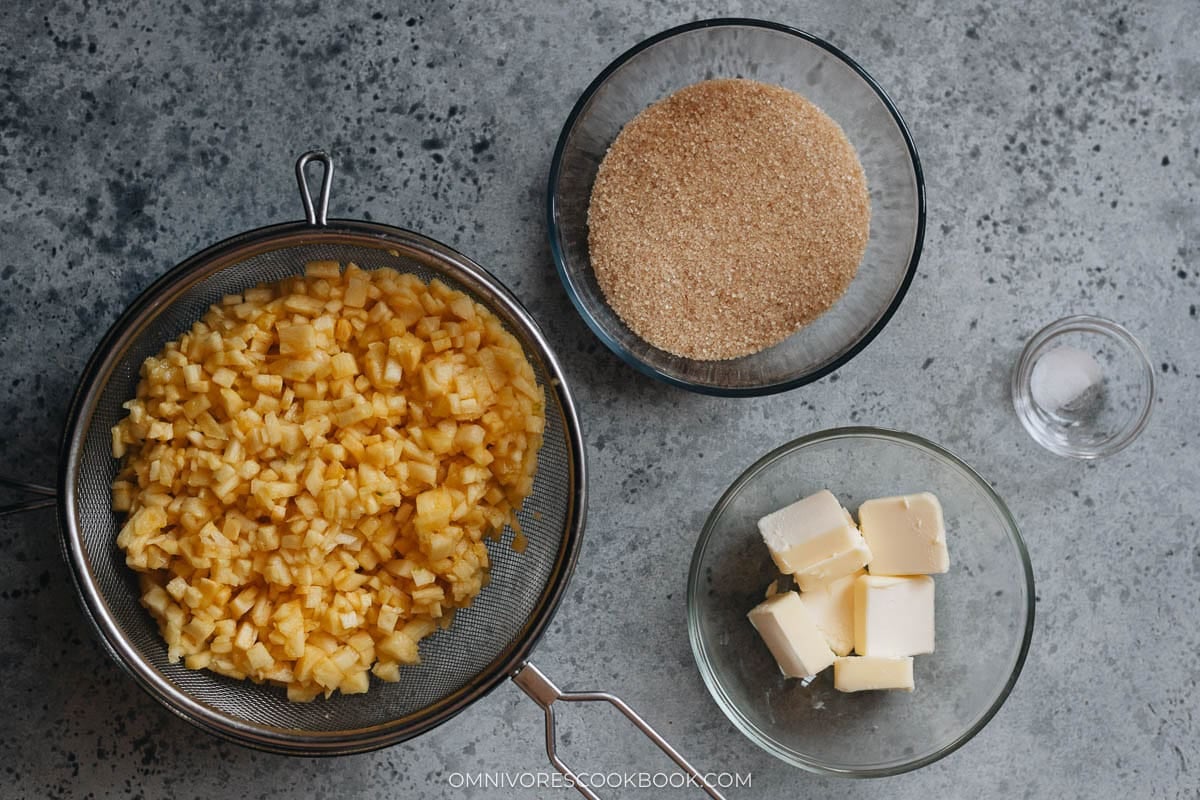
Fresh pineapple: I use a whole ripe pineapple, peeled and cored, and I dice the flesh into fine pieces rather than blending it into a puree.
Sugar, salt, and butter for the filling: I cook the diced pineapple with sugar and a small amount of salt to bring the flavor forward and balance the tang, and I stir butter into the jam at the very end for a glossy finish.
All-purpose flour: I use regular all-purpose flour for the pastry dough. The dough is closer to a pie dough than a cookie dough in texture, with more crumble and less snap, and all-purpose is the right protein level for that finish.
Powdered milk: Powdered milk is what gives the pastry its lightly sweet, mellow, almost-shortbread flavor. I find it in the baking aisle of most American grocery stores, and it is a small addition that noticeably improves the finished pastry.
Sugar, baking powder, and cold butter for the dough: A little sugar and baking powder go into the flour with the powdered milk, and cold cubed butter gets cut into the dry mix so the pastry stays flaky.
Eggs: A whole egg plus an extra yolk bind the dough together.
How to Make
Prepare the filling
Prep the pineapple: Peel and core the pineapple, then dice the flesh into fine pieces. Place the diced pineapple in a strainer set over a large bowl and let it drain for 10 to 15 minutes so most of the surface liquid drips off. Discard the drained liquid.
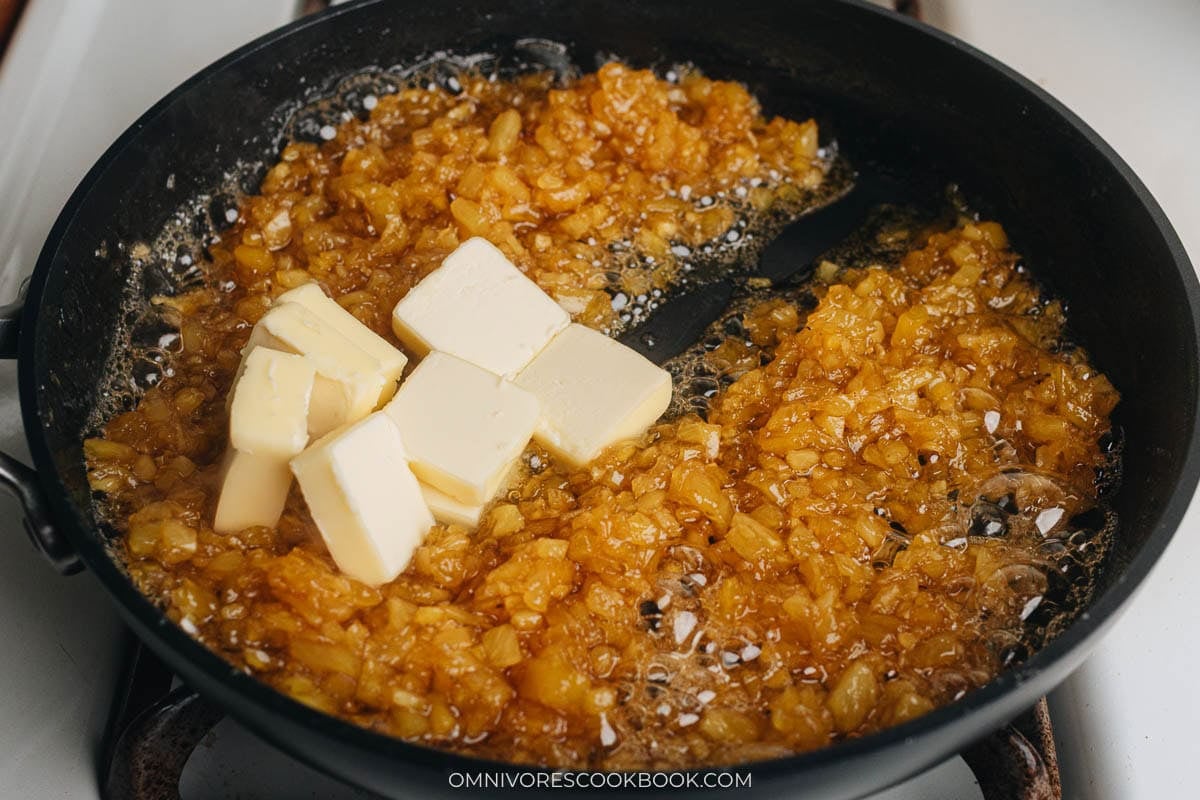
Cook the filling: Transfer the drained pineapple to a large saute pan and add the sugar and salt. Cook over medium heat, stirring occasionally to keep the fruit from sticking, until the pineapple releases its liquid and then the liquid cooks off completely and the fruit turns sticky and jammy.
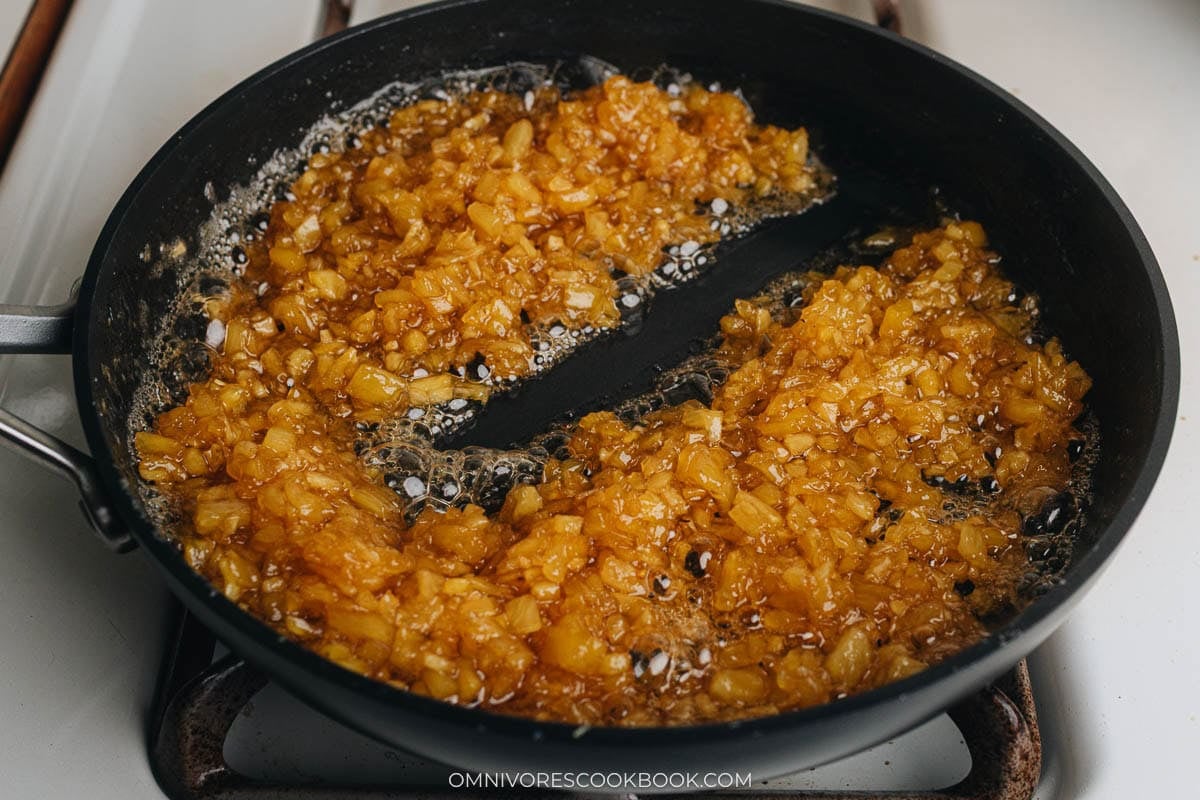
Finish the filling: Add the butter to the hot pineapple and stir until it melts and coats the fruit in a glossy finish.
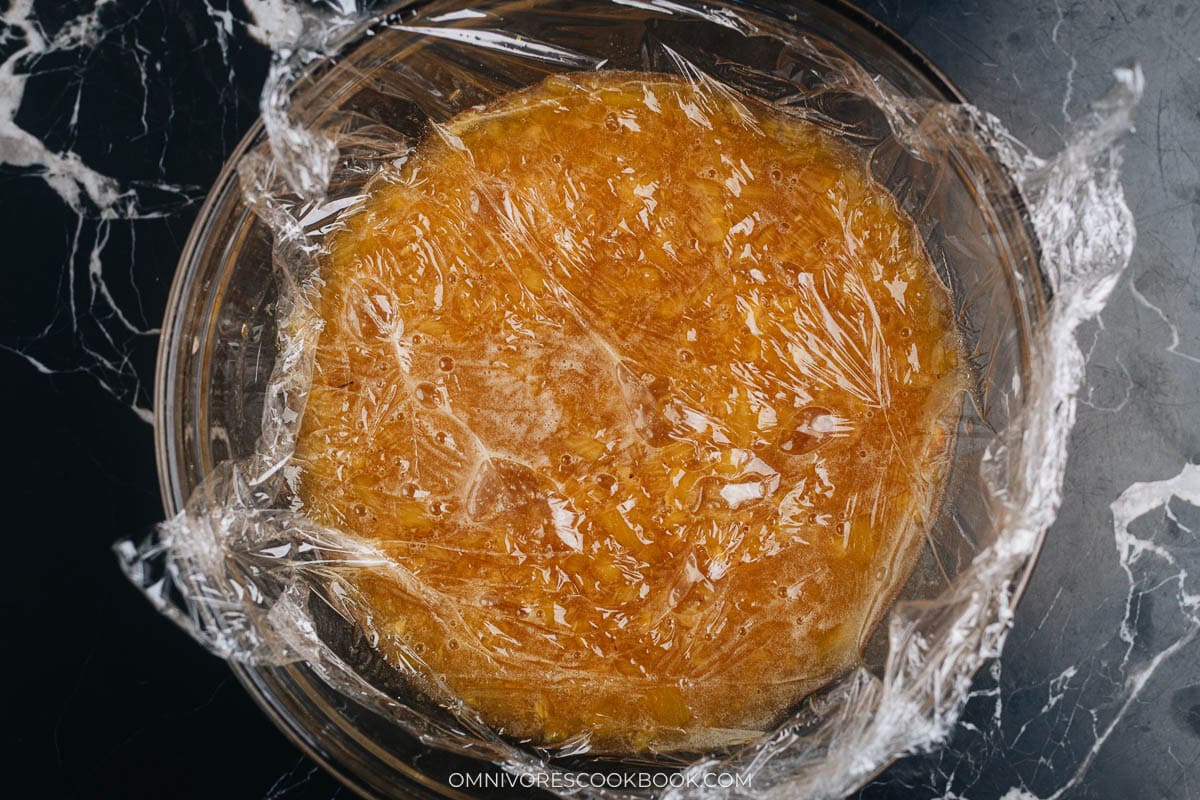
Transfer the filling to a medium bowl, cover the surface with plastic wrap so a skin does not form, and chill in the fridge until completely cold.
Make the dough
Mix the dry ingredients: In a food processor or a large bowl, combine the all-purpose flour, sugar, powdered milk, and baking powder. Pulse or whisk to combine.
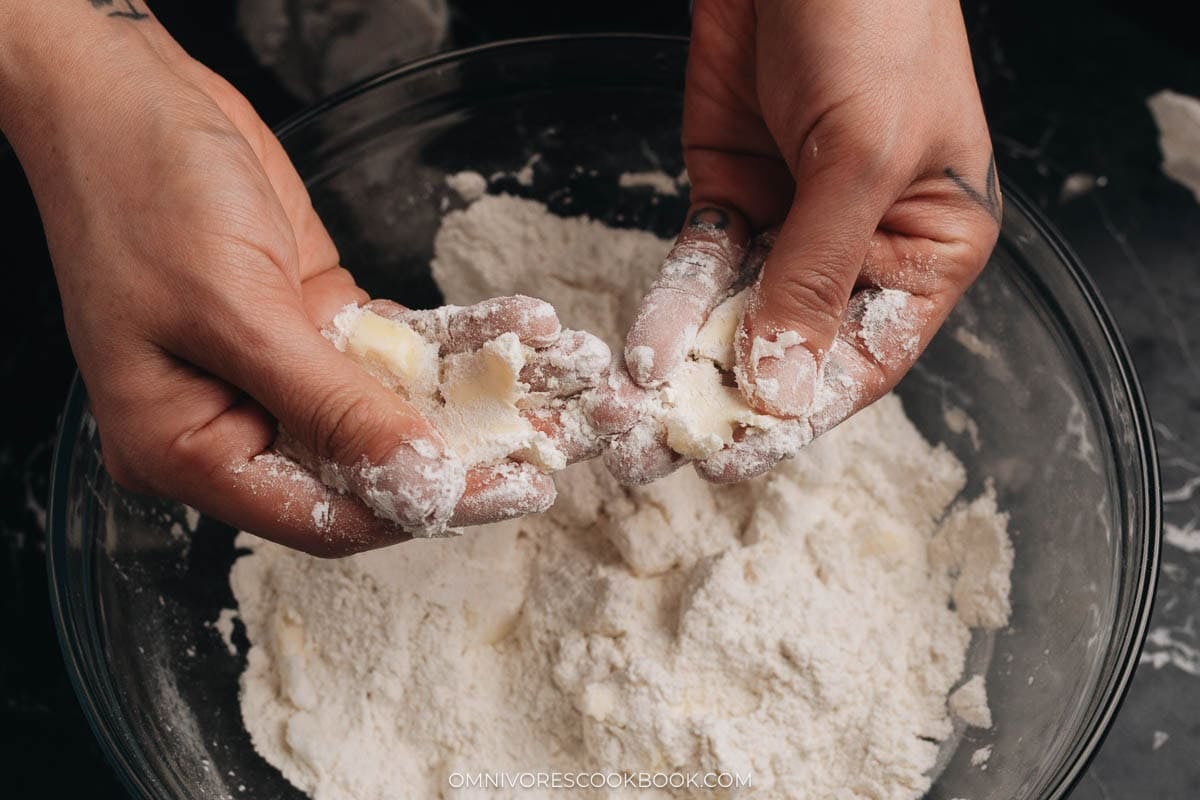
Cut in the butter: Add the cold cubed butter to the dry mix. Pulse in the food processor or cut in by hand until the mixture looks crumbly, like a rough sand.
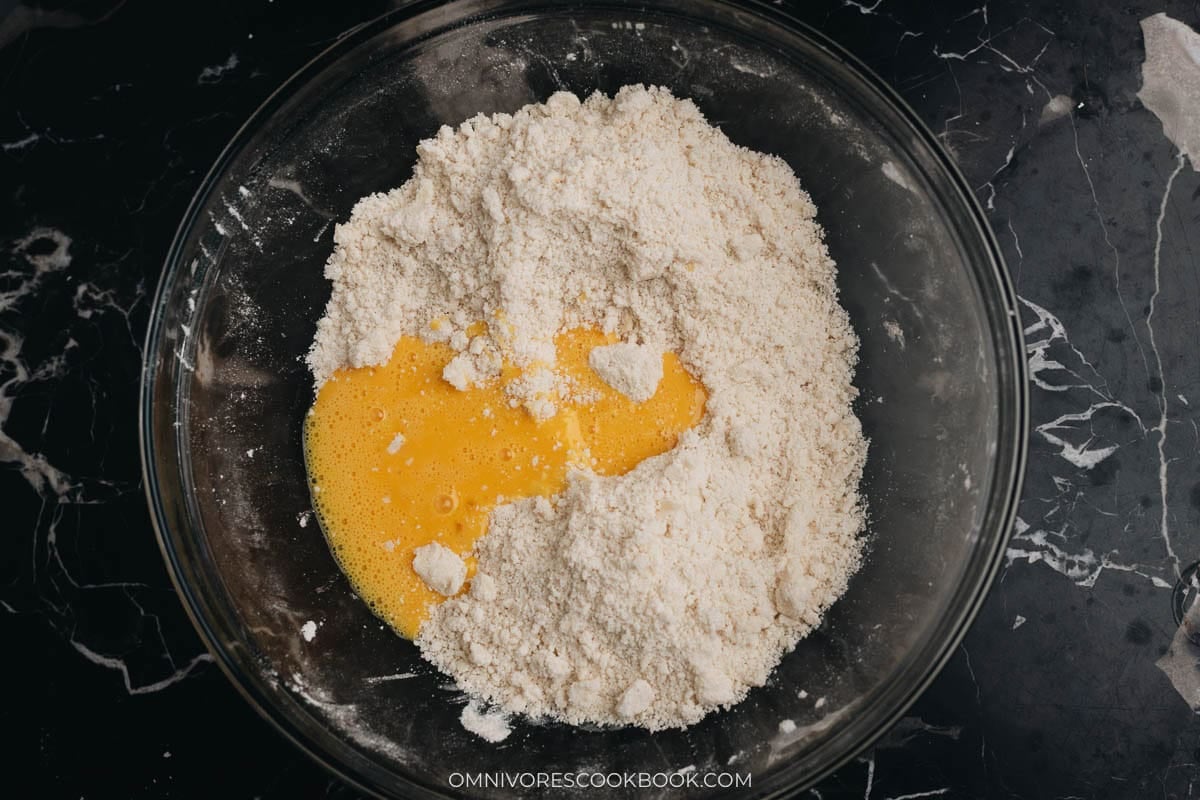
Bind the dough: Add the whole egg and the extra yolk. Mix until the dough just comes together into a shaggy ball.
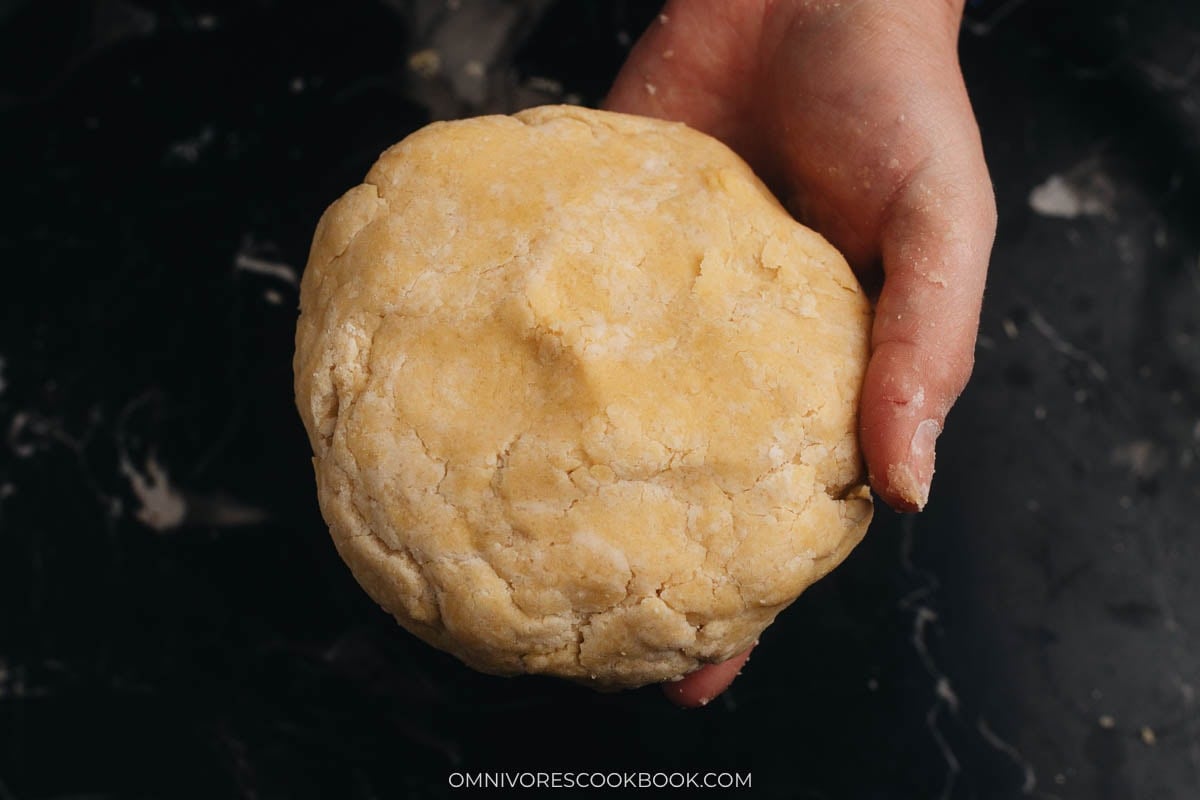
Turn the dough out onto a clean work surface: Shape it into a rough square, wrap it in plastic, and chill for at least 30 minutes or up to overnight.
Make the foil pan
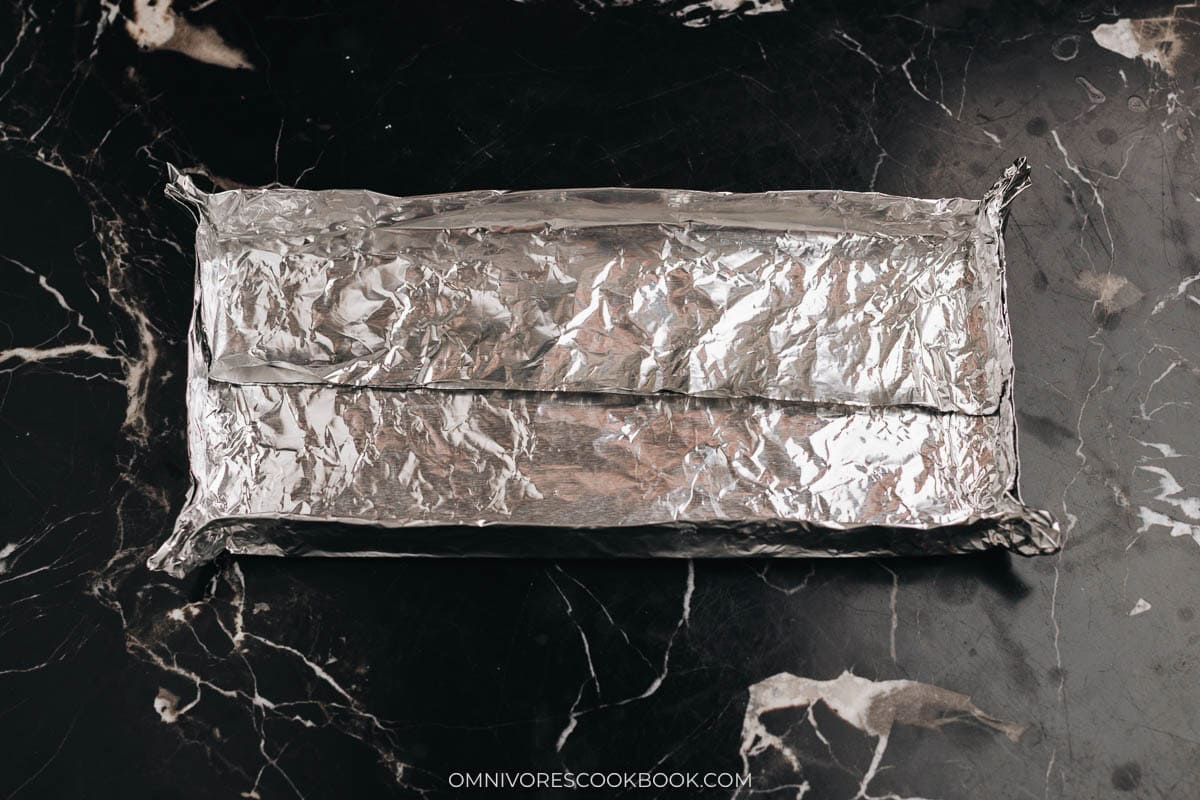
Shape the foil pans: Cut a large sheet of aluminum foil about 2 1/2 feet long and fold it in half twice so I have a 4-layer sheet.
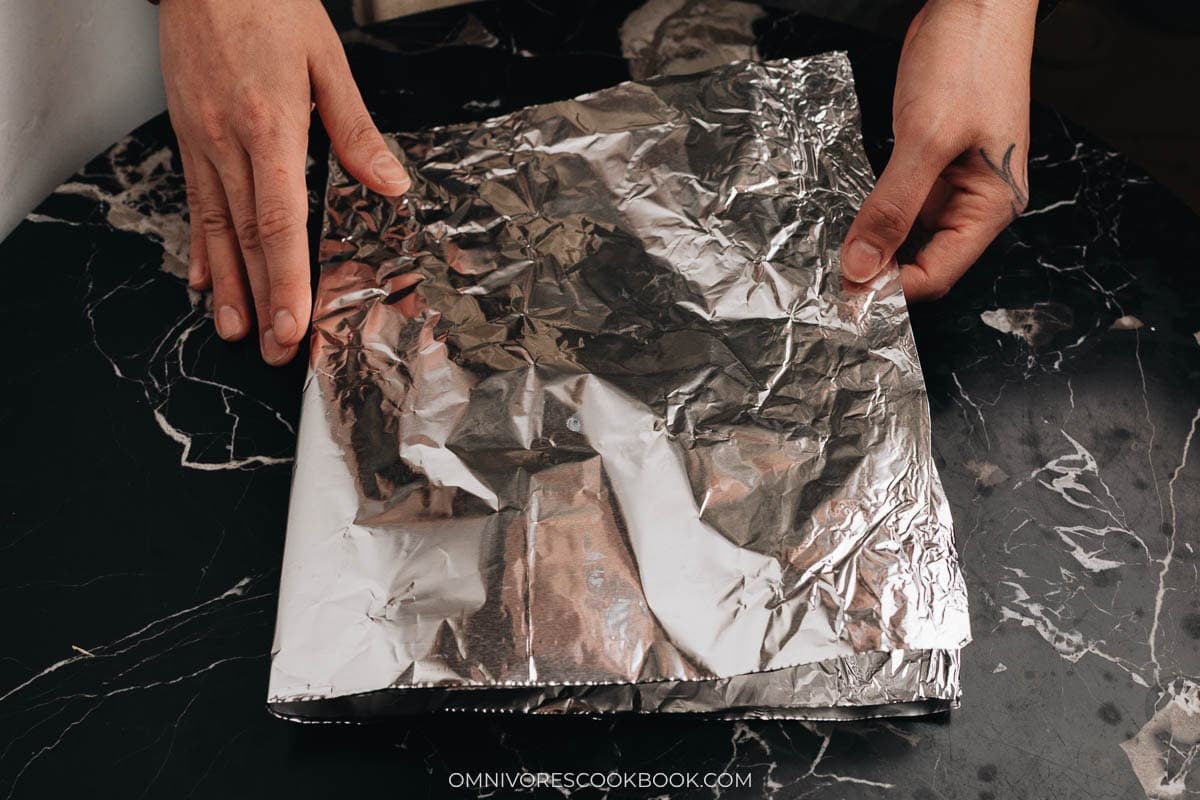
Place a loaf pan upside down on the counter: Then press the folded foil over the bottom to crease the shape of the loaf pan into the foil.
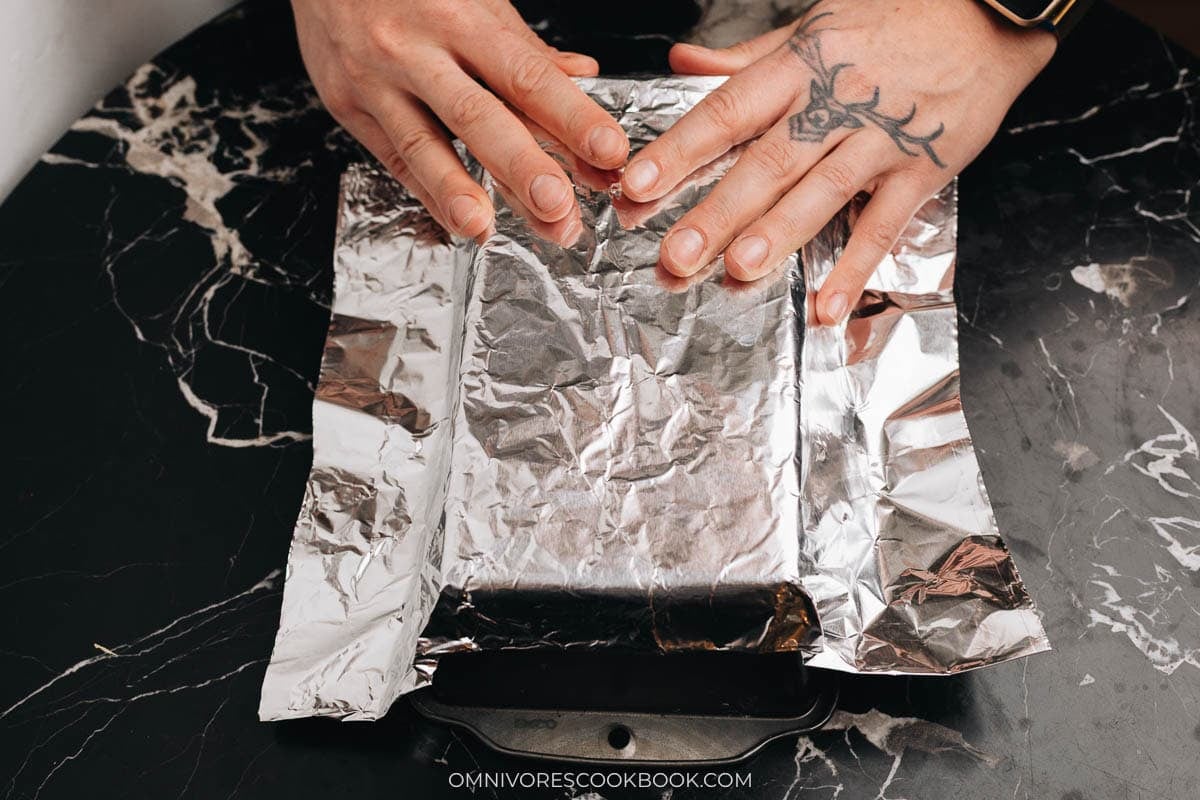
Lift the foil off and fold along the creases to create 4 sides about a half inch high.
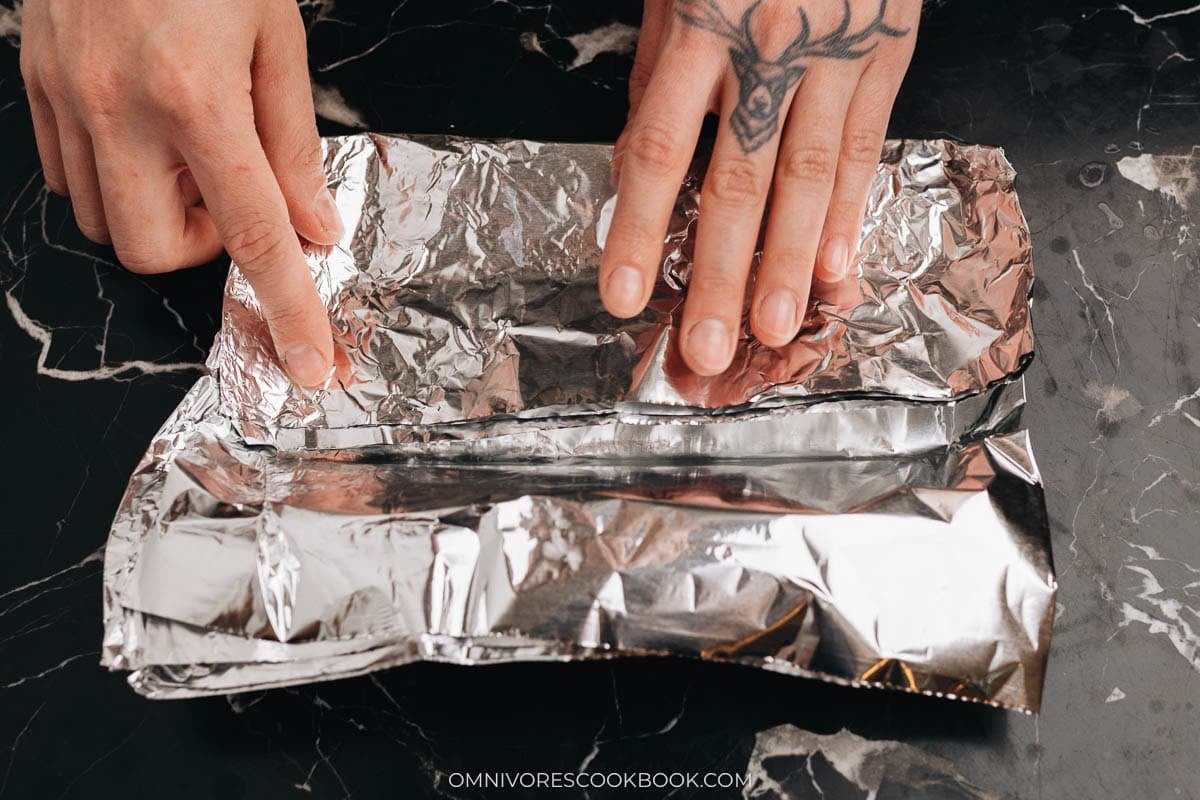
Finish pans: Make 2 foil pans so I can bake both loaves at the same time.
Assemble the pineapple cake
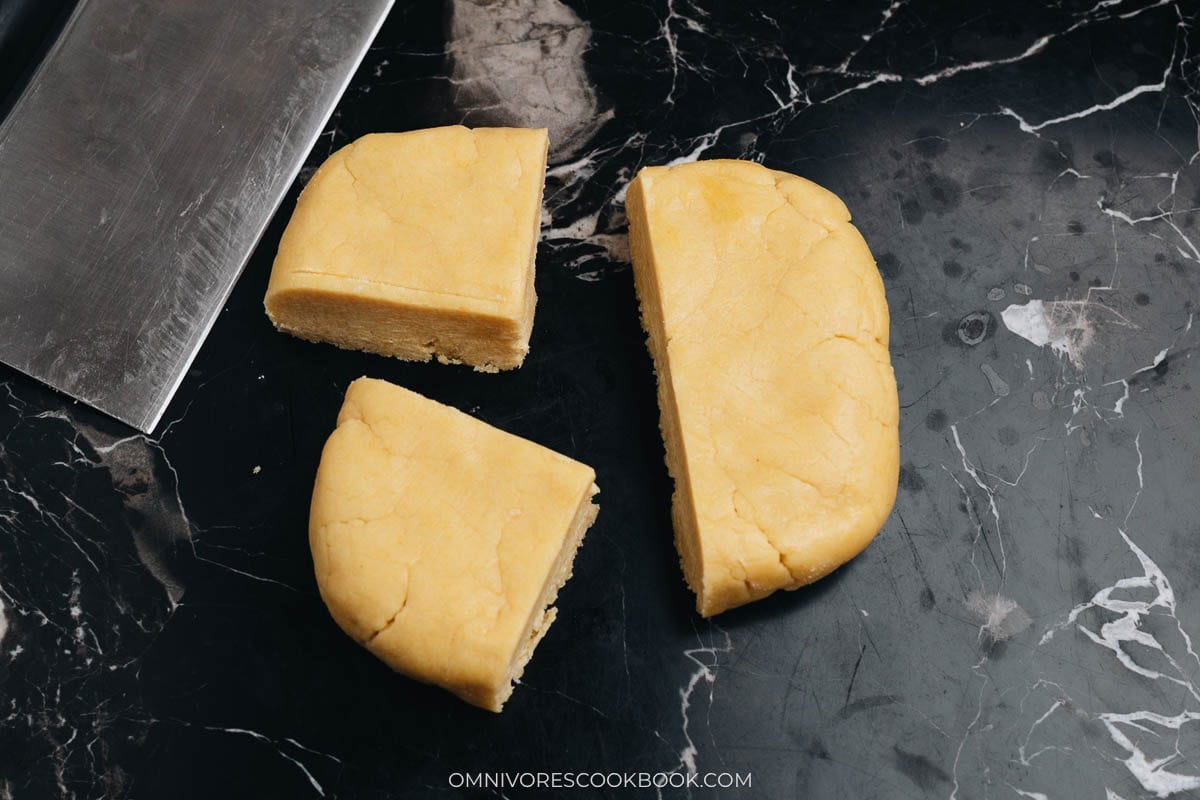
Cut the dough: This is simply cutting into 4 equal pieces.
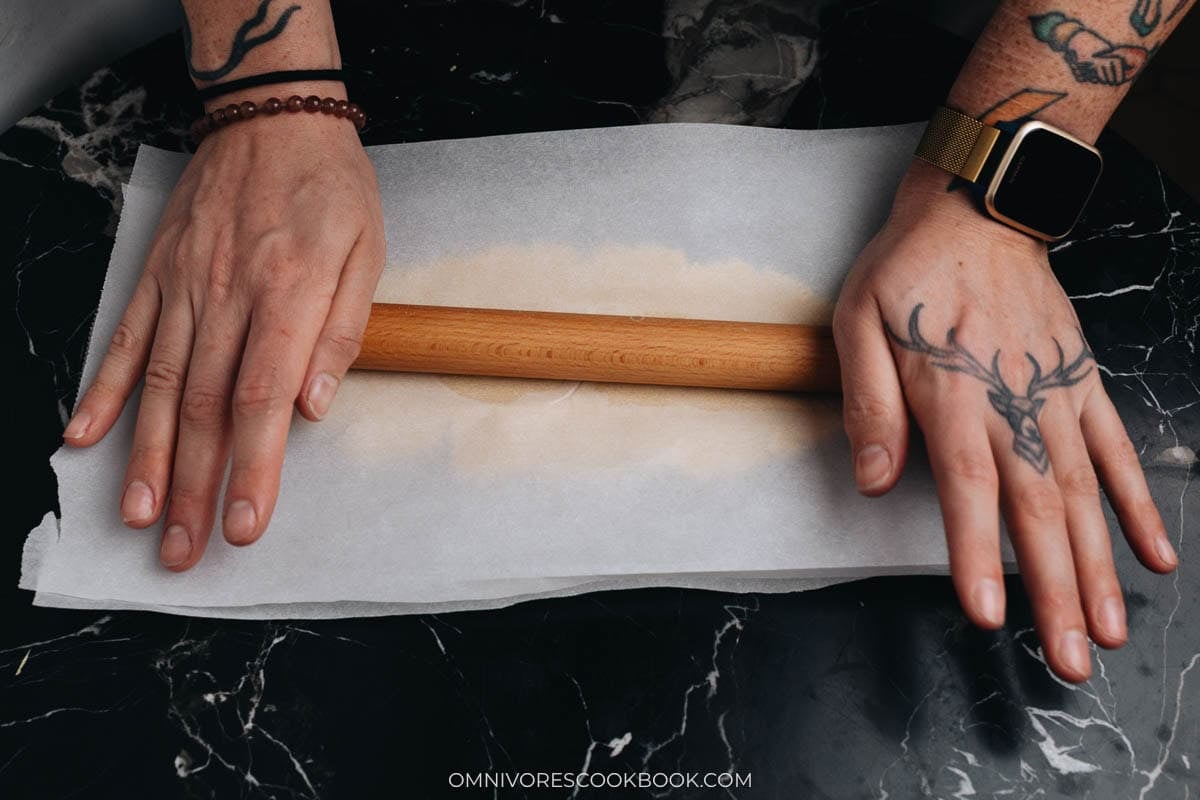
Roll the dough: Place one piece between 2 large sheets of parchment paper and roll it out thin and slightly larger than the foil pan, aiming for a rough rectangle.
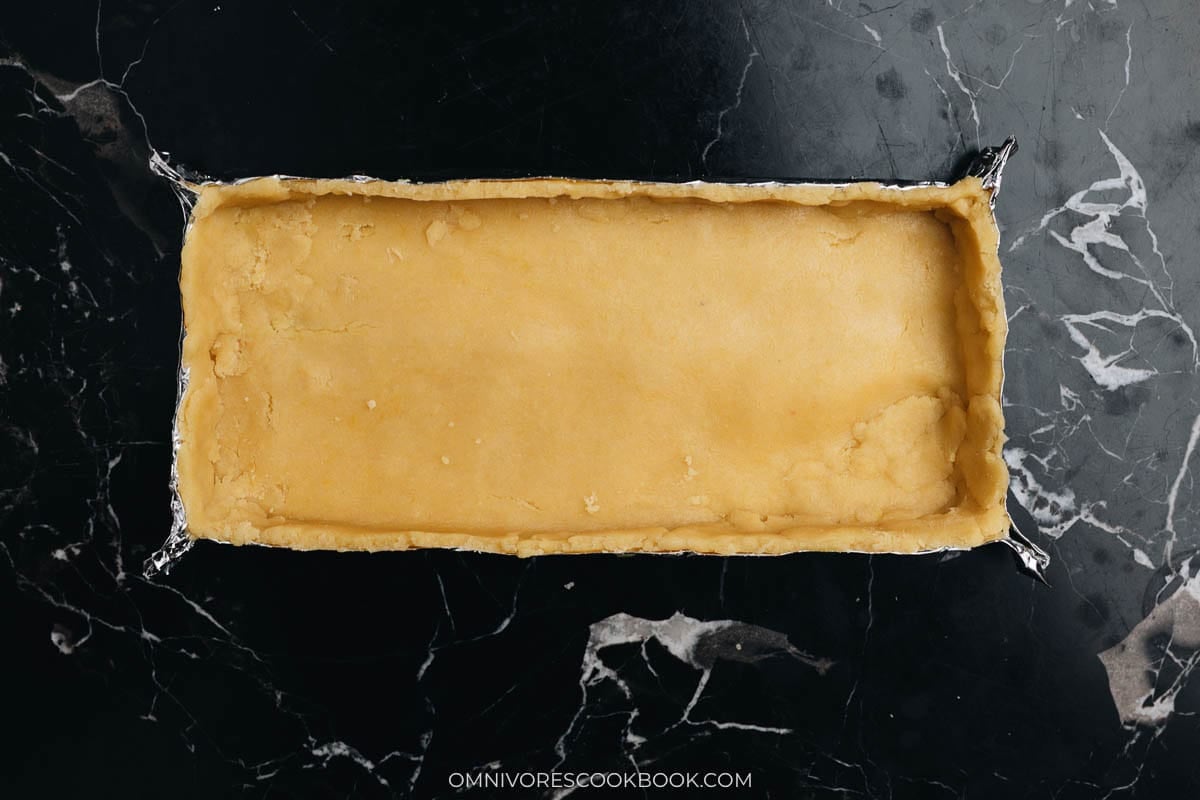
Fit the bottom sheet: Lift the top parchment off, flip the dough into the foil pan, and remove the second parchment sheet. Press the dough into the corners of the pan and trim off any overhang by pressing off the edges with my fingers.
Fill the pan: Spread half of the cooled pineapple filling over the fitted dough sheet in an even layer. The filling should come almost all the way to the top edge of the pan with a small gap for the top sheet of dough.
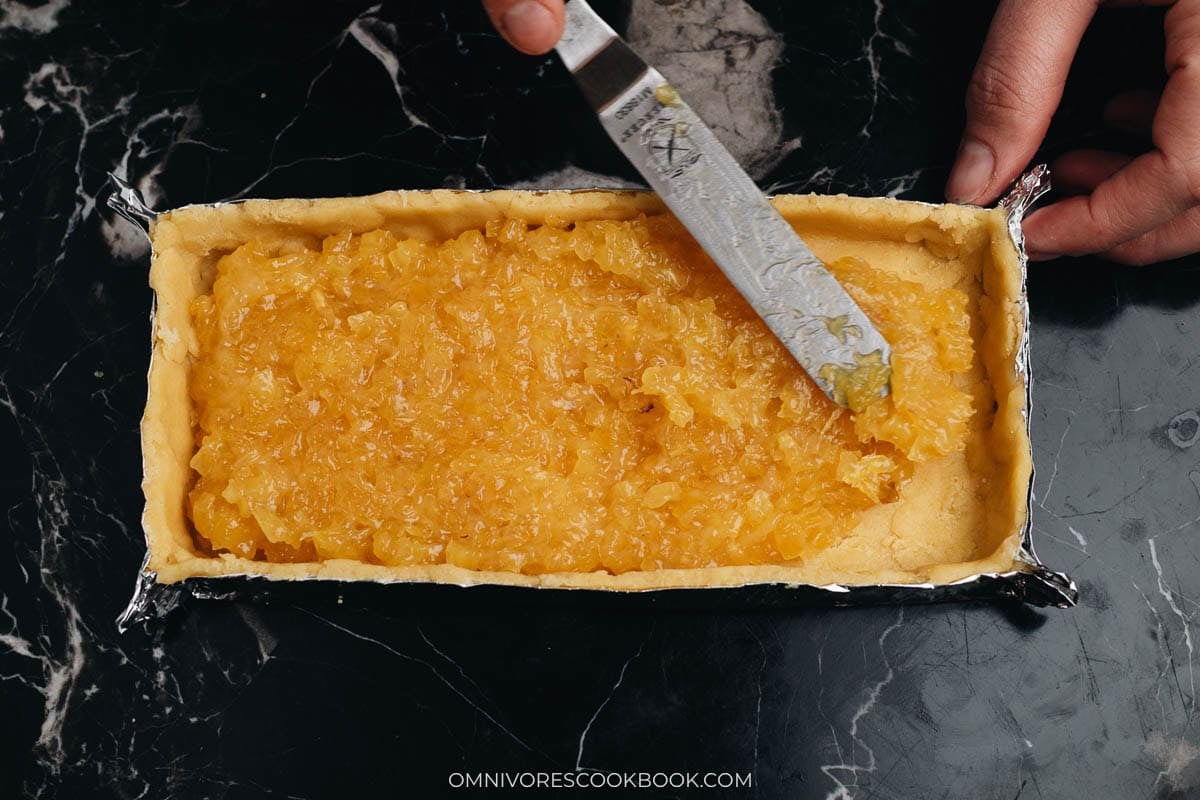
Add the top sheet: Roll out another quarter of the dough between parchment sheets the same way, flip it over the filling, and press the edges down to seal the filling completely inside the pastry. Trim any excess dough hanging over the pan.
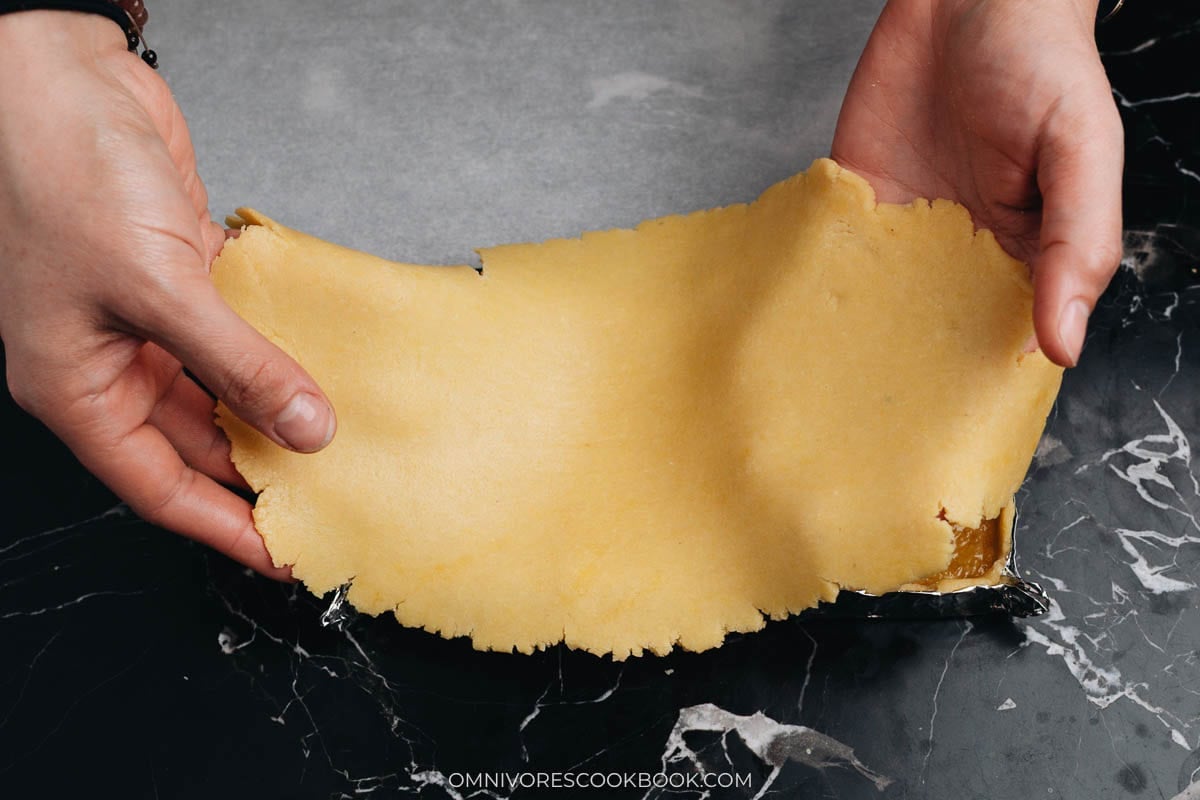
Repeat for the second loaf: Use the remaining two dough pieces and the other half of the filling to shape the second loaf in the second foil pan.
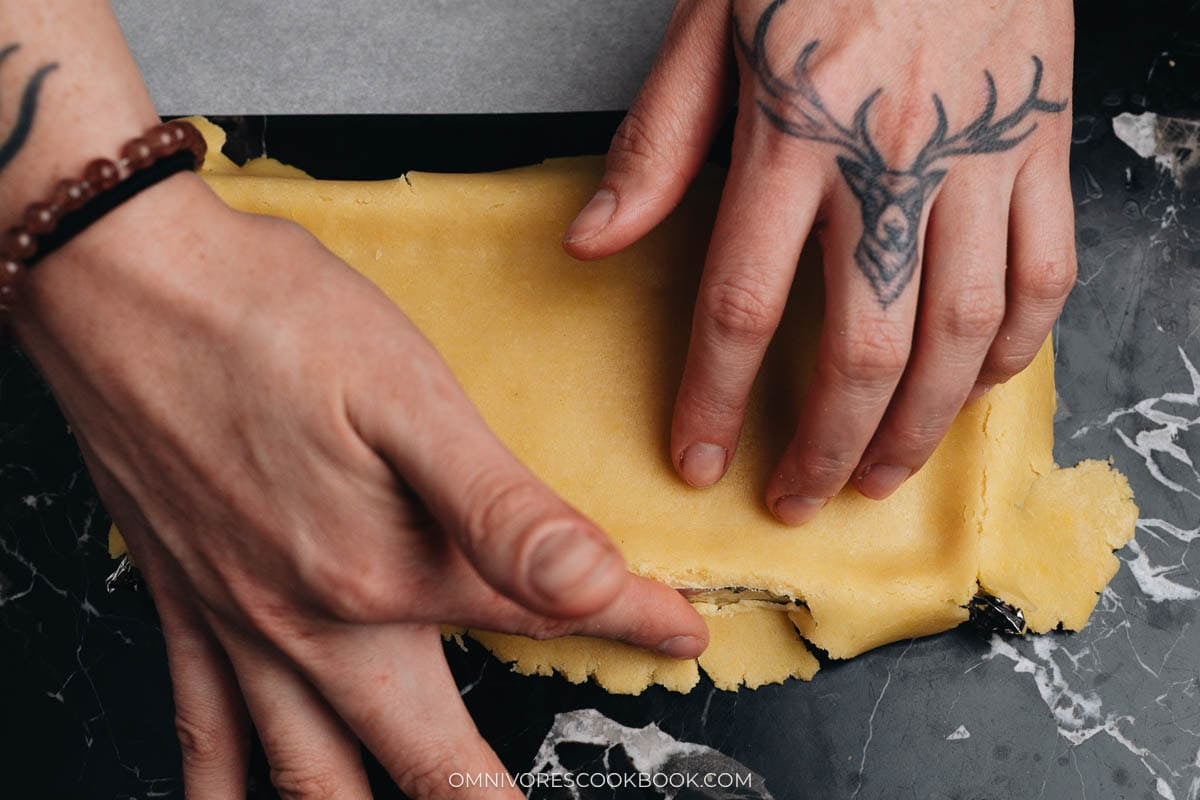
Bake and cut the pineapple cake
Bake: Preheat the oven to 325°F (163°C). Transfer both foil pans onto a sheet pan and bake on the middle rack for 20 to 25 minutes, until the top of the pastry turns light golden.
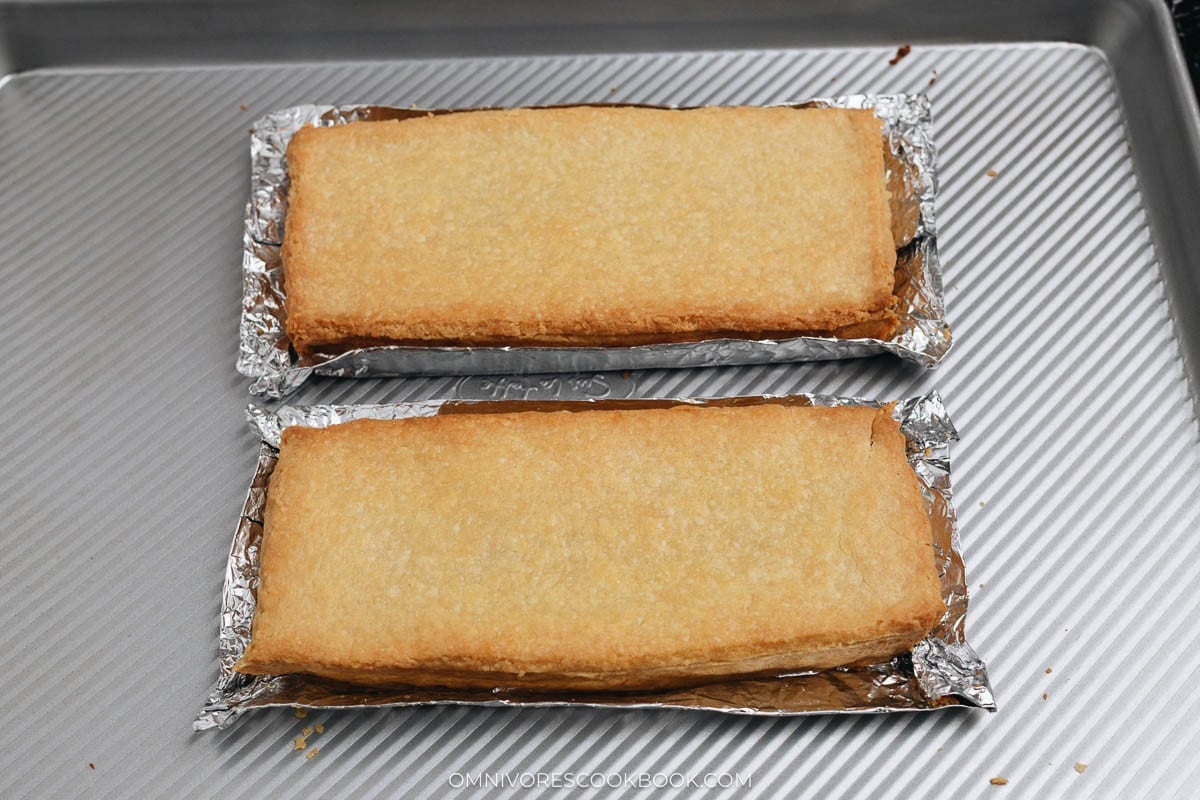
Cool: Let the loaves cool completely in the foil pans. Once cold, fold down the foil sides and transfer each loaf to a cutting board.
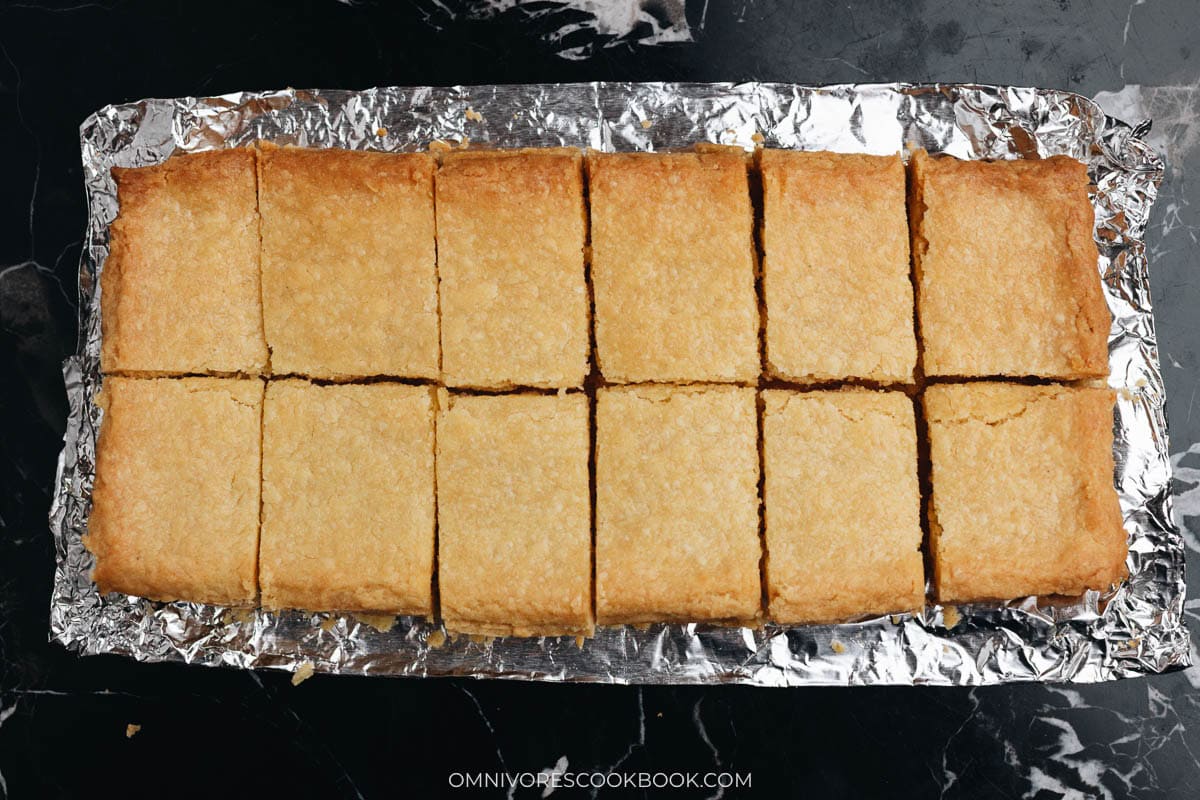
Serve: Slice each loaf lengthwise down the center, then crosswise into thirds, then halve each third, for a total of 12 pieces per loaf.
Cooking Tips
Cut the pineapple, do not blend it: Dicing the pineapple by hand is what keeps the filling chewy. A blender breaks the fruit into a smooth paste, and the finished cake loses the texture that separates a homemade cake from a packaged one.
Cook the filling until it is properly sticky, not just thick: The pineapple releases a lot of liquid when it hits the sugar, and it can look reduced well before it actually is. I keep the pan on medium heat and stir until the fruit clings to itself and the spoon leaves a clean trail across the bottom of the pan. Underdone filling weeps into the crust while the cake bakes.
Chill the filling completely before you assemble: Warm filling softens the pastry and tears the top sheet when I try to lay it down. I press plastic wrap directly onto the surface so a skin does not form, then leave it in the fridge until it is cool all the way through.
Keep the butter and the dough cold, and work quickly: This pastry behaves like pie dough. If the butter warms up in the flour, the crust bakes dense instead of crumbly. I chill the dough for at least 30 minutes, and if my kitchen is warm, I slide it back in for 10 minutes between the rolling and the shaping.
Bake both foil pans in the same session: Shaping 2 pans is not much more work than one, and it saves me from re-rolling scraps and re-heating the oven for a second round. 2 pans yield 24 pieces, which is the right amount for tea at home plus a small gift box for a friend.
How I Love Serving
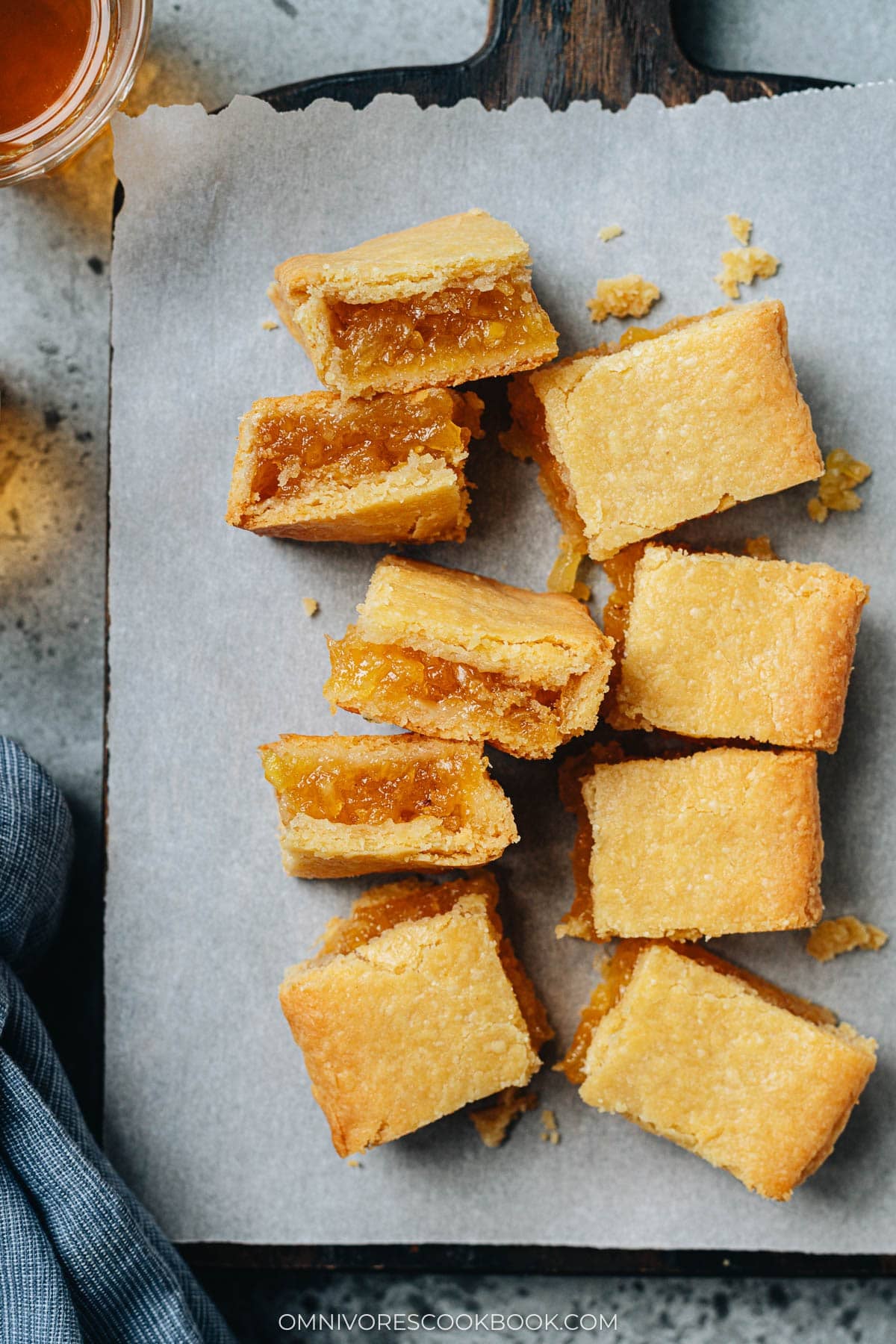
I really enjoy serving these decadent Taiwanese pineapple cakes out on a small plate with a hot pot of Chinese jujube tea in the afternoon, and I recommend 2 pieces per person is usually the right amount.
At Lunar New Year I put pineapple cakes at the center of a tea board with a plate of walnut cookies and a small square of matcha tiramisu so guests have a Chinese cookie, an East Asian modern dessert, and a Taiwanese classic all in one round, and I pair the whole party with more hot tea. I also love wrapping the extra pineapple cakes in small squares of parchment paper and give them as edible gifts to my neighbors and my friends who cannot easily find the boxed ones near where they live, and every year at least one person tells me these are better than the imported version they were sent as a gift.
Frequently Asked Questions
Why is my pastry cracking when I press it into the foil pan?
Cracking pastry usually means the dough was too cold or was rolled too thin. I let the chilled dough sit at room temperature for 5 minutes before I roll it if it feels stiff coming out of the fridge, and I aim for a thickness a little heavier than a pie crust so the pastry has enough structure to hold the filling. If a piece tears while I press it into the pan, I patch it with trimmed dough and press the seam closed with my fingers, and the seam disappears once the pastry bakes.
Can I use canned pineapple instead of fresh?
I do not recommend it because canned pineapple is packed in syrup or juice and the fruit sits soft, which breaks down into a slack, over-sweet paste rather than a chewy jam. Fresh pineapple has the acidity, the chew, and the natural sugar level the filling depends on, and the cook-down time is designed around a fresh fruit that releases its own liquid. If you can’t get fresh pineapple, I recommend to drain the canned pineapple chunks very well and pat them dry before cooking, and cut the sugar in the filling by about a third to compensate for the syrup.
How long do the pineapple cakes keep in the fridge and freezer?
I store the cakes in an airtight container at room temperature for 2 to 3 days, in the refrigerator for up to a week, or in the freezer for up to 3 months. The room-temperature version is the closest to fresh, and a short warm-up in a 300°F oven for a few minutes brings back the crumbly texture in the fridge and freezer versions. I thaw the freezer version in the fridge overnight before I warm it.
Want to Save This Recipe?
Enter your email below & we’ll send it to your inbox. Plus get great new recipes from us every week!
This Taiwanese pineapple cake is a buttery crumbly pastry filled with a chewy and tangy pineapple jam made from fresh pineapple and baked in a homemade foil pan. This is the simplified version I make at home when I want the flavor of the boxed Lunar New Year pastries I grew up eating without the fussy square metal mold every traditional recipe calls for.
Prevent your screen from going dark
To make the filling
Dice pineapple into fine pieces. Place it in a large strainer over a large bowl for 10 to 15 mins. Let sit until most of the residual liquid is released. Drain and discard the liquid, and transfer the pineapple into a large saute pan. Add sugar and salt. Cook over medium heat. The pineapple will release a lot of liquid at first. Continue to simmer, stirring occasionally to avoid sticking, until all liquid evaporates completely and the pineapple pieces start to feel sticky. Add butter and stir to melt. Transfer everything to a medium-sized bowl. Let cool slightly. Then cover the top of the pineapple with plastic wrap. Let cool in the fridge completely before using.
For pastry
In a food processor (ideally) or by hand, add the flour, sugar, powdered milk and baking powder. Stir to combine.
Add the butter. Pulse or cut by hand until crumbly.
Add the egg and yolk. Mix until the dough just starts to come together. Transfer the dough onto a clean work surface. Form it into a rough square shape. Wrap in plastic and chill at least 30 mins, or up to overnight.
Shape the tin foil pan
Cut a large sheet of aluminum foil, about 2.5 feet (76 cm) in length. Fold in half 2 times, to form a thicker sheet that has 4 layers (so the pan will be sturdy enough to hold the pineapple cake). Place an actual loaf pan upside down (*Footnote 1). Press the folded foil over the bottom of the loaf pan to crease, shaping the foil like the loaf pan. Then remove the foil and fold at the creases, to create 4 sides that are about 1/2” (5 cm) high.
You can repeat this to create 2 foil pans so you can bake both pineapple cakes at the same time (highly recommended). Or you can bake one cake at a time by only using one pan (this will take a lot longer because each pineapple cake needs time to cool off before removing the foil).
Shape the dough
Once the dough is fully chilled, cut the dough into 4 equal pieces.
Place the dough between two large pieces of parchment paper. Roll out the dough until very thin and slightly larger than the foil pan, aiming to keep the shape of a rectangle.
Lift the top piece of parchment to release the dough. Carefully flip the dough sheet over, and remove the parchment paper from the other side. Carefully transfer rolled dough to the foil pan. Press the dough to fit the pan. The dough should come up on all sides. Trim the edge of the dough by pressing off any overhang with your fingers. You can patch up any tears with excess dough.
Fill the fitted dough sheet with half of the cooled pineapple filling. The filling should go almost all the way up to the top edge of the pan, with a little space left for the other dough sheet. Press lightly to smooth out the filling and form an even layer.
Repeat the rolling process with the next piece of dough using the same method from step 2. Place the rolled dough over top to seal in pineapple filling, trimming off any excess dough. Gently press the dough edges to seal the filling completely.
Preheat the oven to 325°F (163°C). Transfer the pineapple cake foil pans onto a sheet pan. Bake on the middle level for 20 to 25 minutes, until the top turns light golden. Let the pineapple cakes cool off completely. Then you can fold down the edges of the foil pans and place the pineapple cake on a cutting board. To cut the pineapple cake, slice lengthwise down the center. Then slice into thirds crosswise, then slice each third in half to make 12 pieces in total.
Ingredient Substitution Guide
- It is much easier to use a loaf pan as a guide to create the tin foil pan. If you do not have a loaf pan, you can still create a tin foil pan that is about 8.5” (21 cm) long and 4.5” (11 cm) wide.
- I highly recommend using the gram measurement because it’s more precise, which produces a better result.
Serving: 1serving, Calories: 164kcal, Carbohydrates: 24.3g, Protein: 2.2g, Fat: 7.5g, Saturated Fat: 4.5g, Cholesterol: 34mg, Sodium: 40mg, Potassium: 472mg, Fiber: 0.8g, Sugar: 13.4g, Calcium: 203mg, Iron: 1mg

Did you make this recipe?
I’d love to hear how it turned out for you! Please take a moment to leave a 5-star rating ⭐️ and share your thoughts in the comments further down the page. It really helps others discover the recipe too.



