
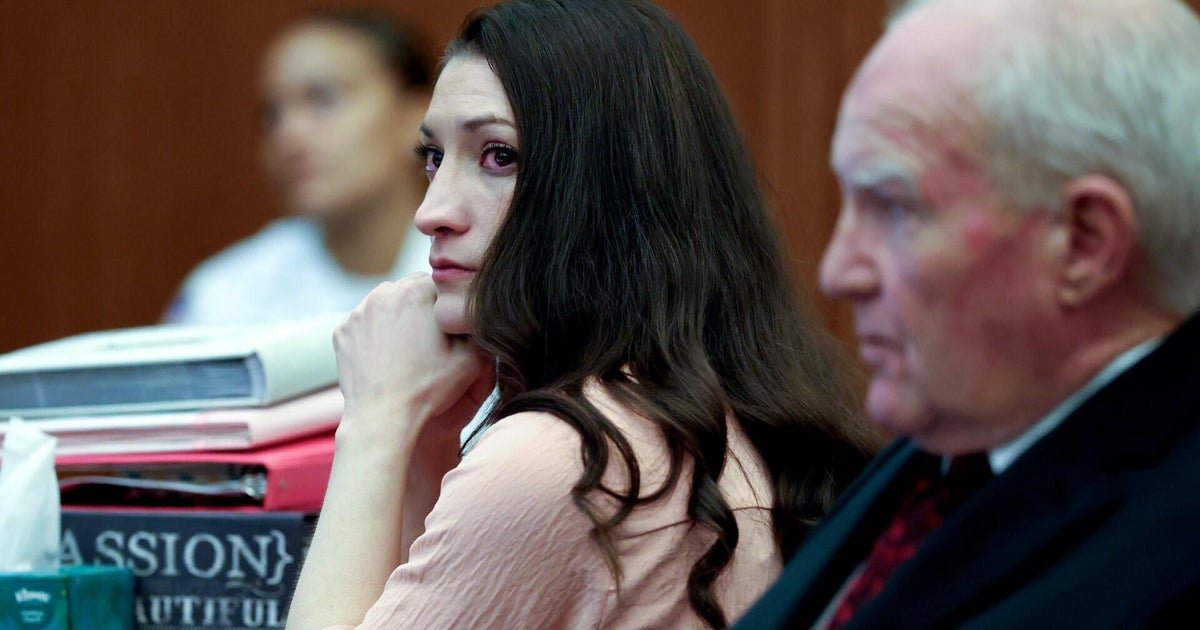
Lindsay Clancy’s murder trial resumed Tuesday in Massachusetts with the 15th day of testimony.
You can watch the trial live on CBS News Boston in the embedded video or on YouTube when court is in session.
More defense witnesses will testify, a day after the prosecution rested its case after calling 72 witnesses in Plymouth Superior Court. One of the first people to testify for the defense was Clancy’s mother, Paula Musgrove. The children’s other grandmother, Patrick Clancy’s mother, took the stand Tuesday for the defense.
A full day of testimony is planned, according to Judge William Sullivan.
Jennifer Sprague and Shanan Buckingham are handling questioning for the prosecution while Kevin Reddington is Clancy’s defense attorney.
Defense psychiatrist testifies
The prosecution objected to witness Dr. Donald Condie, saying it was unclear if what he was going to testify about was different from an affidavit.
After arguments without the jury present, Judge Sullivan ruled that he would allow the testimony.
A short time later, Condie took the stand with the jury present. He is trained in psychiatry at the Massachusetts Mental Health Center through Harvard University. He is a clinical and forensic psychiatrist.
Condie said he has spent a great deal of time treating people in the state system with psychotic disorders and mood disorders.
In Clancy’s case, Condie reviewed the records of Rebecca Jollotta and Jennifer Tufts, psychiatrists who worked with Clancy for her mental health struggles, along with Brigham and Women’s hospital records. Jollotta and Tufts testified for the prosecution earlier in the trial.
“They are somewhat sparse. There are many check boxes in the records, but not a great deal of sentences that describe what was done during sessions,” Condie said of Jollotta and Tufts’ records.
Condie talked about the struggles that Clancy was having in late 2022.
“She talked about things like dizziness, feeling sedated in the morning if she got any sleep at all. These are symptoms that people who are experiencing postpartum depression frequently complain about. She continued to complain about anxiety,” Condie said, adding, “It is a very unpleasant experience.”
According to Condie, “at times she reported that she heard a voice.”
On cross-examination, the prosecutor highlighted that Condie is involved in the family’s civil case.
She also noted that while Clancy was prescribed a large amount of medications over the months before her children’s death, but was only taking three or four at a time. She highlighted that while Clancy’s dosage was increased for her prescription, she was only taking a small number of pills that had been prescribed to her.
The prosecutor also asked Condie to confirm that, according to the records, Clancy never reported to Tufts, Jollotta or mental health clinician Latiesha Dukes that she was hearing voices. According to the prosecutor, Clancy never mentioned hearing voices until after the children’s deaths.
The cross-examination concluded with the prosecutor pointing out that Condie did not interview Clancy himself, he was only reviewing records.
Condie concluded his testimony around 12:15 p.m.
Patrick Clancy’s mother Susan testifies
The first witness called by the defense Tuesday was Susan Clancy, Patrick Clancy’s mother and Lindsay Clancy’s ex-mother-in-law. Susan Clancy said she had a very good relationship with her former daughter-in-law.
“She was very nurturing, very loving. She was a wonderful mother,” Susan Clancy said. “She loved her children, all of them. Very, very much.”
She said Lindsay Clancy reached out in November to say she was suffering from insomnia and was very anxious and sad. Susan Clancy, a nurse, reached out to colleagues who were running a program to help with postpartum mothers.
“Did you find that Lindsay was interested at all times in trying to get better and see doctors?” Reddington asked.
“Very much so,” Susan Clancy said. “She was begging for help.”
During cross-examination, Susan Clancy said she offered to help with the kids and take them overnight while Lindsay was struggling, but the family decided it was best for them to stay in their own beds. She testified she was also frequently texting with Lindsay about the drugs she was taking.
“There were a lot of medications,” Susan Clancy said. “It seemed confusing.”
Prosecutor Shanan Buckingham asked Susan Clancy about a Christmas Day breakfast, followed by a church visit. Clancy answered that she was an active member of the Catholic church.
“Are you aware that murder is considered a mortal sin?” Buckingham asked.
Judge Sullivan ordered the question stricken from the record.
Lindsay Clancy trial
Clancy, 36, is charged with first-degree murder in the deaths of her three children, 5-year-old Cora, 3-year-old Dawson and 8-month-old Callan, in their Duxbury home on Jan. 24, 2023.
Clancy pleaded not guilty but admits to killing her children. Defense attorney Reddington said she should not be held criminally responsible because she was overmedicated and suffering from postpartum psychosis.
Prosecutors said Clancy planned the murders before faking a suicide attempt that left her paralyzed and in a wheelchair.
If Clancy is convicted of first-degree murder, she faces life in prison without parole. If the jury finds that she was not criminally responsible for the deaths of her children, she will be sent to a state psychiatric hospital in Massachusetts.
If you or someone you know is in emotional distress or a suicidal crisis, you can reach the 988 Suicide & Crisis Lifeline by calling or texting 988. You can also chat with the 988 Suicide & Crisis Lifeline here.
For more information about mental health care resources and support, the National Alliance on Mental Illness HelpLine can be reached Monday through Friday, 10 a.m. to 10 p.m. ET, at 1-800-950-NAMI (6264) or email info@nami.org.



