
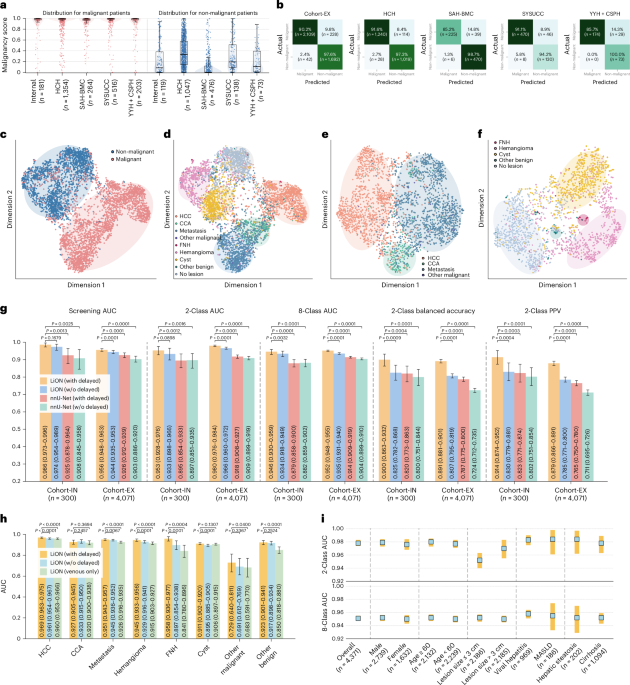
Tan, E. Y. et al. Liver cancer in 2021: Global Burden of Disease Study. J. Hepatol. 82, 851−860 (2024).
Maino, C. et al. Liver metastases: the role of magnetic resonance imaging. World J. Gastroenterol. 29, 5180–5197 (2023).
Bray, F. et al. Global cancer statistics 2022: GLOBOCAN estimates of incidence and mortality worldwide for 36 cancers in 185 countries. CA Cancer J. Clin. 74, 229–263 (2024).
Chan, S. L. et al. The Lancet Commission on addressing the global hepatocellular carcinoma burden: comprehensive strategies from prevention to treatment. Lancet 406, 731−778 (2025).
Reig, M. et al. BCLC strategy for prognosis prediction and treatment recommendations: the 2026 update. J. Hepatol. 84, 631–654 (2026).
Kim, S. H., Kamaya, A. & Willmann, J. K. CT perfusion of the liver: principles and applications in oncology. Radiology 272, 322–344 (2014).
Benson, A. B. et al. Hepatobiliary cancers, version 2.2021, NCCN Clinical Practice Guidelines in Oncology. J. Natl Compr. Canc. Netw. 19, 541–565 (2021).
Frenette, C. et al. ACG clinical guideline: focal liver lesions. Am. J. Gastroenterol. 119, 1235–1271 (2024).
Chernyak, V. et al. ACR appropriateness criteria® liver lesion-initial characterization. J. Am. Col. Radiol. 17, S429–S446 (2020).
Sangro, B. et al. EASL Clinical Practice Guidelines on the management of hepatocellular carcinoma. J. Hepatol. 82, 315–374 (2025).
Lee, Y. J. et al. Hepatocellular carcinoma: diagnostic performance of multidetector CT and MR imaging-a systematic review and meta-analysis. Radiology 275, 97–109 (2015).
Singal, A. G. et al. AASLD practice guidance on prevention, diagnosis, and treatment of hepatocellular carcinoma. Hepatology 78, 1922−1965 (2023).
Gore, R. M. et al. Management of incidental liver lesions on CT: a white paper of the ACR incidental findings committee. J. Am. Coll. Radiol. 14, 1429–1437 (2017).
Nakai, H., Arizono, S., Isoda, H. & Togashi, K. Imaging characteristics of liver metastases overlooked at contrast-enhanced CT. AJR Am. J. Roentgenol. 212, 782–787 (2019).
Rinella, M. E. et al. AASLD practice guidance on the clinical assessment and management of nonalcoholic fatty liver disease. Hepatology 77, 1797–1835 (2023).
Isensee, F., Jaeger, P. F., Kohl, S. A. A., Petersen, J. & Maier-Hein, K. H. nnU-Net: a self-configuring method for deep learning-based biomedical image segmentation. Nat. Methods 18, 203–211 (2020).
Cao, K. et al. Large-scale pancreatic cancer detection via non-contrast CT and deep learning. Nat. Med. 29, 3033–3043 (2023).
Qian, X. et al. A multimodal machine learning model for the stratification of breast cancer risk. Nat. Biomed. Eng. 9, 356−370 (2024).
Zhang, Y. et al. A clinically applicable AI system for detection and diagnosis of bone metastases using CT scans. Nat. Commun. 16, 4444 (2025).
Balaguer-Montero, M. et al. A CT-based deep learning-driven tool for automatic liver tumor detection and delineation in patients with cancer. Cell Rep. Med. 6, 102032 (2025).
Zhang, K. et al. Vision transformer-based model can optimize curative-intent treatment for patients with recurrent hepatocellular carcinoma. Nat. Commun. 16, 4081 (2025).
Ying, H. et al. A multicenter clinical AI system study for detection and diagnosis of focal liver lesions. Nat. Commun. 15, 1131 (2024).
Lu, R. et al. AI enhanced diagnostic accuracy and workload reduction in hepatocellular carcinoma screening. NPJ Digit. Med. 8, 500 (2025).
Wei, Y. et al. Focal liver lesion diagnosis with deep learning and multistage CT imaging. Nat. Commun. 15, 7040 (2024).
Ding, W. et al. Contrast-enhanced ultrasound-based AI model for multi-classification of focal liver lesions. J. Hepatol. 83, 426−439 (2025).
Rajpurkar, P., Chen, E., Banerjee, O. & Topol, E. J. AI in health and medicine. Nat. Med. 28, 31–38 (2022).
Calderaro, J., Seraphin, T. P., Luedde, T. & Simon, T. G. Artificial intelligence for the prevention and clinical management of hepatocellular carcinoma. J. Hepatol. 76, 1348–1361 (2022).
Lekadir, K. et al. FUTURE-AI: international consensus guideline for trustworthy and deployable artificial intelligence in healthcare. BMJ 388, e081554 (2025).
Chernyak, V. et al. Liver imaging reporting and data system (LI-RADS) version 2018: imaging of hepatocellular carcinoma in at-risk patients. Radiology 289, 816–830 (2018).
Semaan, S. et al. Hepatocellular carcinoma detection in liver cirrhosis: diagnostic performance of contrast-enhanced CT vsdot MRI with extracellular contrast vsdot gadoxetic acid. Eur. Radiol. 30, 1020–1030 (2020).
Minami, Y., Nishida, N. & Kudo, M. Imaging diagnosis of various hepatocellular carcinoma subtypes and its hypervascular mimics: differential diagnosis based on conventional interpretation and artificial intelligence. Liver Cancer 12, 103–115 (2022).
Kwag, M. H. et al. Simplified LI-RADS for hepatocellular carcinoma diagnosis at gadoxetic acid-enhanced MRI. Radiology 305, 614−622 (2022).
Cannella, R., Zins, M. & Brancatelli, G. ESR Essentials: diagnosis of hepatocellular carcinoma—practice recommendations by ESGAR. Eur. Radiol. 34, 2127–2139 (2024).
Grossberg, A. J. et al. Multidisciplinary standards of care and recent progress in pancreatic ductal adenocarcinoma. CA Cancer J. Clin. 70, 375–403 (2020).
Freitas, P. S. et al. Imaging evaluation of the liver in oncology patients: a comparison of techniques. World J. Hepatol. 13, 1936 (2021).
Oweira, H. et al. Prognostic value of site-specific metastases in pancreatic adenocarcinoma: a surveillance epidemiology and end results database analysis. World J. Gastroenterol. 23, 1872–1880 (2017).
Tempero, M. A. et al. Pancreatic adenocarcinoma, version 2.2021, NCCN Clinical Practice Guidelines in Oncology. J. Natl Compr. Canc. Netw. 19, 439–457 (2021).
Koroukian, S. M. et al. Receipt of targeted therapy and survival outcomes in patients with metastatic colorectal cancer. JAMA Netw. Open 6, e2250030 (2023).
Bond, M. J. G. et al. First-line systemic treatment for initially unresectable colorectal liver metastases: post hoc analysis of the CAIRO5 randomized clinical trial. JAMA Oncol. 11, 36–45 (2025).
Peng, Z. et al. Lenvatinib combined with transarterial chemoembolization as first-line treatment for advanced hepatocellular carcinoma: a phase III, randomized clinical trial (LAUNCH). J. Clin. Oncol. 41, 117–127 (2023).
Marrero, J. A. et al. Diagnosis, staging, and management of hepatocellular carcinoma: 2018 practice guidance by the American Association for the Study of Liver Diseases. Hepatology 68, 723−750 (2018).
European Association for the Study of the Liver and European Organisation for Research andTreatment of Cancer.EASL−EORTC clinical practice guidelines: management of hepatocellular carcinoma. J. Hepatol. 56, 908–943 (2012).
Roschewitz, M. et al. Automatic correction of performance drift under acquisition shift in medical image classification. Nat. Commun. 14, 6608 (2023).
Kelly, C. J. et al. Diagnostic accuracy, fairness and clinical implementation of AI for breast cancer screening: results of multicenter retrospective and prospective technical feasibility studies. Nat. Cancer 7, 494–506 (2026).
Chan, A.-W. et al. Reporting guidelines for clinical trial reports for interventions involving artificial intelligence: the CONSORT-AI extension. Nat. Med. 26, 1364–1374 (2020).
Lin, T.-Y. et al. Feature pyramid networks for object detection. In 2017 IEEE Conference on Computer Vision and Pattern Recognition (CVPR) 2117−2125 https://doi.org/10.1109/CVPR.2017.106 (IEEE, 2017).
Yan, K. et al. Liver tumor screening and diagnosis in CT with Pixel−Lesion−Patient Network. In International Conference on Medical Image Computing and Computer-Assisted Intervention (eds Greenspan, H. et al.) 72−82 https://doi.org/10.1007/978-3-031-43904-9_8 (Springer, 2023).
Huang, W. et al. LIDIA: precise liver tumor diagnosis on multi-phase contrast-enhanced CT via iterative fusion and asymmetric contrastive learning. In International Conference on Medical Image Computing and Computer-Assisted Intervention (eds Linguraru, M. G. et al.) 394−404 https://doi.org/10.1007/978-3-031-72114-4_38 (Springer, 2024).
Mao, Y., Jiang, L., Chen, X. & Li, C. DisC-Diff: disentangled conditional diffusion model for multi-contrast MRI super-resolution. In International Conference on Medical Image Computing and Computer-Assisted Intervention (eds Greenspan, H. et al.) 387−397 https://doi.org/10.1007/978-3-031-43999-5_37 (Springer, 2023).
Vaswani, A. et al. Attention is all you need. In Proc. 31st International Conference on Neural Information Processing Systems (NIPSʼ17) (eds von Luxburg, U. et al.) 6000−6010 (Curran Associates, 2017).
Zhang, X. et al. Non-contrast CT esophageal varices grading through clinical prior-enhanced multi-organ analysis. Med. Image Anal. 109, 103924 (2025).
Wasserthal, J. et al. TotalSegmentator: robust segmentation of 104 anatomic structures in CT images. Radiol. Artif. Intell. 5, e230024 (2023).
Yan, K., Tang, Y., Harrison, A. P., Cai, J., Lu, L. & Lu, J. Interpretable medical image classification with self-supervised anatomical embedding and prior knowledge. In Medical Imaging with Deep Learning https://openreview.net/forum?id=0wblcjbC2sN (2021).
Mok, T. C. W. et al. Modality-agnostic structural image representation learning for deformable multi-modality medical image registration. In 2024 IEEE/CVF Conference on Computer Vision and Pattern Recognition (CVPR) 11215–11225 https://doi.org/10.1109/CVPR52733.2024.01066 (IEEE, 2024).
Selvaraju, R. R. et al. Grad-CAM: visual explanations from deep networks via gradient-based localization. In 2017 IEEE International Conference on Computer Vision (ICCV) https://doi.org/10.1109/ICCV.2017.74 (IEEE, 2017).
Van der Maaten, L. & Hinton, G. Visualizing data using t-SNE. J. Mach. Learn. Res. 9, 2579−2605 (2008).



