
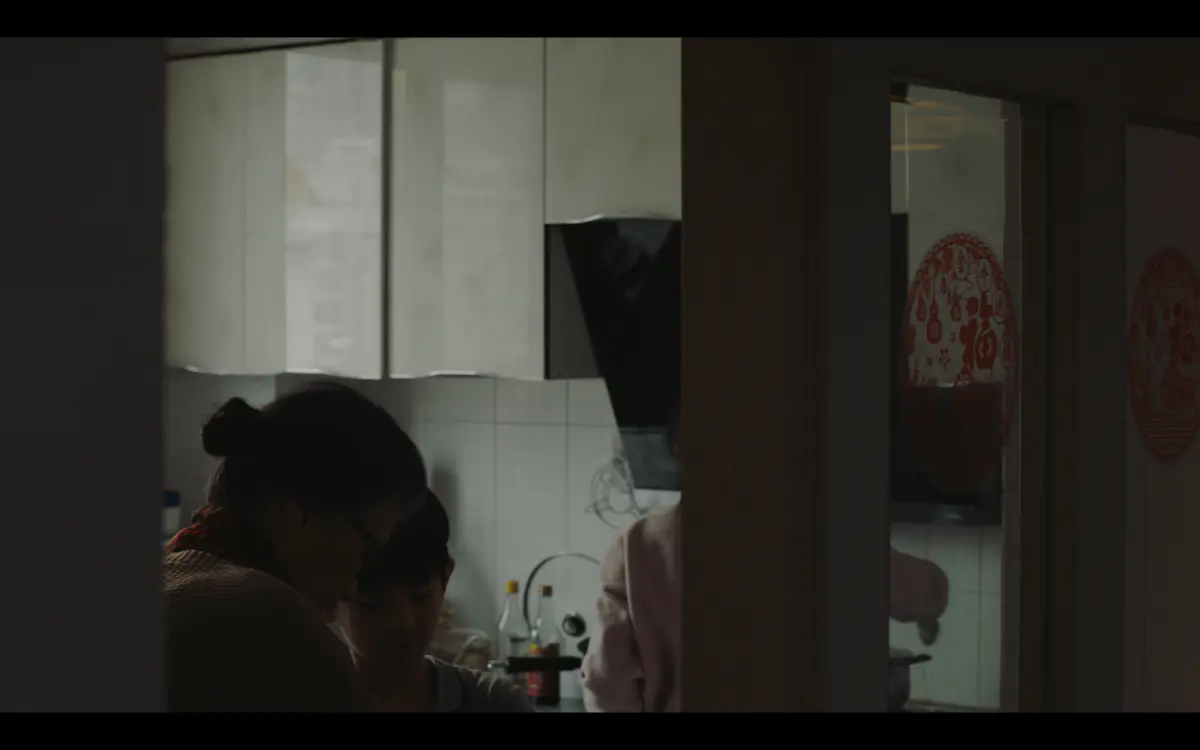
“Shards” is an independent film from the People’s Republic of China that premiered in 2024 at the First International Film Festival in Xining, China’s most important festival for emerging filmmakers. The Best Film award, as a note, was not presented that year. The jury, chaired by none other than former indie filmmaker and now blockbuster director Guan Hu, read out a remarkable statement that caused quite a stir. It included the following: “Reviewing this year’s filmmaking landscape, there is ample diversity but no single outstanding work; many have steadily advanced, yet there is a lack of those who have raised new horizons. Therefore, the jury has decided that the honor for Best Feature Film will remain vacant this year, with anticipation and belief in the future.” The director and screenwriter of “Shards,“ Jiang Yuzhi, readily identifiable by his Western name, Baggio Jiang, as a fan of the former Italian football star, did at least win the Best Director award.
Watch This Title
on CathayPlay by clicking on the image below
Whether the jury’s harsh assessment applied to the competition was justified, is another matter. None of the films attracted much international attention, and neither did “Shards.” Baggio Jiang, who studied film and psychology at the prestigious Stanford University, can nevertheless claim to have delivered an appealing debut after making several short films. He also produced the film himself. As he explains, he was inspired by a gathering with his own family on the eve of the Chinese New Year in 2022, in the midst of the COVID-19 pandemic, which also plays a central role in his film. It becomes quite clear that the characters in „Shards“ have quite different ideas about how to deal with the pandemic.
The married couple Wang Bo (Hans Han) and Xiao Yan (Li Jingting), together with their young son Jojo, are preparing for a festive meal. Xiao Yan’s father arrives first, followed later by her mother, much to the boy’s delight. The women prepare traditional dishes served during the Spring Festival, while the men discuss “men’s business,” as well as a green vase that was once broken but repaired using a traditional technique known as “juci.” The fragments are pieced back together with metal threads. Shards not only provide the film with its title, but are repeatedly brought to the fore—and, predictably enough, the relationships between the various characters are not without their own fractures. This is particularly true of the young couple, and a dramatic confrontation between them forms the film’s key scene. It is not only well written but also superbly acted, particularly by Li Jingting.
This is where the young director’s strengths become apparent, even if, formally, he occasionally overreaches. Most of the action is shot quite appropriately from an “Ozu perspective,” with the camera positioned not too high above floor level (cinematography: Jesse Zhao). Yet some rather unmotivated camera angles and shifts in focus occasionally seem somewhat odd, especially since this is essentially a classic chamber piece that never leaves the confined space of the apartment. The music by Zhang Yiyun and Ying Zhifan is used with pleasing restraint.
Overall, “Shards” leaves a good impression, particularly considering that it is a first feature. Its minor shortcomings are easy enough to overlook. In any case, Baggio Jiang appears to be another promising talent to emerge from China’s rich independent film scene.



