
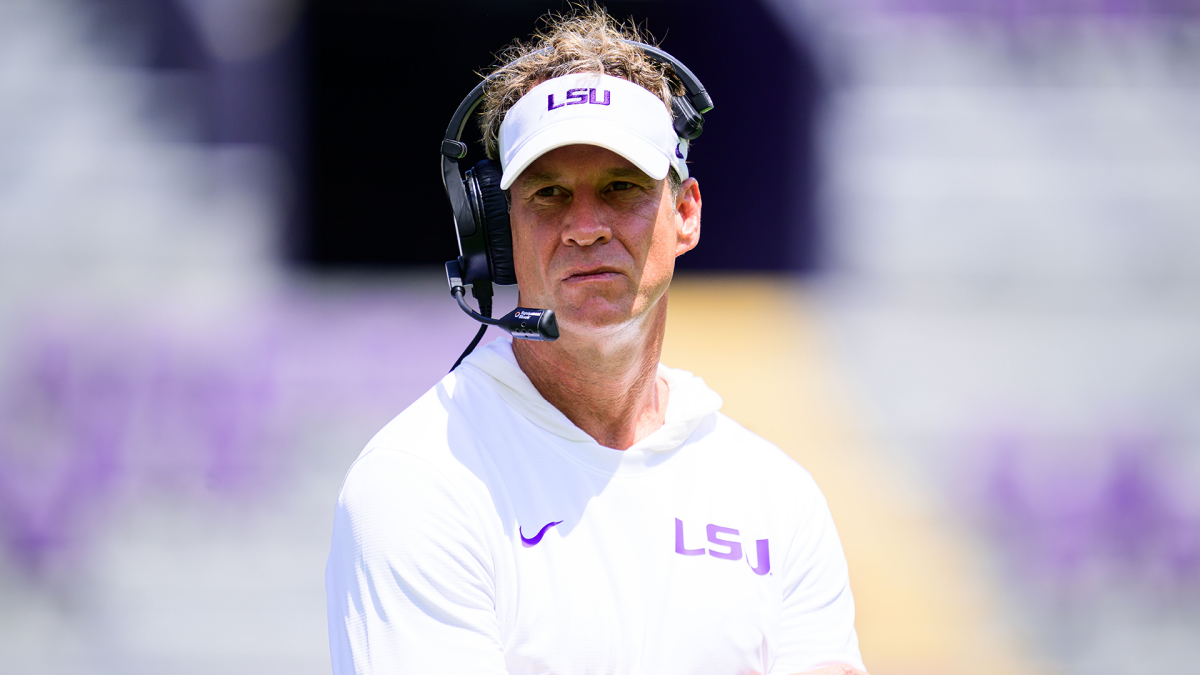
With less than 48 hours remaining until LSU’s highly anticipated season opener against Clemson, attention centered on a Baton Rouge courtroom, not a potential national championship squad.
On Thursday evening, a Louisiana judge ruled in favor of granting a preliminary injunction against the NCAA that allowed LSU to sign multiple players who had signed NFL contracts and participated in preseason. LSU is reportedly set to add defensive tackle Zxavian Harris and tight end Dae’Quan Wright after both played in NFL preseason.
Even for Lane Kiffin, this is pushing it.
Of course, every coach in college football is weighing how to best manage their rosters and handle a complicated eligibility cycle. Despite Steve Sarkisian’s insistence, there aren’t many morally righteous players in this space; they don’t last long. But LSU has made a public mockery of this whole process and rightfully drawn the ire of their conference mates.
LSU scores a courtroom victory, but the fight isn’t over
The SEC passed a rule in August to ban players who signed contracts with professional teams from returning to college. That includes undrafted free agent contracts like Harris and Wright. Multiple attorneys general have come to the SEC’s defense, with Georgia AG Chris Carr encouraging the SEC to explore punishments — to the level of expulsion from the conference.
The SEC is prevented from enforcing that rule via the injunction. That could change if the SEC’s federal case goes a different direction. In that case, rostering the players could lead to massive penalties for Kiffin and LSU, including a multi-game suspension and major fines. It hasn’t mattered so far. Kiffin won’t budge.
Texas Tech faced a similar situation in the Big 12 after quarterback Brendan Sorsby was reinstated by a local judge after gambling on his own games. Even though Sorsby was legally cleared to play, the Big 12 threatened to ban Texas Tech from the Big 12 title game if it played Sorsby.
The pressure was strong enough that Sorsby and Texas Tech made a mutual decision for him to leave the roster. The chances of ruining a team’s season over one player were not worth it for either side.
Massive risk for a marginal gain
LSU invested a tremendous amount of money into their roster, perhaps the most in college football. The Tigers signed the No. 1 transfer portal class in the nation, headlined by quarterback Sam Leavitt, offensive tackle Jordan Seaton and safety Ty Benefield.
The thing is, LSU will benefit from adding Wright and Harris to the roster. Both play premium positions and know Kiffin’s system well. At the same time, the Tigers don’t need them. Tight end Trey’dez Green is arguably the best in the country. There’s plenty of defensive line depth and key transfers that could swing games.
LSU is already positioned as a potential championship contender. The upside of this nonsense isn’t especially high. The potential for chaos, though, increases rapidly as Kiffin drags multiple open-court battles into the regular season.
Tigers linebacker Whit Weeks told reporters that he felt the situation wasn’t a distraction, that players were used to uncertainty. Still, at what point does the cost outweigh the benefits? Is LSU aware enough to even know?
Louisiana senator John Kennedy put it succinctly after he was asked about Kiffin’s antics while talking about the Protect College Sports Act. There’s only one thing that matters. It starts on Saturday at Tiger Stadium against Clemson.
“My people don’t care what Lane Kiffin does,” Kennedy said. “We don’t care as long as he wins. But he better win.”
More court battles could await LSU
Attorneys representing the SEC said they’re planning to file an appeal to the injunction. Additionally, the SEC has a separate federal lawsuit that would allow them to enforce their new rule. The only guarantee remaining is that there will be more billable hours, more lawyers and more courtrooms. Or, put more simply, there’s more nonsense to come.
Is it really worth it?



