
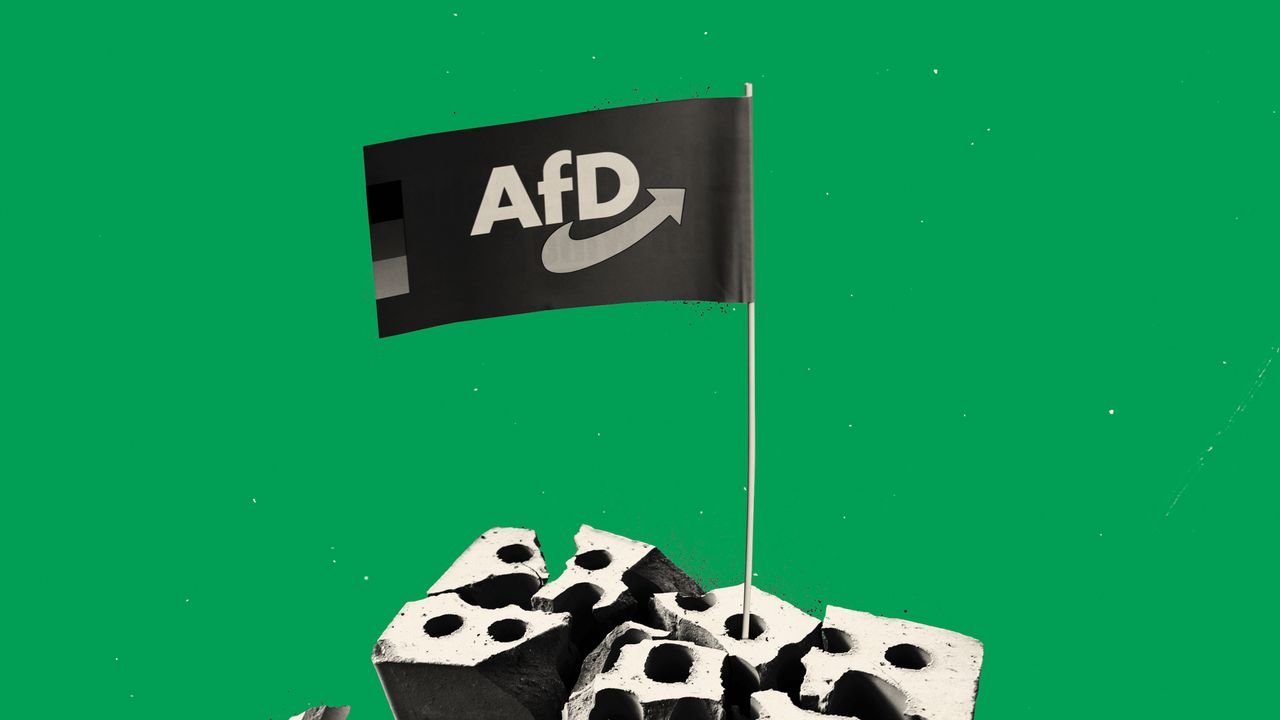
The Brandmauer, then, may have been a necessary instrument, but it allowed establishment parties to focus on the mechanics of defense rather than on offense—that is, on articulating a program that will win over voters. The region of the former East Germany, for example, is facing deindustrialization and demographic decline; voters there, who tend to be poorer than those in the west and feel alienated and excluded, provide the AfD with its highest levels of support.
Jana Hensel, a journalist born in East Germany, published a book this year subtitled “Why the East Is Turning Away from Democracy.” She said, “By spending all this time thinking about how to maintain the firewall, we managed to forget the voters on the other side—how they live, their feelings, their problems.” The Brandmauer allowed the AfD to enjoy the image of the disruptive outsider, the one who really feels your pain, without the responsibility of having to do anything about it.
In Saxony-Anhalt, the AfD’s strong showing came at the expense of the Christian Democratic Union, the center-right party of Angela Merkel and of the current Chancellor, Friedrich Merz. The AfD hopes to persuade a handful of C.D.U. members to break from their firewall pledge and enable a governing majority; AfD leaders are also courting a far-left party that shares their hostility toward immigration and current policy on Russia and Ukraine. Perhaps more likely is a political stasis, in which neither the AfD nor the forces opposed to it take charge outright. That’s hardly a victory for those seen as the protectors of Germany’s normality.
In truth, no mainstream German party has figured out a formula for slowing the AfD’s electoral march. Merz has periodically flirted with adopting part of its agenda, specifically on immigration. Last year, in a controversial vote in the Bundestag, the C.D.U. pushed through a resolution on stricter migration rules which it knew would gain a majority only with AfD support. But one study after another shows that, when established parties take on the policies of the insurgent right, they end up just shedding more votes to it. In recent days, some C.D.U. members have renewed talk of a legal ban of the AfD. None of these stopgap measures deal with the real problem: like much of Europe, Germany is changing—economically, culturally, politically—and, in a sizable part of the population, that is stoking a desire for radical solutions. “Even if the AfD won’t fix the problems of its supporters,” Hensel said, “it will destroy the system under which they think they have suffered.”
Two other German states have elections later this month, and in 2029 the country will hold federal elections that will seat a new Bundestag and, perhaps, a new Chancellor. The AfD is rising in the west, too—for example, in Baden-Württemberg, a wealthy state home to much of the country’s automotive industry. In a sign of Germany’s greater manufacturing decline, the auto sector lost more than forty thousand jobs last year. The VW Group recently announced plans for fifty thousand additional phased layoffs and the end of production at four plants. That sort of malaise may lead to support for the AfD, even as it struggles with a solution. The Party’s co-chair Alice Weidel recently stumbled on television when asked to explain how German car producers could compete with growing demand for Chinese electric vehicles.
For years, the Brandmauer freed the AfD from such expectations. Yet competence at institutional defense is no substitute for an affirmative vision of governance. That’s also a lesson for other European democracies, from Austria to France, where mainstream parties have struggled to keep far-right challengers from power. A firewall can protect a political system, at least for a while, but it cannot explain what that system is for, or why its citizens should care. ♦



