
If a borrower takes a loan and fails to repay the full amount, the lender may agree to close the loan once the settlement amount is paid. However, the way the account is reported to credit bureaus can continue to affect the borrower’s ability to access credit in the future.
A “settled” status indicates that the lender accepted an amount lower than the original dues. This can make the borrower less favourable in the eyes of future lenders. Knowing the steps to take after a settlement can help improve your credit profile before applying for new credit card or another loan.
What does ‘settled’ status actually mean?
A loan is generally marked “settled” when the borrower and lender agree on an amount lower than the total outstanding dues and that agreed amount is paid. It is different from a “closed” account as it refers to full amount being paid, according to CIBIL’s own explanation.
For example, let’s say a person took a personal loan worth ₹5 lakh to fund their trip to Europe and they had been the monthly installments on time. But, after some time, the borrower had a medical emergency in their family and therefore couldn’t pay the remaining amount of ₹3 lakh.
As a result, the bank agrees to a certain settlement amount, which in this case, can be ₹1.5 lakh (for illustration purposes). Once that amount is paid, the borrower no longer has the agreed settlement amount outstanding.
However, it does not mean there won’t be any more consequences and they can freely ask for credit later. The person’s credit report can still show that the original obligation was not fully repaid.
How can ‘settled’ status impact future loans
Your past credit behavior has a long-lasting impact. Lenders view “settled” as risky, primarily because if you haven’t met your repayment obligation before, there are chances that you might do this again, according to CIBIL.
The individual who took a personal loan to fund their Europe trip and settled the outstanding amount because they could not clear it in full can think their immediate financial burden has been resolved, but the impact could come later.
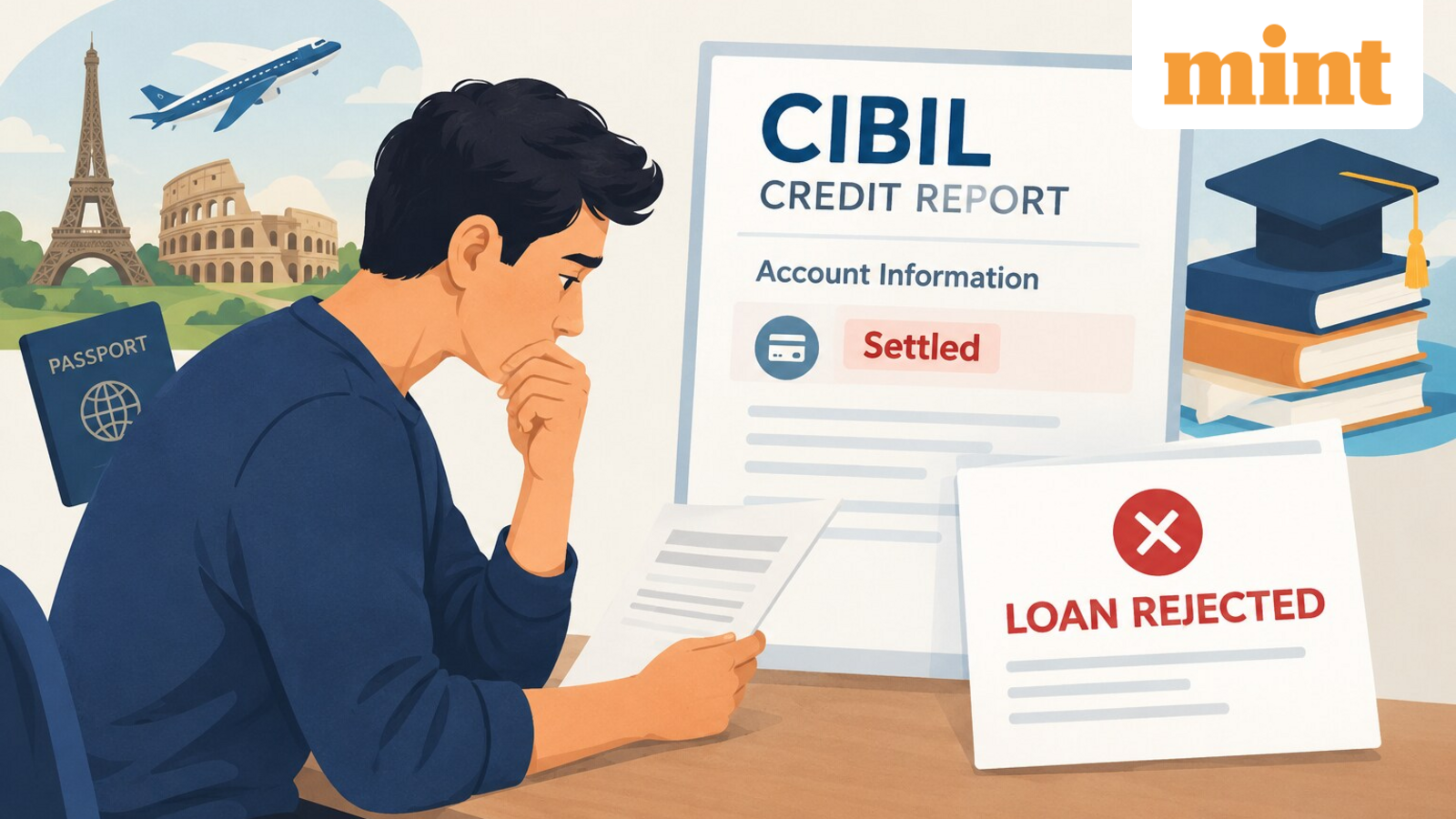
Let’s say, the same person later plans to pursue higher education. They compared the interest rates available on education loans and selected one to apply for but within a few hours, their loan application gets rejected after the lender found a “settled” status under the Account Information section of their CIBIL report.
Though the person might have thought that the “settled” status has a positive connotation, it wasn’t the case. If the borrower had made the entire payment, the loan would have been reported as “closed”.
The “settled” status on their CIBIL report was the reason why their education loan application had been rejected, according to CIBIL’s website, which also cited a similar example of a borrower.
What is the solution?
If you previously settled a loan due to insufficient funds and later become financially stable again, such borrowers are advised to pay the remaining (outstanding) amount on their personal loans.
After doing so, the person should also procure the a no objection certificate (NOC) from the bank and raise a dispute on CIBIL’s website.
The credit bureau will confirm this development with the bank and change the status from “settled” to “closed” within 30 days from the dispute filing, according to the credit bureau’s website.



