
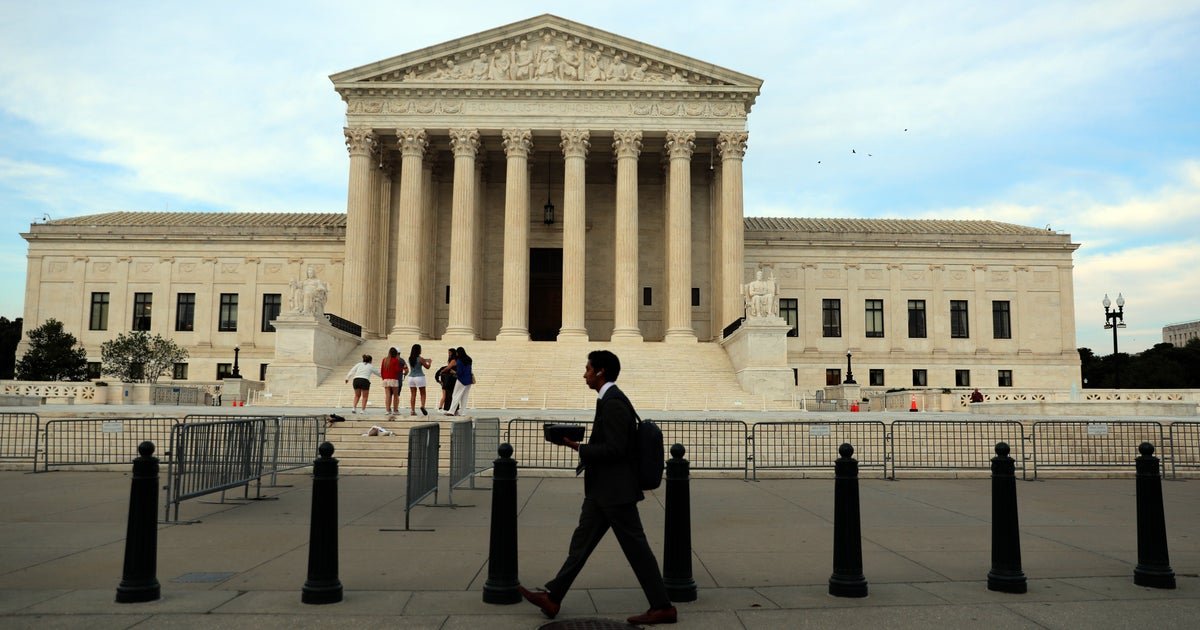
The U.S. Supreme Court is temporarily allowing the Trump administration to run state voter registrations through data held by the Social Security Administration in an unsigned decision on Friday.
The ruling overrules lower court decisions that had forbidden the Department of Homeland Security from using Social Security data as part of an effort to search voter registration data submitted by states to the Systematic Alien Verification for Entitlements (SAVE) system for supposed noncitizen voters.
The Supreme Court’s three liberal justices dissented.
The administration can now use sensitive personal information in its effort to purge voters it deems noncitizens from state registration rolls. Purges using data in DHS’ SAVE database routinely turn up incorrect matches by wrongly identifying naturalized citizens as noncitizens. This creates significant burdens for eligible voters who are removed from the voter rolls, even though they are legally allowed to vote.
Rahmat Gul via Associated Press
It should be too late for this to affect the 2026 midterm elections. Federal law prohibits states from engaging in systematically purging their voter rolls within 90 days of a federal election. Republican officials, however, have tried to reinterpret this ban as not applying to the removal of noncitizens and, in 2024, a Supreme Court shadow docket decision allowed Virginia to continue removing voters from the rolls during this 90-day period.
The court case emerged from a 2025 executive order issued by President Donald Trump that directed DHS to transform the SAVE database into a tool to identify and purge supposed noncitizens from state voter rolls.
A coalition of groups and voters led by the League of Women Voters challenged DHS’ pursuit of Social Security data as a violation of privacy laws protecting such sensitive data and argued that using potentially “stale” Social Security citizenship data could lead to improper removals of citizens from the voter rolls. Lower court judges sided with the League of Women Voters at the district court and appeals levels.
But conservatives on the Supreme Court stayed those decisions, claiming that the plaintiffs were unlikely to succeed. The unsigned decision from the court stated that a 1995 immigration law enabled DHS to access any government data to verify citizenship, overriding the previously enacted Social Security and privacy laws.
In dissent, the liberal justices wrote that “the majority misreads the statutory text.” The immigration law provisions do not “override any explicit statutory limits on information-sharing,” like those protecting sensitive Social Security data. The laws protecting that data require agencies to provide a notice-and-comment period and prevent such data sharing without consent.



