

An age-group triathlete’s fast bike splits turns into a nightmare of anonymous whistleblower protests, plus Hayden Wilde watched Taylor Knibb’s recent multisport dominance and said, “hold my beer.”
Tim Heming breaks down the biggest triathlon news of September 2026. (Photo: Triathlete)
Published September 29, 2026 09:40AM
September is always a wild month in multisport: one minute, we’re dissecting the aerodynamic triumphs and tactical masterclasses of the 70.3 World Championship and World Triathlon Grand Final; the next, we’re pivoting hard to the lava fields of Kona as the final countdown to the Ironman World Championship begins.
But while the sport’s biggest names chased hardware this month, age-group scenes were serving up their own high drama – including an amateur triathlete caught in a motor-doping scandal she didn’t even know she was a part of at first.
Of course, columnist Tim Heming has a take on it all. Read on for all the triathlon news, notes, and essential takeaways from the month of September – and gear up, because October is going to be even more drama.
Multiple “Motor Doping” Accusations Frighten Amateur Triathlete
Triathletes hiding motors on their race bikes is a wonderful topic for conspiracy theorists.
A few years ago, Triathlete even wrote an article titled: Should We Be Worried About Motor Doping? and found there were no confirmed cases of motor doping at Ironman or any other USA Triathlon (USAT) sanctioned events.
So imagine the surprise of 55-year-old keen amateur triathlete Brigid Freyne, who crossed the line in the San Diego Triathlon Classic triathlon on the second weekend in September, to be met by officials who said a complaint had been lodged that she was using a motorized bicycle.
Freyne told Triathlete: “My response was: ‘Go check out my bike. It’s right over there in the transition. So feel free to examine it or whatever you need to do. There’s no motor on that bike. I’m not a cheater.’”
A medical doctor from California, Freyne had finished 82nd out of 150 and third in her age group in the standard-distance event, and said that officials asked how she could ride her bike so fast, leading her to explain how she had been competing in running races since 1981, and triathlon for the past two decades, including around 15 events a year.
However, Freyne said that the officials declined to check the bike, stating they weren’t mechanics.
Unsettled by the incident, she contacted race organizers, KOZ Events, and was shocked by the response. The email reply from KOZ Events read: “Following previous protests from this same competitor, I have personally inspected your bicycle alongside USAT officials on multiple occasions.
“We have never found any indication that your bicycle violates USAT rules or contains any form of motorized assistance. Your bike splits are exceptionally fast, and they clearly reflect remarkable athletic ability, fitness, and hard work – not a bicycle with ‘superpowers.’ I am sorry you had to deal with this again.”
But Freyne had no idea there had been any past complaints. She continued: “I was like, ‘This is all news to me!’ I thought this was the first time I was being accused of using an e-bike.”
Freyne adds it was “frightening to think that this person who has something against me had access to my equipment in the transition zone and could harm me in serious ways by altering the mechanics of my bike or spiking my sports drink and all sorts of things.”
Understandably concerned, Freyne contacted the national federation, USAT, which sanctioned the race, explaining her alarm that it had been an ongoing issue. “I’d been accused of being a cheater by someone, an unidentified person, and needed to know who it is,” she explained.
Freyne received a reply from Kathryn Murtagh, General Counsel at USAT, which apologized for the way the Competition Jury was conducted at the race and stated that under USAT’s competition rule (15.7), the person instigating the protest should have been present. As such, Freyne would have known who her accuser was.
Murtagh also confirmed that USAT had received a previous allegation in April from the same individual, and even convened a Zoom call explaining that the federation wouldn’t be taking up their complaint because there was no credible evidence.
Furthermore, Murtagh said USAT would send notice to the accuser stating the matter is closed and that they should not raise the matter again at any future event or it will be construed as harassment. USAT also released the name of the individual to Freyne, but Triathlete has chosen not to publicly share this information.
The whole incident has left Freyne feeling deflated. “I need to reconsider this triathlon thing altogether,” she added. “I don’t need to go to races. I can do other exercises. Triathlons aren’t necessary for me to live.”
USAT told Triathlete: “USA Triathlon takes all protests and complaints seriously. We have a formal process in place for at-race protests, including those relating to equipment issues, and for post-race complaints.
“We have been investigating this incident since we were notified and have been working directly with the impacted party on the findings of both the protest and the resolution, as well as any processes that may have differed from our protocols.”
A Wilde Month of Racing
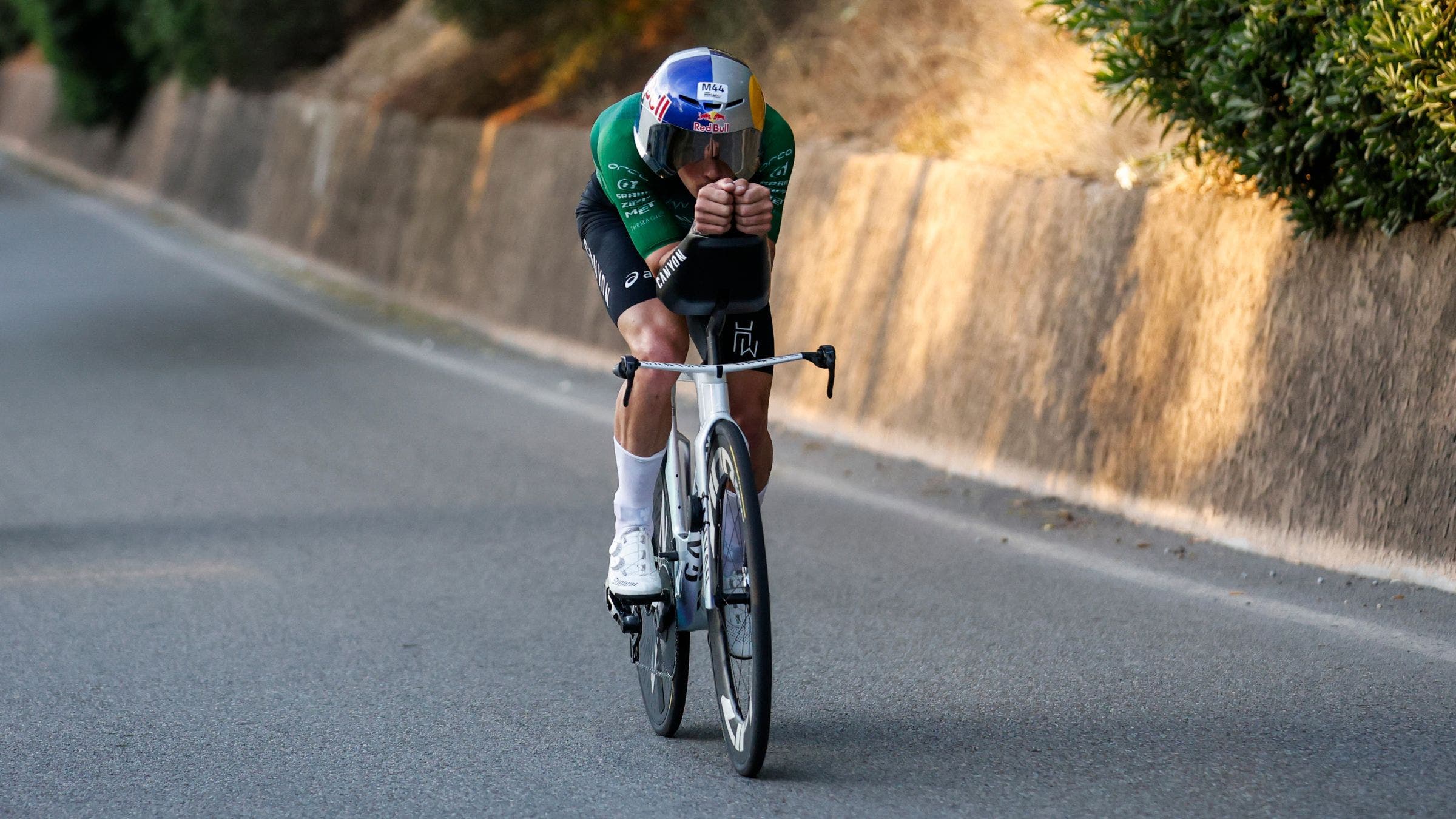
Taylor Knibb likes to compete. After taking her fourth Ironman 70.3 World Championship title in Nice, she placed 13th at the cycling time trial world championship in Montreal before refocusing on Kona.
Hayden Wilde saw that and said, “Hold my beer.” The Kiwi placed second at Supertri Jersey, won his first 70.3 World Championship in Nice, and captured the T100 French Riviera title. He then capped off a grueling three weeks of racing with a fifth-place finish at the World Triathlon Championship Finals in Pontevedra.
Wilde attributes his success to ambition, work ethic, and superior race instincts. Though aggressive racing previously led to late-race implosions at the 2024 70.3 Worlds in New Zealand and the Paris Olympics, he raced tactically in Nice. He managed his position on the bike to avoid drafting penalties, then controlled his pace during the run to break his competitors.
“I didn’t feel like I was working extremely hard in the first 8km,” Wilde noted, explaining that saving energy early allowed him to race strictly within his limits during the final 12 kilometers.
What’s Happening with Hyrox – er, Hybrid Racing – in Triathlon?
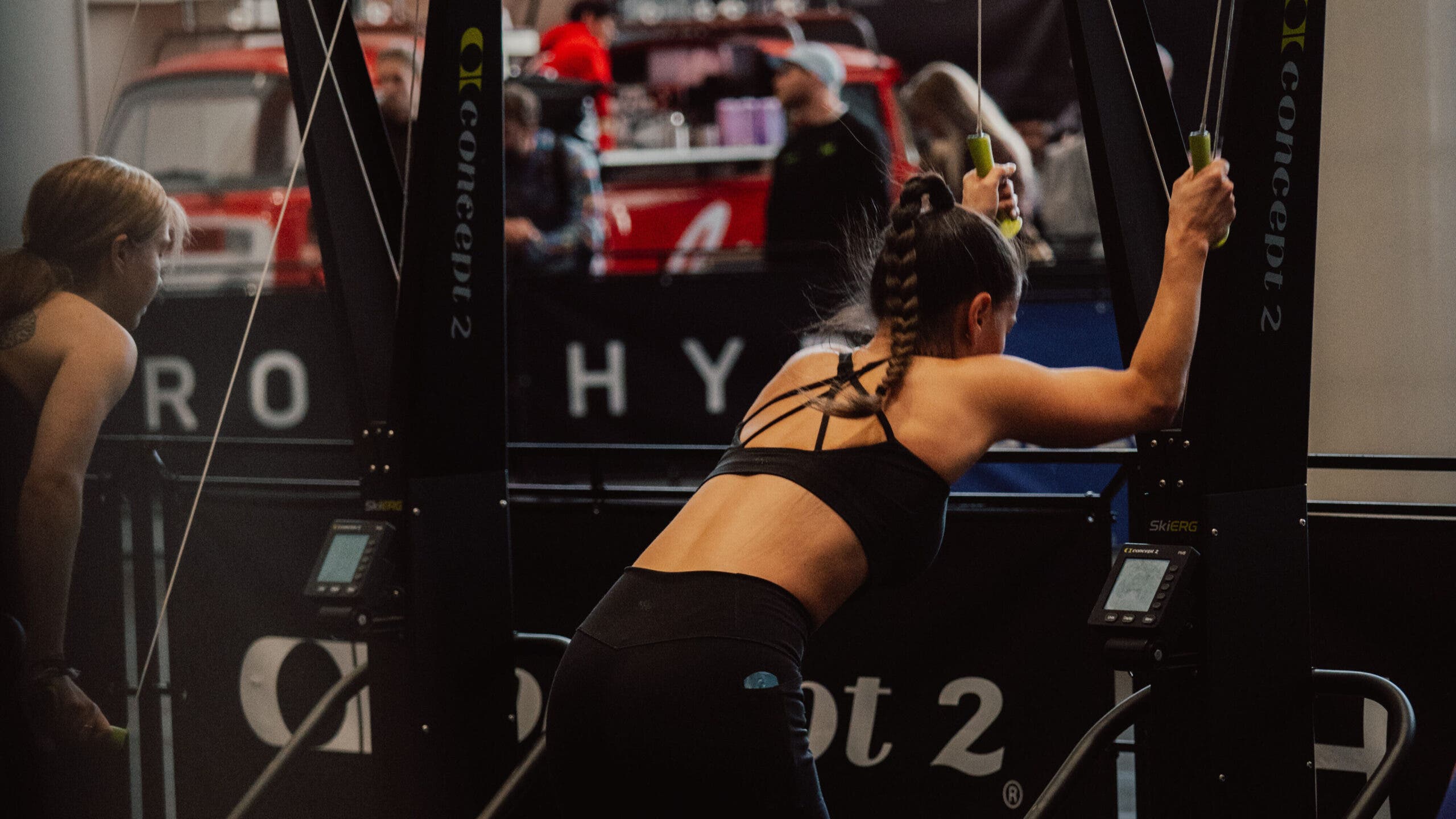
The World Triathlon Championship Finals happened in Pontevedra last week, including a raft of racing from age group to paratriathlon, juniors, Under-23s and elites.
There were some sublime performances on the course, but things were also heating up off-course at the annual World Triathlon Congress, the assembly of delegates from all triathlon nations around the world.
One of the topics on the agenda was the inclusion of hybrid racing (previously, albeit briefly, called hyathlon) under the umbrella of triathlon.
If that’s terminology you’re not currently familiar with, then you’ll probably be more aware of Hyrox, the fitness phenomenon that reportedly had 1.5 million participants across 95 cities in the past 12 months.
Once the partnership is agreed (it is still “being negotiated,” according to World Triathlon President Antonio Arimany), it should have benefits for both sides: World Triathlon seeing increased participation numbers and Hyrox eyeing a possible route into future Olympic recognition.
However, there is a hitch. In the same way as Ironman is a private organization, not a sport, so too is Hyrox. And in the same way that the aims of a for-profit company and an international federation don’t always align, there are likely to be some bumps to smooth out.
It’s also why World Triathlon has now settled on hybrid racing as a name, with federations in Spain, Colombia, Romania and Turkey already organizing events.
Which leads us to the actual format, and Congress was told that there would be three initial formats: Ultimate, Fast, and Ultra, with the Ultimate format being Hyrox’s current eight 1-kilometer runs with eight functional fitness stations, which would be used for the hybrid racing world championships.
Those Fabulous French Take World Triathlon Titles
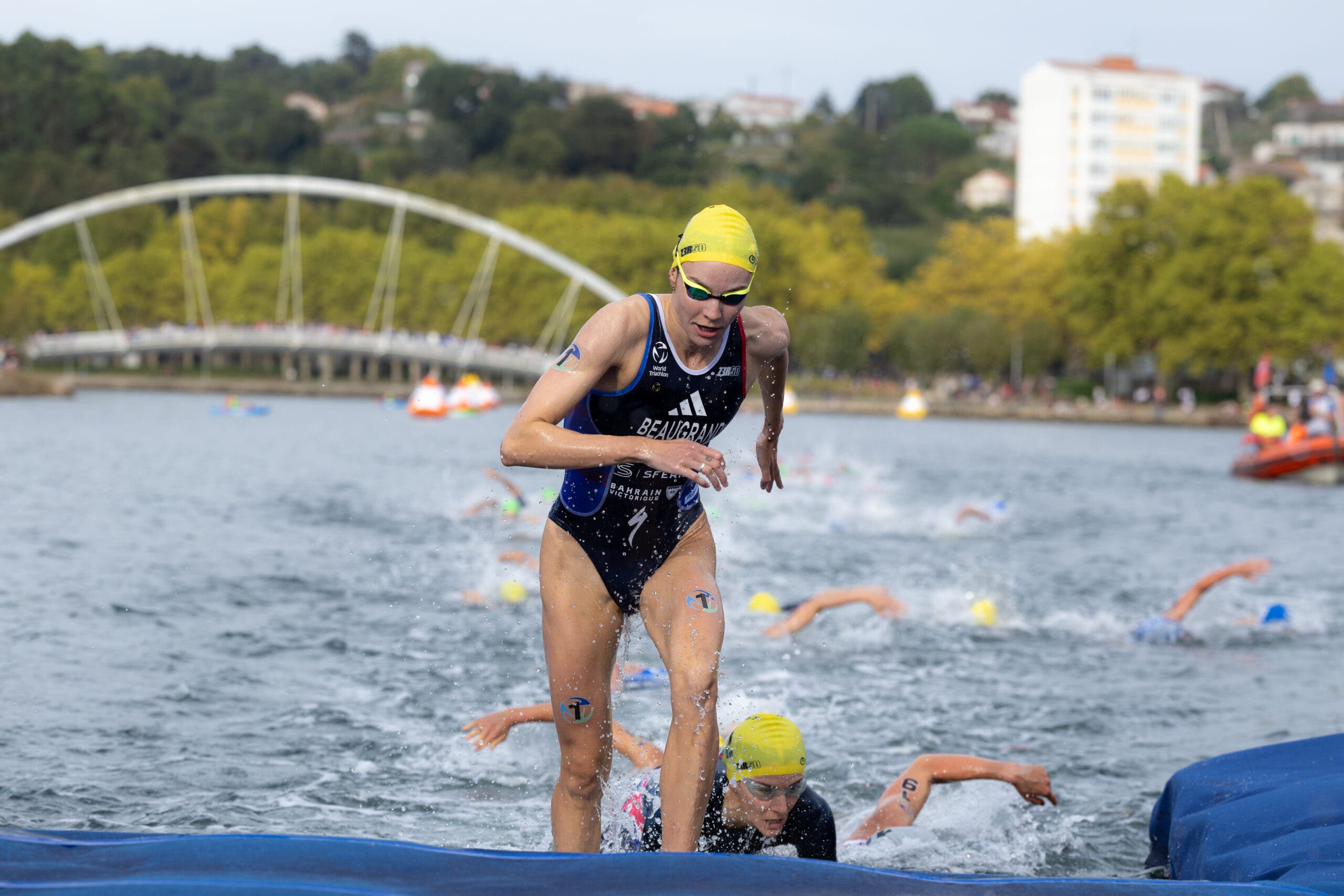
There are any number of spectacular performances that could be picked out in Pontevedra, from Hungary’s 18-year-old Fanni Szalai winning the junior world championship at the third attempt after two silvers, to a sprint finish between Matt Hauser and Vasco Vilaça in the men’s elite race, as Alex Yee ran a 28:46 10-kilometer split to nearly beat them both.
But it’s the French women who also drew attention, and not just Cassandre Beaugrand, whose second world title capped a perfect season where she also set national records for 3,000m, 5,000m and 10,000m on the track.
In the Under-23 championships, Ilona Hadhoum, 22, and Léa Houart, 20, were one-two out of the water, and it remained that way at the finish line. Both are former world junior champions, with Houart beating Szalai last year in Wollongong. Hadhoum ran 32:56 in Spain over 10km. Beaugrand (on a different course) ran 32:35. It’s a conveyor belt of Gallic talent that shows no sign of stopping.
Side note: No other women broke 33 minutes for the 10 kilometers. However, 2016 Olympic champion Gwen Jorgensen ran 33:01. At 40, she was the oldest in the field and ran the whole route alongside Sweden’s Tilda Månsson, whose position was one place higher and split one second lower, and who was the second-youngest in the field (and 18 years Jorgensen’s junior).
Kona #CoupleGoals
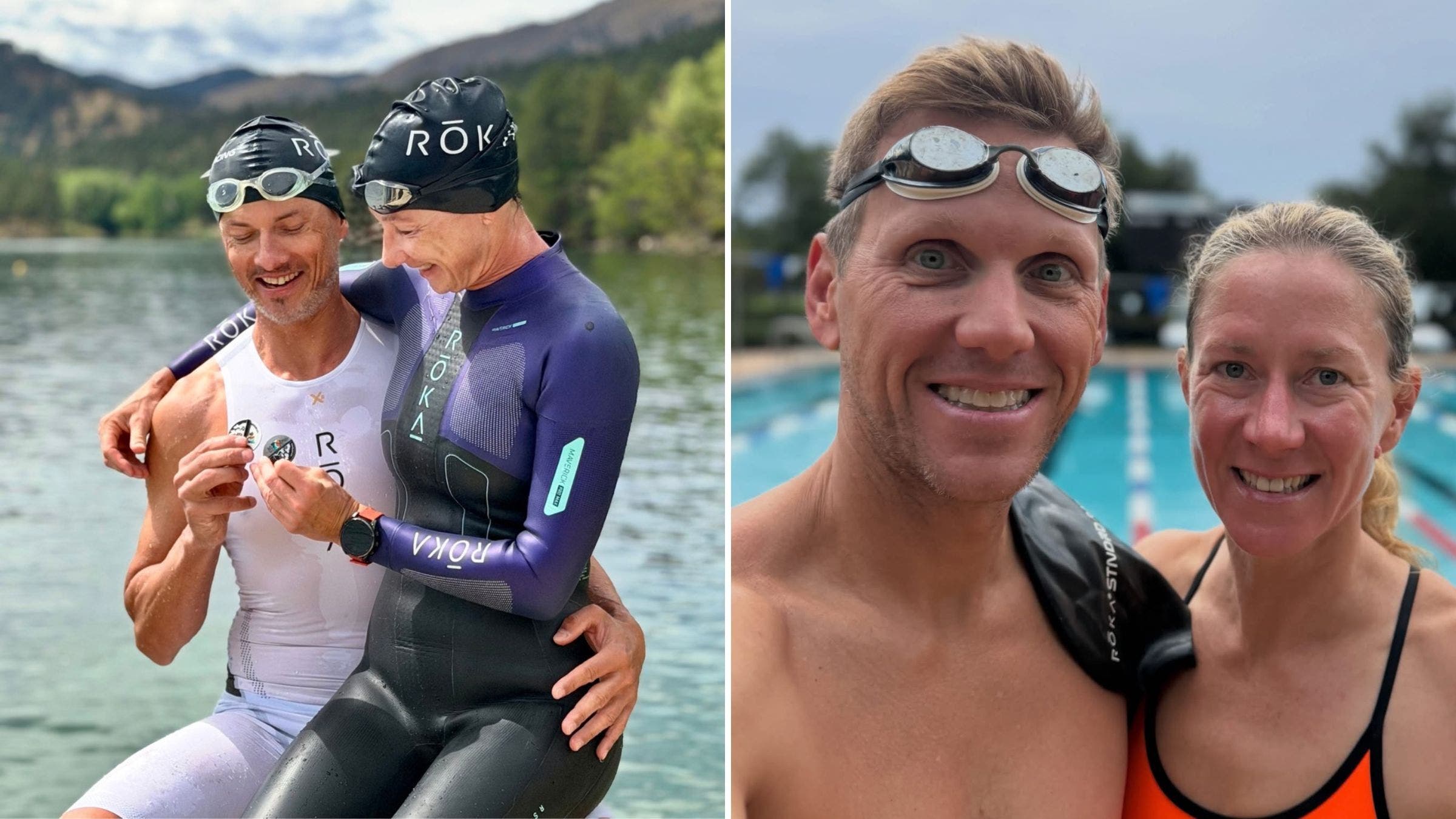
With the Ironman World Championship being a one-day event on the Big Island for the first time in seven years, it would be hard to find anyone more elated than the happy couples for whom racing together on the same day means everything.
Jordan Blanco’s piece introduces the idea that “if we can’t race together, we won’t race at all” when it comes to World Championships, which also raises further challenges, as discussed, when one partner qualifies and the other misses a slot.
And in case you missed it elsewhere, the men and women who qualified for the 2026 Ironman World Championship received different Kona qualification coins. And the two pieces fit together, tying in with the 2026 World Championship theme, Ho’olōkahi, representing unity, harmony, and peace.
Lactate: What You Need To Know
The Norwegians might not have introduced lactate monitors to physiological testing in endurance sports, but they’ve certainly helped boost their profile in triathlon in the past few years.
But while we might now know that a blood prick from an earlobe can tell us if we’re training too hard, do we really understand the function of lactate in the human body – particularly that it’s not a demonized “fatigue-inducing waste product” but perhaps the ultimate endurance fuel. Over to dietitian Matthew Kadey to break down the science in this piece.
The most-read Triathlete stories from September 2026
- What Every Endurance Athlete Can Learn From Liis Kapten’s Viral 70.3 Tallinn Finish
- The 50 Best Triathlons in the USA, One in Every State
- The Best Triathlon Bikes of 2026
- Joe Skipper Receives 18-Month Competition Ban
- Hayden Wilde Conquers Nice to Claim Ironman 70.3 World Championship Title
- Our Expert Tester Analyzes the Fastest Shoes at the 2026 Ironman 70.3 World Championship
- How (and Why) a Triathlon Swim Gets Canceled
- Unstoppable Taylor Knibb Dominates Ironman 70.3 World Championship
- 2026 Ironman 70.3 World Championship Quotes: What the Pros Said Behind the Scenes in Nice
- The Fastest Pro Bikes at the 2026 70.3 World Championship



