
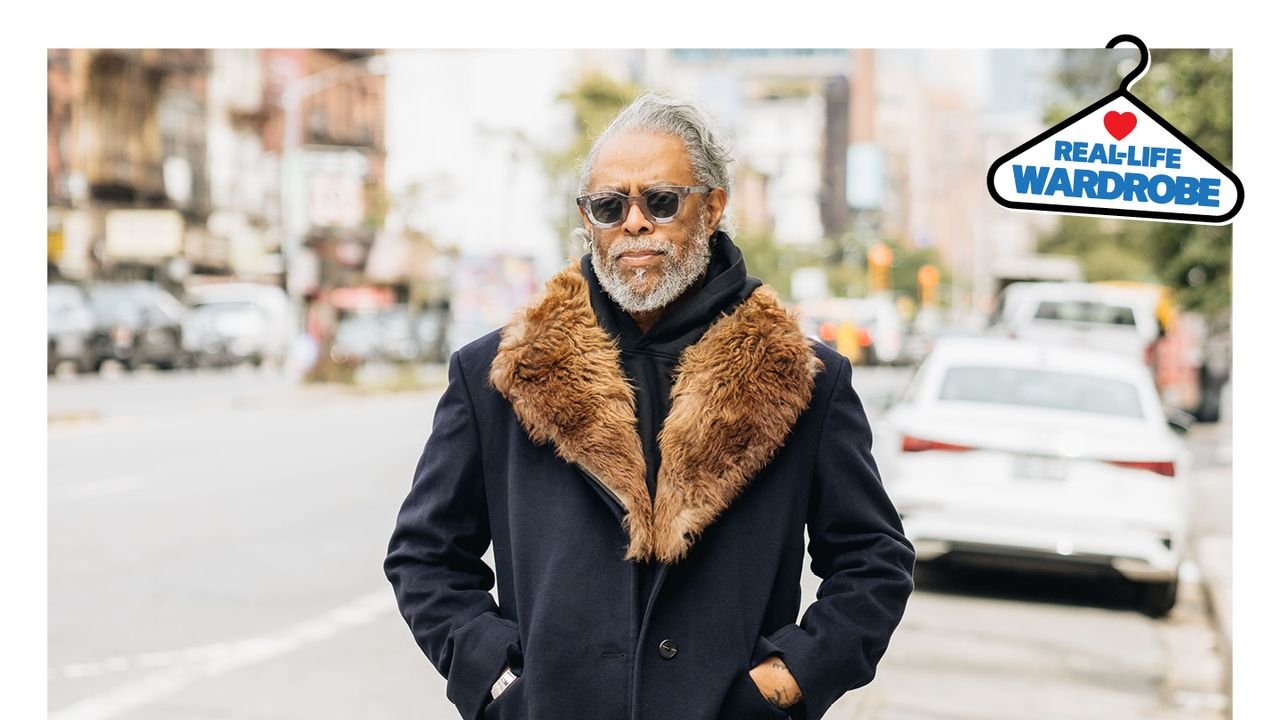
In a recent interview, you said, “There’s no modernism in contemporary art as we understand it without Black aesthetics.” Given that fashion is an art form, too, how do you feel about the fashion industry’s relationship to Blackness?
Well, that’s obviously a very, very big, broad question. I do think we’ve seen, in the 20th century in particular, the general impact of Black culture on the mainstream. Black artistic creative practices, mostly unacknowledged. But today in particular, a large percentage of fashion is street fashion. When you start talking about street fashion, you’re basically talking about the way Black folks dress and how that’s impacted everything. Demna, for example, initially had that at Balenciaga—that oversized silhouette that’s straight out of hip-hop in the ’90s.
Admiration. He was evidence that there were younger Black creatives who were going to be able to take the culture forward. It was a profound loss for everybody, [but] for Black folks in particular. Because he not only was a genius in what he did, but he was very invested in sharing the codes, sharing the map of how you do it. It was super high on his list of things he was invested in, so he had a really profound effect on me.
I was just profoundly sad when he died. I remember thinking Black people don’t get to have anything. You know what I mean? He was a change agent. And change agents are really important. Not necessarily always the greatest artists. Sometimes they’re both the greatest and change agents, but as often as not, change agents are people who change the feel and the context that they operate in. Virgil was about [this] as much as anybody. I told someone at one point, “He’s going to be running LMVH before it’s all over.”



