
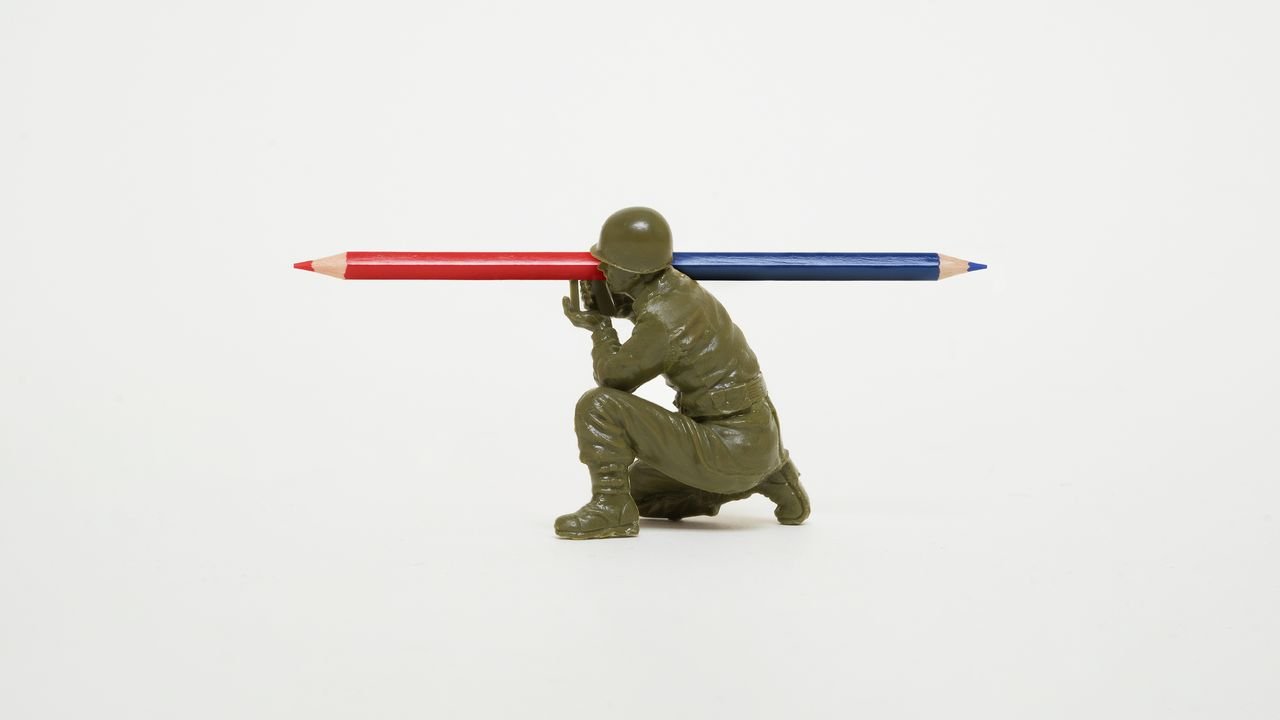
When I last wrote about the redistricting wars, a year or so ago, I noted that Trump did not invent gerrymandering, of course; the practice is about as old as America itself, and many parties, some of which no longer exist, have been willing participants. (Trump’s crusade was unusual in that it took place mid-decade—typically, redistricting follows the decennial census, to account for population changes—but even this wasn’t entirely new.) The President did, unquestionably, start the latest round, by encouraging Republicans in Texas to draw new boundaries that would, in theory, make five Democratic districts friendlier for the G.O.P. (“We are entitled to five more seats,” he said.) Elsewhere, North Carolina had carved out one pickup opportunity for Republicans, as, it seemed, had Missouri, pending the referendum campaign. Californians, meanwhile, had voted to suspend a nonpartisan commission that typically draws the state’s map, and make five Republican districts friendlier for Democrats—an explicit response to Texas. Redistricting efforts in other red states—Indiana, most notably—had stalled, despite intense pressure from the White House. The over-all success of Trump’s seat grab was thus unclear.
The Indiana effort soon flamed out conclusively; a bloc of Republicans in the state Senate voted it down, holding firm even amid bomb threats and swatting attacks. Virginians then voted, in a referendum, to bring as many as four seats into the Democratic column; throw in a single seat in Utah (which is now solidly blue, following a court battle with origins that long precede the national tit-for-tat), and Democrats, as NPR put it in late April, appeared to have an “edge.” But, not long afterward, lawmakers in Florida approved a new map aimed at flipping four seats to Republicans, and in early May Virginia’s top court struck down the redraw there, on procedural grounds. The same week, most of the Indiana legislators who had voted against redistricting and were up for reëlection lost to Trump-backed challengers, a fact that didn’t change any district lines but that was seen, nationally, as a resounding win for Trumpian vengeance politics. By May 8th, Politico declared the redistricting wars over—and Republicans the victors. Two days later, James Blair, a Trump adviser who was a driving force behind the push, took a victory lap on X. “Two weeks ago people were dooming and asking wAs rEdIsTrIcTiNg wOrTh iT?” he wrote. Now, he predicted, Republicans could once again expect double-digit gains.
In fact, the most important change in that period wasn’t anything that happened in Florida—or Virginia, or Indiana—but a decision out of the U.S. Supreme Court. Under the Voting Rights Act, first passed in 1965, states had been barred from drawing district lines in ways that denied voters of color an equal chance to select their preferred candidates—a crucial, ongoing bulwark protecting minority representation. At the end of April, however, the Court had reached a decision in Louisiana v. Callais, a closely watched case challenging the constitutionality of these rules, and, by six votes to three, gutted them—raising the standard of intentionality such that previously illegal racial gerrymanders are now kosher as long as they can be justified as partisan instead. (And they can be, since party votes in the affected districts generally split along racial lines.) Quickly, Republicans created three more seats that they ought to win, in Louisiana, Alabama, and Tennessee. Justin Jones, a lawmaker in the last of those, burned an image of a Confederate flag at the state capitol in protest, and likened local Republicans to Bull Connor and George Wallace. Steve Cohen, the veteran Democratic congressman in the affected district, around Memphis, decided not to run in the new one, citing its vastly increased physical size, and the difficulty that he would face in campaigning across it due to a disability caused by childhood polio.
Not every state that could have drawn new lines post-Callais did so, however. Republicans in Georgia and Mississippi did not rush them through, and a gaggle of lawmakers got in the way in South Carolina, in a stand that had a whiff of Indiana’s, but with less drama and fewer headlines. The states that did redraw seem to have kicked a hornet’s nest of anger among Black voters. Shomari Figures, the Democratic congressman targeted in Alabama, is, by some estimates, still competitive in his new seat. So, too, is Don Davis, in the North Carolina seat that was redrawn last year, before the Callais verdict (though his Republican opponent, Laurie Buckhout, was apparently confident enough of victory to place a bet on herself on the prediction market Kalshi, which promptly suspended her account). The House Democrats’ campaign arm is now plowing extra resources into the gerrymandered seat in Tennessee.



