
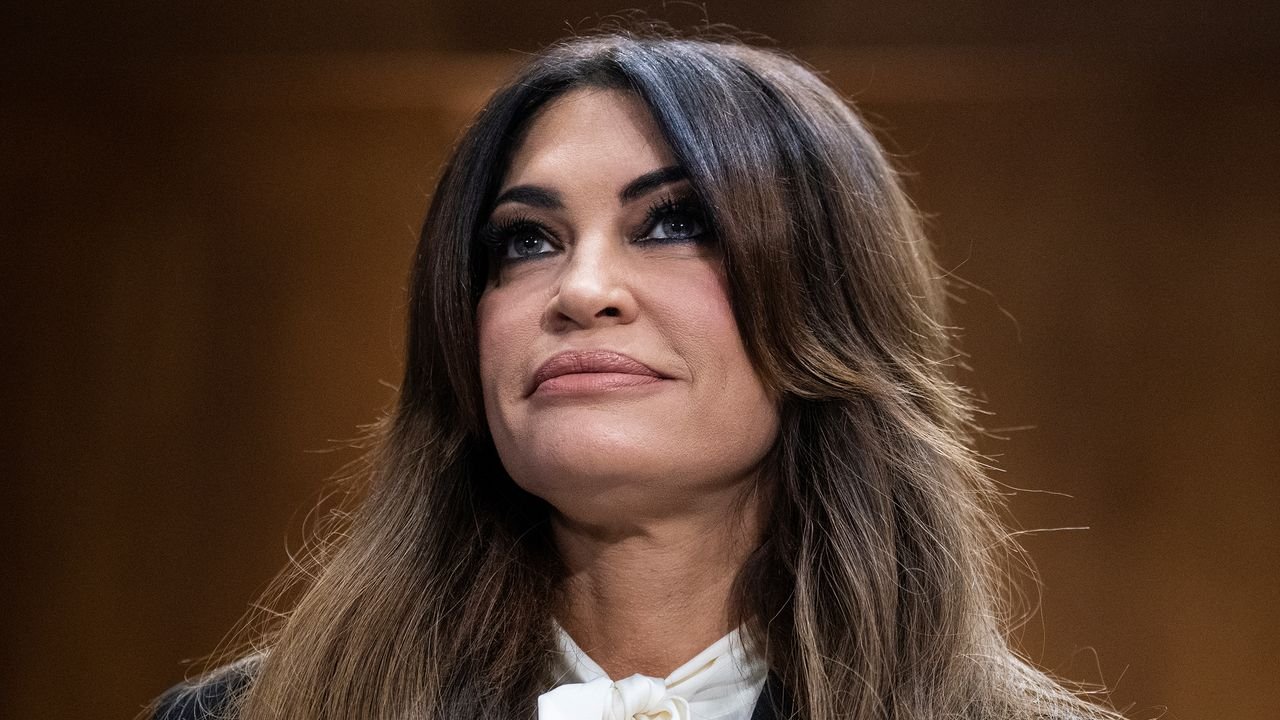
Guilfoyle, a lawyer and former prosecutor—she overlapped with Kamala Harris in the San Francisco district attorney’s office—understood the risk posed by Deters’s digital trail. “Stop papering all these things,” she warned, advising Deters to call her on Signal instead. “It’s really dangerous.” Deters ultimately balked at the AmEx payment. “I can’t do this without getting a divorce,” he told Guilfoyle. (Guilfoyle has suggested the texts were generated by A.I. and said, “I will not allow false accusations to define my decades of public service.”)
The Journal’s final blow, on Saturday, described how Guilfoyle accepted luxury travel, including from a Greek shipping magnate who hosted Guilfoyle on his private jet and paid her bill at the Four Seasons Hotel George V, in Paris, while she was in town to attend his wife’s fashion show. Lobbying an unnamed U.S. businessman to secure an invitation to a dinner at the World Economic Forum in Davos in honor of Eric Trump, Guilfoyle promised, “I’m going to make you a lot of fucking money,” according to a recording reviewed by the Journal.
In March, celebrating Greek Independence Day at the White House, Trump described Guilfoyle as “a person I know very, very well” and “an inspiration to a lot of people.” On Tuesday, that relationship was significantly downgraded. “She wasn’t a member of my family,” Trump told reporters. “She, I guess, dated my son a long time ago.” Kimberly who? That new chilliness was no surprise. Guilfoyle was guilty of what is, to Trump, a capital offense: her reported grift may have been comparatively small, but it failed to benefit the President and, indeed, made him look bad. Guilfoyle joined a very short list of Trump Administration officials whose ethical offenses were deemed serious enough to warrant expulsion. The other leading example from Trump’s second Administration is the former Secretary of Homeland Security, Kristi Noem, who erred, among other things, by spending two hundred and twenty million dollars in a taxpayer-funded campaign featuring the Secretary, on horseback, in front of Mt. Rushmore. Noem’s mistake was not so much promoting herself as failing to promote her boss—and, for good measure, asserting that he had been aware of her spending.
The paradox of Trump Administration corruption is that the most egregious offenders—the President chief among them—operate in plain sight and on a grand scale. They don’t fret, to borrow Guilfoyle’s verb, about “papering” the evidence; they consider themselves, perhaps with good reason, immune from consequences. To borrow from Nixon’s answer to David Frost, when the President does it, that means it is not grifting. Trump imposed some constraints on his own and his immediate family’s dealings during his first term—he promised, for example, that the Trump Organization would not conduct business abroad—but these limits, such as they were, have been shrugged off in the second. As Trump explained to the Times in January, “I found out that nobody cared. . . . I got absolutely no credit for it.”
My colleague David Kirkpatrick calculated that during the first year of his second term, Trump and his family leveraged the Presidency to make more than four billion dollars, dealing in cryptocurrency, foreign real-estate investments, and prediction markets. That total does not include the potential value of Trump’s collusive “settlement” of a private lawsuit against the I.R.S. for the leak of his tax information; as part of the arrangement, the government agreed that Trump, his family, and his companies would be immune from back taxes and penalties. Meanwhile, the President’s son-in-law Jared Kushner is both an unpaid negotiator for the Trump Administration and the owner of an investment firm, Affinity Partners, that is almost entirely financed by Saudi Arabia and other Middle Eastern countries.
When there are consequences for Trump family members’ overreach, they tend toward the minimum. Last month, ProPublica reported that a Russian oligarch close to Vladimir Putin had paid hundreds of thousands in expenses for Donald Trump, Jr., and his new wife, Bettina Anderson Trump’s May wedding celebration, including renting out a private island and putting on a fireworks display. The President described this arrangement as “very common” and “totally allowed,” but said his son was repaying the oligarch. Contrast that seeming nonchalance with Trump’s response to reports of profiteering by James Blair and Chris LaCivita, two of his senior political advisers. On October 6th, the Times reported that, in the heat of the U.S. midterm campaign, the pair had travelled to Republika Srpska, a self-governing territory in the Balkans, to help the pro-Russia government in advance of its own elections. Blair, the former deputy White House chief of staff, and LaCivita, a co-manager of Trump’s 2024 campaign, were paid hundreds of thousands of dollars through a Washington law firm, the Times said. Trump, typically, diminished his relationship with the two men, calling them “outside consultants” who “do not work for me.” He added, “I do not have any idea who else they work for but will, on reflection, ask them and, if there’s a conflict, I will terminate them, immediately!”



