
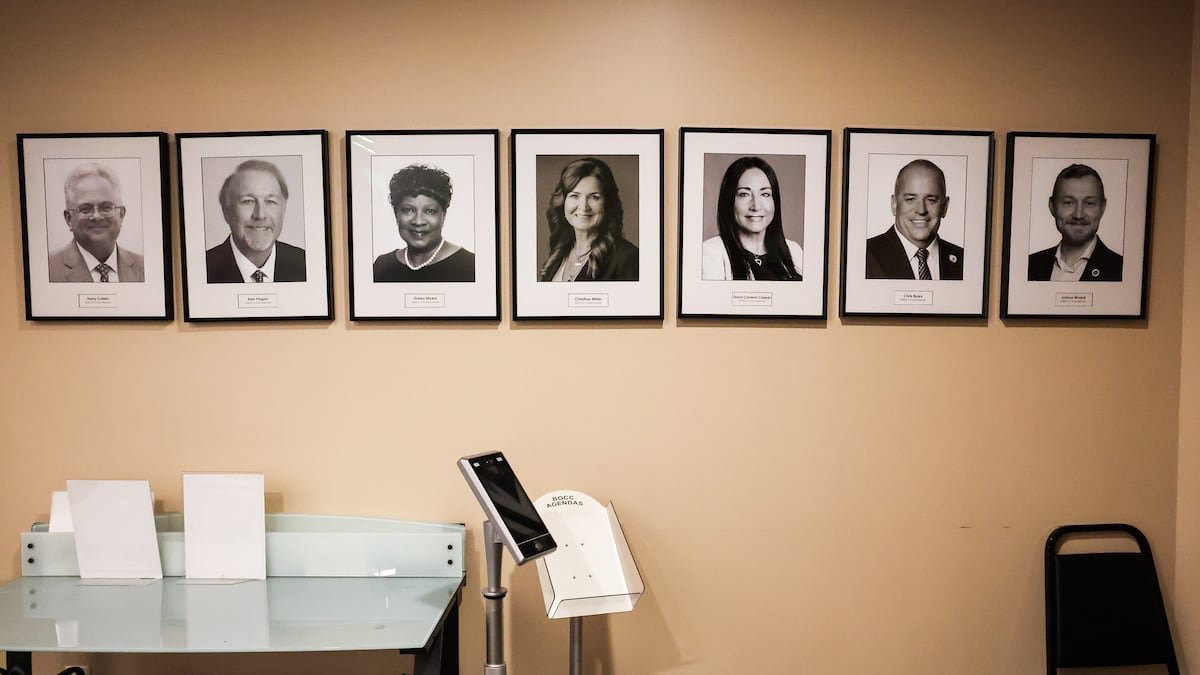
Hillsborough County voters will decide in November whether to expand the board that makes decisions about everything from zoning to what residents should pay in taxes and how that money should be spent on their behalf.
The question asks voters if they want to add two seats to the seven-member Hillsborough County Commission. Gov. Ron DeSantis signed a bill in June that added the question to Hillsborough’s November ballot.
If passed, it would be the first time the commission has expanded in 40 years, despite rapid population growth. The measure would also dramatically change the makeup of the board, with each member elected from districts representing geographic portions of the county.
Currently, four commissioners represent defined geographic areas of the county, while the three others serve countywide. The result is that all voters get a say in choosing a majority of the commissioners who serve them.
As the November election and early voting crawls closer, here’s what to know.
What could this change?
If the referendum passes, voters would change the county charter, which serves a sort of local Constitution, to create the nine districts.
There would no longer be countywide representatives. Voters would get a say in selecting one commissioner instead of a majority.
The referendum would also allow another expansion of the commission once the U.S. Census shows that Hillsborough’s population has grown to at least 2.5 million. When that happens, the commission would expand to 11 members, with each representing portions of the county.
In 1985, when the current board structure was established, there were nearly 750,000 residents of Hillsborough. As of July 2025, the census estimates that nearly 1.6 million people live in the county.
Would this add term limits to commissioners?
Not exactly, but it may have that effect.
Commissioners are limited to two consecutive four-year terms in the same seat. If passed, the referendum wouldn’t change that.
However, some commissioners have previously gotten around term limits by bouncing between countywide seats and districts representing one of four sections of the county. Proposals to limit seat switching have surfaced from time to time but have not gained traction.
Chairperson Ken Hagan, who has been on the commission since 2002, is the most recent example of moving between countywide and district seats.
Florida requires commissioners to reside in the district that they’re running for at the time of taking office. Without countywide seats, commissioners would find it harder to switch seats without changing their residency.
What do people in favor of the change say?
Proponents, including commissioners Chris Boles and Joshua Wostal, say residents would get commissioners who are more attentive and in tune to their concerns. That’s because each commissioner would represent far fewer people.
Currently each countywide commissioner represents about 1.6 million people, far more than the typical Congressional representative. Even commissioners representing geographic districts represent about 400,000 people.
If approved, each commissioner would initially serve no more than about 170,000.
Patrick Manteiga, a Tampa Sports Authority member and publisher of La Gaceta newspaper, said on WMNF’s “Down ‘n Dirty” last week that changing the commission could also increase diversity in its representation. It would enable mapmakers to create a district where Hispanic voters, for instance, would have a greater opportunity to choose someone more aligned with their interests.
“I would like to see more diversity,” Manteiga said. “I would like to see more voices on the County Commission.”
What do critics say?
Instead of creating better representation, opponents have argued the restructuring would dilute resident voices.
Under the current structure, residents can vote for four commissioners — a candidate aiming to serve a voters’ district and three others countywide. If passed, they argue, each voter would have just one commissioner who feels obligated to work on their behalf.
Opponents say that means voters get less of a voice in decisions that affect them, such as zoning changes. Former Hillsborough commissioners Kevin Beckner, Pat Kemp and Mariella Smith have raised concerns about redistricting.
That’s especially important, Beckner said on WMNF, on the heels of Florida’s congressional redistricting that sliced up Black voters. If approved, the party in power would be able to draw districts that make it harder for people from other parties to win a seat.
“By getting rid of the countywide positions, we are introducing more gerrymandering opportunity by whatever party is in charge,” Beckner said. “You’re looking at one potential party being able to control for years the partisanship on the County Commission.”
What does it need to pass?
At least 50% of Hillsborough voters have to vote “yes” for the referendum to pass.
That’s unlike state ballot questions, which need at least 60%. If voters pass the change, Hillsborough commissioners would then start to draft the new district boundaries.
Once approved, the Hillsborough County supervisor of elections office would adjust voter precinct boundaries and update voter registration data.



