
If there is extraterrestrial life out there, it’s certainly done a great job of staying hidden so far (at least as far as the official scientific consensus goes).
International researchers led by a team from the University of Osaka in Japan have now developed a new electrical technique for spotting signs of life outside of Earth’s atmosphere – and it promises to be simpler than current approaches to alien detection.
The method focuses on amino acids, the building blocks of proteins, and details have been published in Nature Communications.
Amino acids come in two mirror-image forms, the L-form and the D-form, and the balance between them in a sample can indicate if the amino acids were produced by something living or non-living.
In scientific terms, the form (or ‘handedness’) of an amino acid is called its chirality, and the technique developed by the researchers can spot this chirality using a tiny gap between two gold nanowires.
“The single-molecule detection and discrimination of molecular chirality demonstrated here highlight a fundamental advance in chemical sensing,” write the researchers in their published paper.
Amino acid chirality can already be analyzed using an approach called liquid chromatography–mass spectrometry (LC–MS), but the instruments needed for it are bulky and require large samples and multiple chemical processes. It’s not ideal for packing onto the back of a lunar buggy.
What the researchers have developed here is much, much smaller.
The two gold nanowires are barely separated from each other and create an electrical tunneling current between them – a quantum effect where electrons ‘leak’ across the gap.
As a solution containing amino acid molecules is dropped onto a microchip holding the gap, the current changes in a way that can be measured, revealing which forms the amino acids are in. Machine learning was used to identify the L-form and D-form molecules from the electrical spikes.
“By combining our nanogap tunneling technique with artificial intelligence, we were able to distinguish between the L and D-forms of amino acids with over 80 percent accuracy,” says bioengineer Takahito Ohshiro, from the University of Osaka.
“This is the first discrimination of amino-acid chirality at the single-molecule level.”
It’s going to take more testing and development to get this into a fully working amino acid scanner that can be added to an astronaut’s toolkit, but the researchers have already tested the approach against current methods.
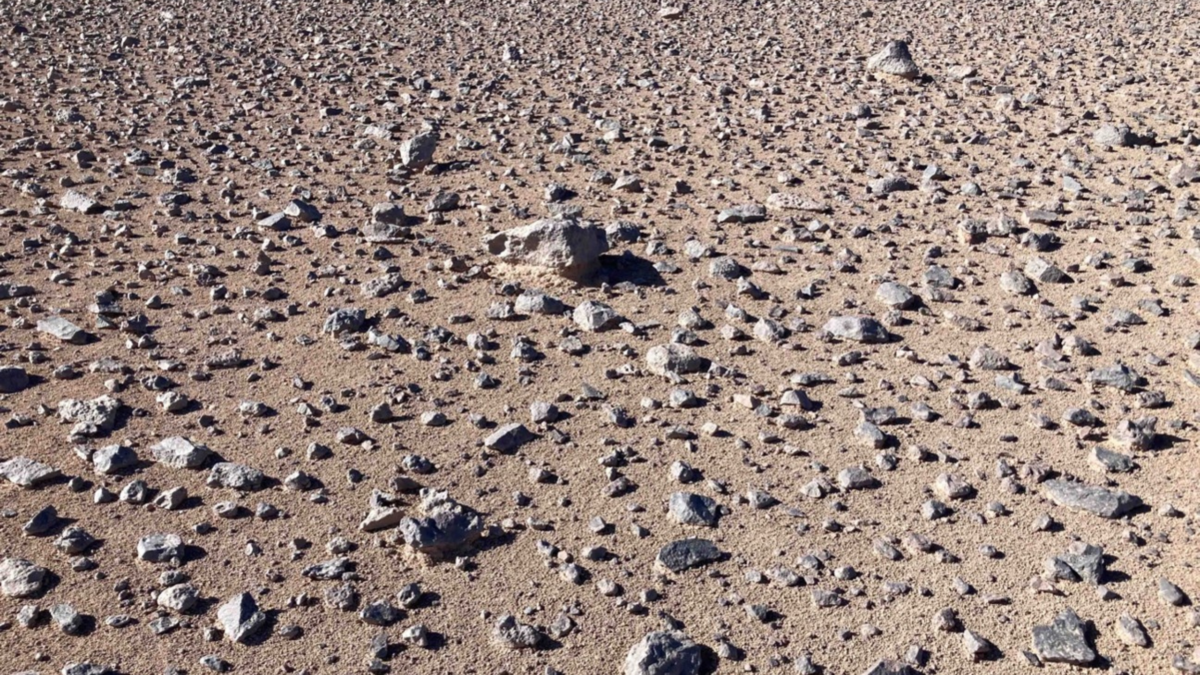
“We analyzed natural samples from the Murchison meteorite in Australia and soil samples from the Atacama Desert in Chile,” says nanotechnologist Masateru Taniguchi, from the University of Osaka.
“Our method was comparable to traditional methods, as both were capable of capturing the major features of amino acid composition.”
Of course, this isn’t a long-range alien life detector – we’re still going to have to get hold of samples to test – but the nanogap device promises a relatively straightforward, compact testing mechanism that needs less preparation and requires fewer molecules.
Potentially, it could be fitted on probes and rovers without a human crew, perhaps beaming back news about signs of life discovered on distant moons and planets. That’s still some way off for now, though.
One of the challenges researchers need to overcome next is preparing the sensor for molecules that it may not have come across before or been trained on. The machine learning component here was crucial to the study’s success.
The technology is now ready to be taken further – for chemical analysis on Earth as well as beyond – and if we do one day detect life on an alien landscape, this might be the approach that makes the discovery.
“These results establish a targeted single-molecule electrical approach for chiral amino acid analysis and provide a foundation for future applications to study chemically complex samples, including those relevant to astrobiological research,” write the researchers.
The research has been published in Nature Communications.
This article was fact-checked by Fiona MacDonald and edited by Fiona MacDonald. While we pride ourselves on our process, we are only human. If you spot a mistake, please let us know.



