
TRUMP YIELDS ON IMMIGRATION ENFORCEMENT. There has long been a deep divide between the parties on deportation policy. For many Republicans, if a person is in the United States illegally, in violation of federal immigration law, that’s enough for that person to be removed. For many Democrats, if that same person is in the country illegally, but — after committing the crime of entering illegally — has not committed any additional crimes, that person should be allowed to stay.
That disagreement is at the core of the current fight over the Trump administration‘s immigration enforcement. In the first year of the administration, federal agents famously pursued the “worst of the worst,” going after illegal immigrants who not only entered the country illegally but went on to commit heinous crimes while here. Republicans argued, convincingly, that those people should never have been allowed to stay in the country long enough to commit new crimes.
But then the administration shifted focus to people who are in the country illegally who have not committed any non-immigration crimes while here. The government had a solid case against them — quite a few had received final orders of removal from immigration judges — yet media coverage sometimes portrayed heartless agents pursuing blameless immigrant victims.
“ICE arrests soar as people with no criminal record are increasingly targeted,” read one New York Times headline this year. Late last year, NPR reported that ICE had targeted migrants in the U.S. who “had no criminal record.” And Axios reported that millions of “undocumented” — the media’s favorite euphemism for “illegal” — immigrants “have no criminal backgrounds.”
Such messaging helped create a political atmosphere leading up to midterm elections in which some Democrats campaigned on a platform of eliminating ICE altogether, while others pledged to cut back on immigration enforcement. Whatever the exact position, Democrats won a spectacular victory, with at least 254 seats in the House and at least 54 in the Senate. (Both figures might rise even higher as the last few races are decided.)
The massive defeat certainly got President Donald Trump’s attention. Just days later, in his first postelection interview, with CBS News’s 60 Minutes, Trump was asked to name one issue on which he would like to work with the new Democratic majority. “I’d love to do something on immigration,” Trump said.
Reporter Ross Douthat asked whether Trump thought immigration enforcement had hurt him in the election. “I think it both helped and hurt,” Trump said. With that, he was making the distinction that most observers make — that Trump’s shutdown of illegal crossings at the U.S.-Mexico border has been a huge success, both in terms of policy and voter approval, while his internal enforcement efforts, including the mess in Minneapolis, alienated a lot of voters.
“I think you would agree that I get an A+ for [closing the border],” Trump said. “For getting people out, I get very high marks for getting the bad ones out. But I got hurt because we also took people that had good jobs — that created one violation, or breaking of the law, and that was that they came into the country illegally.”
“Now, there is a large part of the country that thinks they should be put out,” Trump continued. “And there’s a large part of the country that thinks they should be allowed to stay, if they’re good people working in a landscaping company, or working in a hotel, or doing something, right? And in some cases, paying taxes. And there’s a large group of people who think that they should be allowed to stay.”
“So you think your deportation policy went too far?” asked Douthat. “I think it might be too tough, yeah,” Trump said. “And a lot of people would say that it’s great. But a lot of people think it’s too tough.”
Trump went on to theorize about the possibility of offering some sort of legal status to people who have been in the U.S. illegally for many years. “Get the killers out. Get the rapists out. Get all the rough ones out. Get the drug dealers out. But let the people that are here, and in some cases here for 10 and 15 years, work a deal for them, OK?” Trump said.
Douthat asked whether Trump thought there were any Democrats who might be interested in an agreement along those lines. “I think so, yeah,” Trump said. “People have already called me.”
Trump’s seeming openness to some sort of amnesty deal — although no one said the “A” word — set off alarm bells among a lot of veterans of the immigration policy wars. “Does Trump think the Democrats will do anything except pocket his amnesty and start planning for the next one, when they regain the presidency and open the borders again, Biden-style?” asked the writer Mickey Kaus.
On Fox News, Jesse Watters played a quote from Gov. Ron DeSantis (R-FL) earlier this year saying, “This idea that unless you’re an axe murderer you should be allowed to stay — that is not consistent with our laws, and it’s also not good policy.”
And Mark Krikorian, of the Center for Immigration Studies, which advocates more restrictive immigration laws, argued that the Trump administration went wrong when it switched to high-profile raids designed to take illegal immigrants into custody. Instead, it should have pursued quieter enforcement in the workplace. “Where are the audits of employer personnel records, which require no guns?” Krikorian asked. “Where are the letters from the Social Security Administration notifying employers that the payroll information they submitted doesn’t match the agency’s records?”
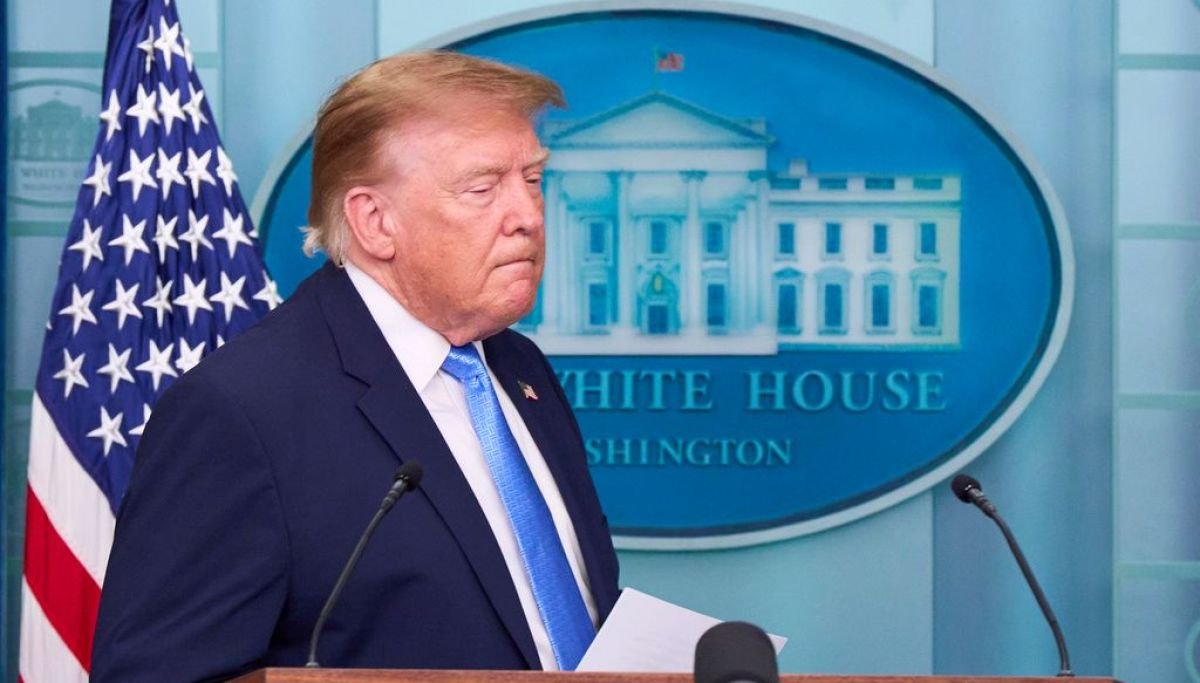
But now the president, after a big defeat at the polls, is talking about some sort of “deal” on immigration. Seeking to quell the uproar, on Monday Trump went to the White House briefing room to insist: “We have a very strong deportation program. There’s no amnesty, no anything, we keep that. But we focus on the worst of the worst.”
But that, again, seemed to signal that the president will change the administration’s priorities. For the first time since taking office in January 2025, Trump sent a strong message to some illegal immigrants that they will be allowed to stay. That was a stunning change in direction on the administration’s signature issue. Like the president’s decision to go to war in Iran, it very likely will divide his supporters — again.



