
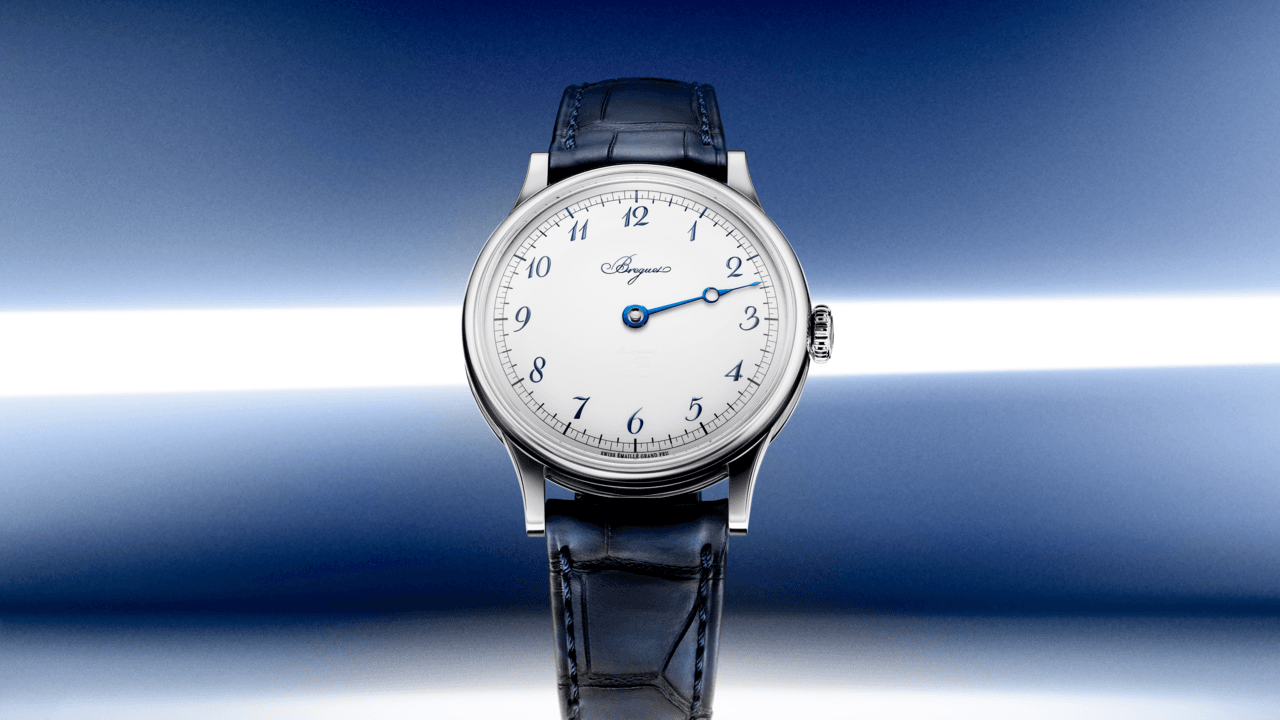
Welcome to GQ’s 201-level Watch Glossary, breaking down the brands, advanced terms, and specific references that are essential knowledge for every serious collector.
Founded in the late 18th century by perhaps the world’s most famous watchmaker, Abraham Louis-Breguet, the eponymous brand was once the horologer to royalty. (He famously made a watch for Marie Antoinette that she unfortunately, ahem, never got the chance to wear.) Breguet is responsible for the tourbillon, an early self-winding mechanism, his famous namesake numerals that nearly every brand in Switzerland uses now, and much more. But despite its massive contributions to horology, the brand’s pieces haven’t caused frenzies among collectors like those from Rolex, Patek Philippe, or even Cartier. However, like Dune’s Bene Gesserit, the watchmaker’s plans are apparently measured in centuries. Recent signals point to the idea that Breguet may be entering a new golden era as collectors come around to its exquisitely made timepieces.
Follow the money, and you’ll quickly find evidence of Breguet’s glow-up. Late last month, at Monaco Legends Group’s fall watch auction, a 1970s-era piece previously owned by a 50-year veteran Breguet watchmaker sold for €221,000. That was nearly of the beginning of the brand’s impressive run of auction that makes us wonder, What’s going on with Breguet these days?
From one master watchmaker to the next
Abraham Louis-Breguet isn’t the only hallowed watchmaker to steer the brand. Legendary names like George Daniels, F.P. Journe, and Michel Parmigiani have contributed to the brand’s legacy. At auction, many collectors are keying in on a period of Breguet led by Daniel Roth from the mid-’70s to 1987. After he left Breguet, Roth went on to found his own successful brand that now sells for six figures at auction. The combination of these two powers is proving irresistible to today’s collectors.
Ref. 3050A



